
Smart Home Devices For Seniors That Help Seniors Stay Independent
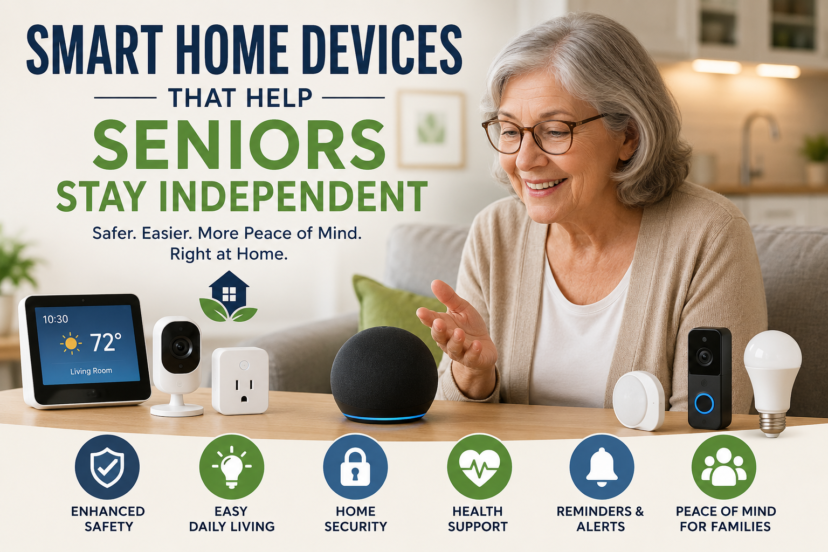
Living independently at home is a goal shared by many older adults. The good news is that maintaining independence doesn’t always require costly renovations or major remodeling projects. Today’s smart home devices for seniors offer practical, affordable ways to make everyday life safer, easier, and less stressful.
Whether you’re an older adult looking to remain in your own home or a caregiver helping a loved one age in place, the right technology can reduce fall risks, simplify daily routines, improve communication, and provide greater peace of mind.
Many smart devices are surprisingly easy to install and use. Voice commands, automatic alerts, and remote monitoring features help support independence while allowing family members to stay connected without being intrusive.
Let’s explore which smart home devices for seniors provide the greatest benefits and how they can help create a safer, more comfortable home.
⭐ Quick Answer: Smart Home Devices For Seniors
The best smart home devices for seniors include voice assistants, smart lighting, video doorbells, smart locks, medication reminders, fall detection systems, smart thermostats, security cameras, leak detectors, and emergency alert devices. Together, these technologies help improve safety, simplify daily tasks, and support independent living with minimal home modifications.
Key Takeaways
Most likely cause: Everyday tasks can become more difficult or risky when a home relies on manual lighting, traditional locks, hard-to-reach controls, or safety systems that require someone to be nearby.
Usually serious? Not necessarily, but small household challenges can affect safety and independence over time. The right technology can make routine activities easier while providing additional protection during emergencies.
First thing to check: Identify the areas where help would make the biggest difference, such as nighttime lighting, answering the door, medication reminders, temperature control, fall detection, home security, or contacting family members.
Best solution: Choose smart home devices for seniors that solve specific everyday problems and are simple to operate. Voice-controlled lighting, smart doorbells, automatic sensors, medication reminders, and emergency alert systems can be particularly useful. Prioritize easy controls, reliable alerts, strong privacy settings, and devices the older adult feels comfortable using.
🏡 Why Smart Home Devices For Seniors Are Becoming Essential
Technology has become much easier to use than it was just a few years ago. Many modern smart home products require little more than speaking naturally or pressing a single button.
For seniors, these devices can help by:
- ✔ Reducing fall risks
- ✔ Improving home security
- ✔ Making daily routines easier
- ✔ Helping caregivers monitor loved ones remotely
- ✔ Supporting medication adherence
- ✔ Providing emergency assistance
- ✔ Increasing confidence while living alone
Rather than replacing independence, smart technology often strengthens it.
💡 Benefits Of Smart Home Devices For Seniors
Adding smart home devices for seniors offers benefits that go far beyond convenience.
Better Safety
Automatic lighting, emergency alerts, and security systems help reduce common household hazards.
Greater Independence
Voice assistants allow seniors to control lights, thermostats, reminders, and entertainment without walking across the room.
Less Caregiver Stress
Family members gain reassurance knowing they can check in remotely when appropriate.
Energy Savings
Smart thermostats and lighting reduce unnecessary energy use.
Easier Daily Living
Simple automation eliminates many small tasks that become more difficult with age.
🎤 Voice Assistants Make Everyday Life Easier
Voice assistants are often the first smart device recommended for aging in place.
Simply speaking commands allows users to:
- Turn lights on or off
- Set medication reminders
- Call family members
- Check weather forecasts
- Listen to music
- Ask health questions
- Create shopping lists
- Control other smart devices
For someone with arthritis or limited mobility, avoiding repeated trips across the room can make everyday life much easier.
💡 Smart Lighting Helps Prevent Falls
Falls remain one of the leading causes of injury among older adults.
Smart lighting reduces that risk by automatically illuminating pathways.
Helpful options include:
- Motion-activated hallway lights
- Nightlights
- Automatic bathroom lighting
- Outdoor pathway lighting
- Voice-controlled lamps
Instead of searching for switches in the dark, lights simply turn on when needed.
🚪 Smart Doorbells And Security Cameras Improve Peace Of Mind
Many seniors worry about unexpected visitors.
Video doorbells allow homeowners to:
- See who is outside
- Speak through the door
- Avoid opening the door to strangers
- Receive package delivery alerts
Indoor and outdoor security cameras also help caregivers check on the home when appropriate while respecting privacy.
🔐 Smart Locks Increase Convenience And Safety
Traditional keys can become difficult to manage due to arthritis, memory problems, or reduced dexterity.
Smart locks offer features such as:
- Keyless entry
- Fingerprint access
- Temporary caregiver codes
- Remote locking
- Automatic locking
Many families appreciate being able to provide secure access for trusted caregivers without hiding spare keys outside.
💊 Medication Reminder Devices Support Better Health
Missing medications is a common concern among older adults.
Smart medication systems may include:
- Audible reminders
- Flashing lights
- Smartphone notifications
- Locked pill dispensers
- Caregiver alerts when doses are missed
These systems encourage consistent medication routines while supporting greater independence.
❤️ Medical Alert Systems With Fall Detection
Emergency response devices remain one of the most valuable smart home devices for seniors.
Modern systems often include:
- Automatic fall detection
- GPS tracking
- Two-way communication
- Waterproof wearable buttons
- 24/7 emergency monitoring
If a fall occurs and the person cannot reach a phone, help can often be summoned automatically.
🌡️ Smart Thermostats Improve Comfort
Older adults may be more sensitive to heat and cold.
Smart thermostats can:
- Maintain comfortable temperatures
- Automatically adjust settings
- Save energy
- Allow caregivers to check temperatures remotely
- Prevent dangerously hot or cold indoor conditions
Some systems also learn daily routines and adjust automatically.
🚰 Smart Leak And Smoke Detectors Add Extra Protection
Water leaks and fires can quickly become serious emergencies.
Smart detectors provide early warning through:
- Phone alerts
- Loud alarms
- Carbon monoxide detection
- Water leak notifications
- Temperature monitoring
Early detection helps prevent expensive damage while improving safety.
📱 Smart Home Devices For Seniors That Support Caregivers
Technology doesn’t only help seniors—it also helps caregivers worry less.
Helpful features include:
- Remote monitoring
- Medication notifications
- Door activity alerts
- Indoor temperature updates
- Emergency notifications
- Video calling
These tools allow caregivers to stay informed without constant visits or intrusive supervision.
🛋️ Building A Smart Home One Device At A Time
You don’t need to automate an entire home overnight.
Many families start with:
- ⭐ Voice assistant
- ⭐ Smart lighting
- ⭐ Video doorbell
Later additions might include:
- Smart thermostat
- Medical alert system
- Smart lock
- Medication dispenser
- Leak detector
Starting small allows everyone to become comfortable with the technology.
⚙️ Tips For Choosing Smart Home Devices For Seniors
Before purchasing new devices, consider:
Ease Of Use
Large buttons, voice control, and simple apps often work best.
Internet Connection
Most devices require reliable Wi-Fi.
Compatibility
Choose products that work together on the same platform whenever possible.
Privacy
Understand what information is collected and who can access it.
Battery Backup
Emergency devices should continue working during power outages whenever possible.
Customer Support
Reliable customer service becomes especially valuable if technical help is needed.
🏠 Smart Technology Works Best Alongside Home Safety Improvements
Technology is only one part of aging safely at home.
Combine smart home devices for seniors with practical safety upgrades like:
- Non-slip flooring
- Grab bars
- Better lighting
- Handrails
- Clear walkways
- Raised toilet seats
- Stable furniture
- Smoke and carbon monoxide detectors
Together, these improvements create a much safer living environment.
👨⚕️ When To Consult A Professional
While many smart home devices are easy to install, some situations call for professional guidance. Consider consulting a qualified expert if an older adult has frequent falls, significant mobility limitations, memory changes, or complex medical needs. A Certified Aging-in-Place Specialist (CAPS) can recommend home modifications, while an occupational therapist can assess daily living challenges and suggest adaptive solutions. Licensed contractors and accessibility installers should handle major renovations, electrical work, ramps, stair lifts, or bathroom modifications. Healthcare providers can also recommend appropriate assistive technologies based on individual health conditions.
❓ FAQs: Smart Home Devices For Seniors
1. What are the best smart home devices for seniors?
Voice assistants, smart lighting, video doorbells, smart locks, medical alert systems, medication reminders, smart thermostats, and leak detectors are among the most helpful options.
2. Do smart home devices require internet access?
Many do. A reliable Wi-Fi connection is needed for most remote monitoring and voice-controlled features, although some medical alert systems use cellular networks.
3. Are smart home devices difficult for older adults to use?
Many modern devices are designed with simplicity in mind. Voice commands, automatic features, and easy-to-use apps make them accessible for many seniors.
4. Can smart home devices help prevent falls?
Yes. Motion-activated lighting, emergency alert systems, voice assistants, and smart monitoring devices can reduce fall risks and improve emergency response.
5. How much do smart home devices for seniors cost?
Costs vary widely. Basic smart speakers and lighting can be relatively affordable, while medical alert systems or comprehensive monitoring services may involve monthly subscription fees.
6. Can caregivers monitor smart home devices remotely?
Many systems allow trusted caregivers to receive alerts, check device status, and communicate with loved ones using secure mobile apps.
7. Which smart home device should I buy first?
For many households, starting with a voice assistant and smart lighting provides immediate safety and convenience benefits while keeping setup simple.
📌 Conclusion: Smart Home Devices For Seniors
Creating a safer home doesn’t always require expensive remodeling. In many cases, a few carefully selected smart home devices for seniors can dramatically improve comfort, confidence, and independence.
Voice assistants, smart lighting, emergency alert systems, medication reminders, and home security devices work together to reduce everyday challenges while helping older adults remain in the homes they love. By starting with one or two practical solutions and expanding gradually, seniors and caregivers can build a safer, lower-stress living environment that supports healthy aging and greater peace of mind for years to come.
Disclaimer: This article is for general informational purposes only and is not a substitute for professional medical, healthcare, or home accessibility advice. Always consult qualified healthcare providers, certified aging-in-place specialists, licensed contractors, or other appropriate professionals before making significant home modifications, purchasing assistive devices, or beginning new exercise or mobility programs. Follow all local building codes and manufacturer instructions when installing home safety equipment.
 Explore more:
- Fall Hazards At Home For Seniors
- Best Non-Slip Flooring For Seniors
- Best Senior-Friendly Bedroom Ideas


Comments are closed.