Best Non-Slip Flooring For Seniors: The Safest Rugs And Flooring Options For Aging In Place
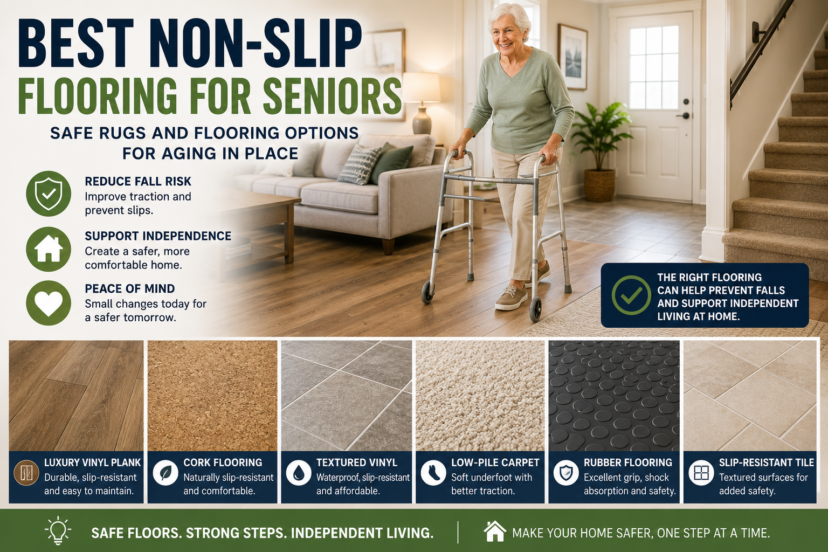
Growing older doesn’t mean giving up the comfort of home—but it does mean paying closer attention to safety. One of the biggest hidden risks inside many homes is the floor beneath our feet. Slippery tile, loose rugs, polished hardwood, and worn carpeting can all increase the chance of a fall. Fortunately, creating a safer home doesn’t require a complete renovation. Choosing the best non-slip flooring for seniors and replacing unsafe rugs with safer alternatives can significantly reduce fall risk while making daily life more comfortable and enjoyable.
Whether you’re planning ahead for yourself or helping an aging parent, upgrading flooring is one of the smartest investments you can make. With the right materials and a few simple improvements, you can create a home that supports independence, confidence, and peace of mind for years to come.
⭐ Quick Answer: Best Non-Slip Flooring For Seniors
The best non-slip flooring for seniors includes luxury vinyl plank (LVP), cork flooring, textured vinyl, low-pile carpet, rubber flooring, and slip-resistant tile. If rugs are used, they should have non-slip backing or be secured with high-quality rug pads to help prevent trips and falls.
Key Takeaways
- Most likely cause: Slippery floors, loose rugs, and worn flooring are common household hazards that increase fall risk, making the best non-slip flooring for seniors an important home safety consideration.
- Usually serious? Yes. Falls are a leading cause of injury among older adults and can result in fractures, reduced mobility, and loss of independence.
- First thing to check: Inspect your home for slick surfaces, unsecured rugs, uneven flooring, and high-traffic areas where slips or trips are most likely to occur.
- Best solution: Install slip-resistant flooring such as luxury vinyl plank, cork, textured vinyl, or low-pile carpet, and secure any area rugs with non-slip backing or quality rug pads to create a safer, more stable walking surface.
🏡 Why Flooring Matters More As We Age
As we get older, our balance, vision, flexibility, and reaction time naturally change. Even a small slip can lead to a serious injury that affects independence.
Common reasons falls become more likely include:
- Reduced balance
- Arthritis and joint stiffness
- Slower reflexes
- Vision changes
- Muscle weakness
- Certain medications
That’s why choosing the best non-slip flooring for seniors is one of the most effective ways to improve home safety without making major structural changes.
⭐ Benefits Of Non-Slip Flooring For Seniors
Safer flooring offers benefits far beyond preventing falls.
Better Stability
Slip-resistant surfaces provide more secure footing during everyday activities.
Greater Independence
Walking confidently around the home becomes easier.
Improved Comfort
Many modern flooring materials are softer underfoot and easier on aging joints.
Easier Mobility
Walkers, canes, and wheelchairs often move more smoothly across appropriate flooring.
Peace Of Mind
Both seniors and caregivers gain confidence knowing the home is safer.
🪵 Best Non-Slip Flooring For Seniors
Let’s look at the safest flooring choices for aging in place.
🟢 1. Luxury Vinyl Plank (LVP)
Luxury vinyl plank has become one of America’s most popular flooring choices.
Benefits include:
- Slip-resistant finishes
- Comfortable underfoot
- Water resistant
- Easy to clean
- Durable
- Affordable
Many homeowners choose textured LVP because it provides excellent traction while resembling real hardwood.
🟤 2. Cork Flooring
Cork naturally provides cushioning that can reduce fatigue.
Advantages include:
- Softer surface
- Slip resistance
- Warm feel
- Noise reduction
- Comfortable for standing
It’s particularly popular in bedrooms and living rooms.
🔵 3. Textured Vinyl Flooring
Vinyl sheet flooring has improved dramatically in recent years.
It offers:
- Water resistance
- Easy maintenance
- Slip-resistant finishes
- Affordable installation
It’s an excellent choice for bathrooms and kitchens.
🟡 4. Low-Pile Carpet
Not all carpeting is unsafe.
Low-pile carpet provides:
- Better traction
- Softer landings
- Comfortable walking
- Reduced glare
Avoid thick, plush carpet that can make walkers and wheelchairs harder to use.
⚫ 5. Rubber Flooring
Rubber flooring is becoming increasingly common in home gyms and accessibility projects.
Benefits include:
- Excellent traction
- Shock absorption
- Easy maintenance
- Long-lasting durability
It’s especially useful in exercise areas or workshops.
⚪ 6. Slip-Resistant Tile
If tile is preferred, choose textured, slip-resistant options instead of highly polished finishes.
Best locations include:
- Bathrooms
- Laundry rooms
- Mudrooms
- Entryways
Look for flooring specifically designed for wet environments.
🧶 Choosing Safe Rugs For Seniors
Rugs aren’t automatically dangerous—but they should be selected carefully.
Choose rugs that have:
- Non-slip rubber backing
- Low profile
- Flat edges
- Durable materials
- Easy-to-clean surfaces
Avoid:
- Curled edges
- Thick shag rugs
- Lightweight throw rugs
- Loose runners
- Worn rugs that slide easily
Even the best non-slip flooring for seniors can become hazardous if unsafe rugs are placed on top.
📍 Where To Use Non-Slip Flooring
Bathroom
Priority features include:
- Slip-resistant flooring
- Non-slip bath mats
- Grab bars nearby
Bathrooms are one of the highest-risk areas for falls.
Kitchen
Look for:
- Easy-to-clean surfaces
- Water resistance
- Comfortable standing support
Luxury vinyl and textured vinyl work especially well.
Bedroom
Bedrooms benefit from:
- Low-pile carpet
- Cork flooring
- Secure bedside rugs
Keep pathways clear from the bed to the bathroom.
Living Room
Focus on:
- Stable area rugs
- Wide walking paths
- Flooring that accommodates walkers or canes
Entryway
Choose flooring that handles:
- Rain
- Snow
- Mud
- Wet shoes
Slip-resistant tile or textured vinyl performs well here.
💡 Additional Ways To Reduce Fall Risk
Flooring works best when combined with other safety improvements.
Consider adding:
- ✔ Better lighting
- ✔ Motion-sensor nightlights
- ✔ Grab bars
- ✔ Stair handrails
- ✔ Furniture arranged for clear pathways
- ✔ Cord organizers
- ✔ Easy-to-reach storage
Together, these changes create a safer environment for aging in place.
🛠️ Tips For Installing New Flooring
Before replacing flooring:
- Measure every room carefully.
- Choose consistent flooring when possible.
- Minimize transitions between flooring types.
- Eliminate raised thresholds.
- Select matte or textured finishes instead of glossy surfaces.
Smooth transitions make walking easier while reducing trip hazards.
💲 Budget-Friendly Flooring Improvements
Replacing every floor isn’t always necessary.
Affordable upgrades include:
- Adding premium non-slip rug pads
- Replacing throw rugs
- Installing stair tread strips
- Using non-slip bathroom mats
- Repairing loose flooring
- Removing damaged carpet
- Securing transition strips
Small improvements often provide significant safety benefits.
👷 When To Consult A Professional
Many flooring upgrades are straightforward, but professional guidance is recommended if mobility challenges are increasing or major renovations are planned.
Consider consulting:
- Certified Aging-in-Place Specialists (CAPS) for home safety evaluations and accessibility recommendations.
- Occupational Therapists to assess mobility needs and suggest appropriate flooring choices.
- Licensed Flooring Contractors experienced with accessibility projects.
- Home Accessibility Installers for transitions, ramps, and other safety modifications.
- Healthcare Providers if balance issues, frequent falls, dizziness, or medical conditions are affecting mobility.
Professional advice can help ensure the flooring you choose supports both current and future needs.
❓ FAQs: Best Non-Slip Flooring For Seniors
1. What is the best non-slip flooring for seniors?
Luxury vinyl plank, textured vinyl, cork flooring, rubber flooring, low-pile carpet, and slip-resistant tile are among the safest choices.
2. Are area rugs safe for seniors?
They can be if they have non-slip backing or are secured with high-quality rug pads. Loose throw rugs should generally be removed.
3. Is hardwood flooring slippery?
Glossy hardwood can become slippery, especially when wet. Textured finishes or area rugs with non-slip backing may improve safety.
4. What flooring is best for walkers and wheelchairs?
Luxury vinyl plank, sheet vinyl, low-pile carpet, and rubber flooring generally provide smooth, stable surfaces for mobility devices.
5. Is carpet safer than hard flooring?
Low-pile carpet may offer better traction and cushioning than slippery hard surfaces. Thick or plush carpet, however, can make mobility more difficult.
6. How often should flooring be inspected?
Check flooring at least once a year for loose boards, curled carpet edges, worn rugs, damaged transitions, or slippery areas.
7. Can replacing flooring help with aging in place?
Yes. Installing the best non-slip flooring for seniors can reduce fall risk, improve mobility, increase confidence, and make daily activities safer.
🎯 Final Thoughts On Best Non-Slip Flooring For Seniors
A safer home often begins from the ground up. Choosing the best non-slip flooring for seniors doesn’t just reduce the chance of falls—it helps create an environment where older adults can move confidently, comfortably, and independently.
Whether you start by replacing a slippery bathroom floor, removing unsafe rugs, or installing textured luxury vinyl, every improvement contributes to a safer home. Small, practical changes today can help preserve independence, reduce stress, and support a higher quality of life for years to come.
Disclaimer: This article is for general informational purposes only and is not a substitute for professional medical, healthcare, or home accessibility advice. Always follow local building codes and consult qualified healthcare providers, licensed contractors, occupational therapists, or Certified Aging-in-Place Specialists (CAPS) before making significant home modifications or beginning new exercise or mobility programs.
 Explore more: