Best Senior-Friendly Bedroom Ideas For Better Safety And Sleep
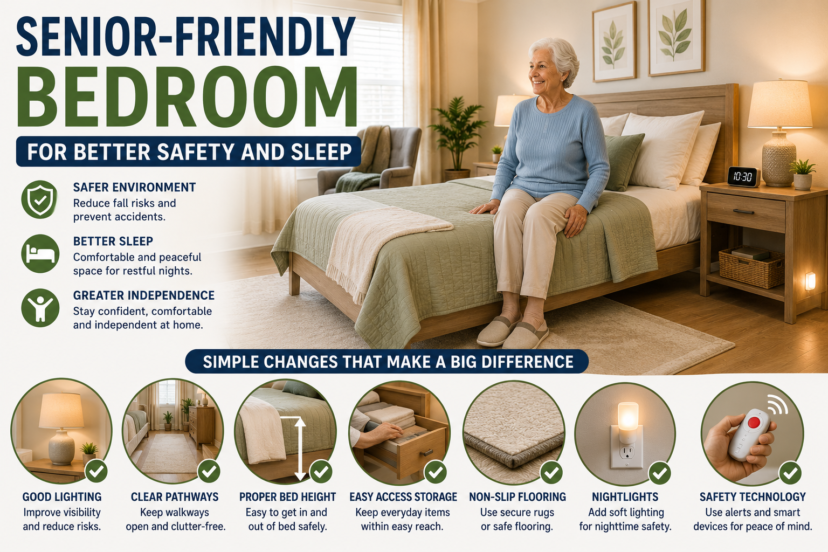
As we age, the bedroom becomes much more than a place to sleep. It’s where we begin and end each day, get dressed, relax, recover, and often spend more time than any other room in the home. A well-designed senior-friendly bedroom can make these daily routines safer, easier, and far more comfortable.
Unfortunately, many bedrooms contain hidden hazards such as poor lighting, loose rugs, cluttered walkways, or beds that are too high or too low. These issues may seem minor, but they can increase the risk of falls, disturb sleep, and make everyday tasks more difficult.
The good news is that creating a safer bedroom doesn’t require an expensive remodel. With a few thoughtful improvements, older adults can enjoy better sleep, greater independence, and increased confidence while continuing to age in place.
⭐ Quick Answer: Senior-Friendly Bedroom
A senior-friendly bedroom is designed to improve safety, comfort, accessibility, and sleep quality. Key features include proper lighting, clutter-free walkways, supportive mattresses, easy-to-reach storage, stable furniture, non-slip flooring, and simple accessibility upgrades that help older adults remain independent.
Key Takeaways
Most likely cause: Bedroom safety and accessibility problems often develop because traditional room layouts, furniture heights, lighting, flooring, and storage were not designed with changing mobility, balance, or vision needs in mind.
Usually serious? Not always, but common bedroom hazards such as loose rugs, poor lighting, unstable furniture, electrical cords, and cluttered walkways can increase the risk of trips and falls.
First thing to check: When creating a senior-friendly bedroom, start by checking the path between the bed, doorway, closet, and bathroom. Remove tripping hazards and make sure frequently used areas are well lit and easy to navigate.
Best solution: Create clear walking paths, improve lighting, secure or remove loose rugs, keep everyday items within comfortable reach, choose stable furniture, and make sure the bed is easy to get into and out of. Individual mobility or accessibility needs may require additional professional recommendations.
🛏️ Why A Senior-Friendly Bedroom Matters
The bedroom is one of the most frequently used rooms in the home, making it an important place to focus on safety and comfort.
As people grow older, common changes such as reduced balance, arthritis, vision changes, and decreased mobility can make everyday bedroom activities more challenging.
A thoughtfully designed senior-friendly bedroom helps reduce these challenges while promoting better sleep and safer movement.
Benefits include:
- Better nighttime safety
- Reduced fall risk
- Improved sleep quality
- Easier mobility
- Greater independence
- More confidence living at home
Small improvements today can make a meaningful difference for years to come.
🌙 How A Senior-Friendly Bedroom Improves Sleep
Good sleep becomes increasingly important with age.
A comfortable bedroom supports better rest by reducing interruptions and making it easier to move safely during the night.
Helpful improvements include:
- Comfortable room temperature
- Blackout curtains
- Quiet surroundings
- Supportive mattress
- Easy access to the bathroom
- Soft, adjustable lighting
Better sleep supports physical health, mood, memory, and overall quality of life.
💡 Improve Lighting Throughout The Bedroom
Lighting is one of the easiest and most affordable safety upgrades.
A well-lit senior-friendly bedroom should include multiple light sources.
Consider adding:
- Bright overhead LED lighting
- Bedside lamps with large switches
- Motion-sensor nightlights
- Closet lighting
- Hallway nightlights leading to the bathroom
Avoid dark corners that can hide obstacles.
🚶 Keep Walkways Clear And Open
Clear pathways are essential for safe movement.
Remove:
- Loose rugs
- Electrical cords
- Decorative baskets
- Shoes
- Small furniture blocking pathways
There should be a direct, unobstructed path from the bed to the bedroom door and bathroom.
🛌 Choose The Right Bed Height
A bed that is too high or too low makes getting in and out more difficult.
Ideally:
- Feet should rest flat on the floor when sitting on the edge.
- Knees should remain close to a 90-degree angle.
- Standing up should require minimal effort.
Bed risers or lower bed frames can often solve height issues.
🛏️ Select A Supportive Mattress
The mattress plays an important role in comfort and mobility.
Look for:
- Medium-firm support
- Pressure relief
- Easy movement
- Good edge support
- Durable construction
Many older adults find adjustable beds helpful for reading, watching television, or reducing pressure on joints.
🪑 Use Stable Bedroom Furniture
Furniture should provide stability rather than create hazards.
Choose:
- Solid nightstands
- Chairs with armrests
- Stable dressers
- Rounded furniture corners whenever possible
Avoid lightweight furniture that shifts easily when used for support.
📦 Organize Storage For Easy Access
Frequently used items should always be within comfortable reach.
Store:
- Everyday clothing
- Glasses
- Medications (when appropriate)
- Phone charger
- Water
- Reading materials
Avoid storing heavy items on high shelves.
Easy organization reduces bending, stretching, and climbing.
🚫 Remove Slip And Trip Hazards
Many bedroom falls happen because of small obstacles.
Inspect the room for:
- Loose rugs
- Wrinkled carpeting
- Slippery flooring
- Electrical cords
- Pet toys
- Clutter
If rugs are used, secure them with non-slip rug pads.
🌡️ Keep The Bedroom Comfortable Year-Round
Comfort affects both sleep quality and safety.
Aim for:
- Comfortable indoor temperatures
- Good airflow
- Easy-to-reach thermostat controls
- Lightweight bedding
- Humidity levels that reduce dry air
Small environmental adjustments often improve sleep considerably.
📱 Add Helpful Technology
Technology can make a senior-friendly bedroom even safer.
Useful additions include:
- Voice-controlled smart speakers
- Motion-sensor lighting
- Smart plugs
- Emergency call buttons
- Medical alert systems
- Automatic bedside lighting
These features improve convenience without adding complexity.
❤️ Small Bedroom Changes That Make A Big Difference
Many improvements are inexpensive and easy to complete.
Consider:
- ✔ Installing nightlights
- ✔ Rearranging furniture
- ✔ Replacing loose rugs
- ✔ Adding grab bars near adjoining bathrooms
- ✔ Upgrading lamp switches
- ✔ Organizing closets
- ✔ Improving bedside storage
- ✔ Installing lever-style door handles
Together, these changes create a more comfortable and secure environment.
🏡 Creating A Long-Term Aging In Place Bedroom
The best senior-friendly bedroom evolves with changing needs.
As mobility changes over time, review the room every year.
Ask yourself:
- Is the lighting still adequate?
- Is getting out of bed easy?
- Are pathways clear?
- Is storage accessible?
- Would grab bars or additional supports improve safety?
Making gradual improvements is often easier and less expensive than waiting until changes become urgent.
👷 When To Consult A Professional
Many bedroom safety improvements are simple DIY projects, but some situations call for professional guidance.
Consider consulting a qualified expert if:
- Falls have already occurred in or near the bedroom.
- Mobility limitations are increasing.
- A walker or wheelchair is being introduced.
- Structural changes, widened doorways, or accessibility renovations are needed.
- Bed transfers are becoming difficult due to medical conditions.
Professionals who can help include:
- Certified Aging-in-Place Specialists (CAPS) for home safety assessments and accessibility recommendations.
- Occupational Therapists to evaluate mobility and daily living activities.
- Home Accessibility Installers for grab bars, ramps, and other safety equipment.
- Licensed Contractors experienced with aging-in-place renovations.
- Healthcare Providers who can assess balance, vision, medications, or other factors affecting safety and sleep.
❓ FAQs: Senior-Friendly Bedroom
1. What makes a bedroom senior-friendly?
A senior-friendly bedroom includes good lighting, clutter-free walkways, supportive furniture, safe flooring, accessible storage, and features that reduce fall risk while improving comfort and sleep.
2. What is the safest flooring for a senior bedroom?
Low-pile carpet, cork flooring, luxury vinyl plank with textured finishes, and properly secured area rugs are popular choices because they provide good traction and are easier to walk on.
3. Should seniors use nightlights?
Yes. Motion-sensor nightlights or plug-in LED lights help illuminate pathways to the bathroom and reduce the risk of nighttime falls.
4. What is the best bed height for seniors?
The ideal bed height allows someone to sit with both feet flat on the floor and stand up comfortably without excessive effort.
5. Are adjustable beds helpful for older adults?
Many older adults benefit from adjustable beds because they can make getting in and out of bed easier while improving comfort for reading, sleeping, or managing certain health conditions.
6. How can caregivers improve bedroom safety?
Caregivers can improve safety by removing trip hazards, improving lighting, organizing storage, securing rugs, and ensuring frequently used items are easy to reach.
7. How often should a senior bedroom be evaluated?
Review the bedroom at least once a year or after any significant changes in health, mobility, vision, or balance to ensure it continues to meet current safety needs.
🎯 Conclusion: Senior-Friendly Bedroom
Creating a senior-friendly bedroom doesn’t require expensive remodeling or specialized design expertise. Often, a series of small improvements—better lighting, safer flooring, organized storage, and supportive furniture—can dramatically improve both safety and comfort.
By taking simple, practical steps today, older adults and caregivers can create a bedroom that promotes restful sleep, reduces fall risk, and supports independent living for years to come. Every thoughtful improvement helps make aging in place safer, easier, and more enjoyable.
Disclaimer: This article is for general informational purposes only and is not a substitute for professional medical, healthcare, or home accessibility advice. Always follow local building codes and consult qualified healthcare providers, licensed contractors, occupational therapists, or Certified Aging-in-Place Specialists (CAPS) before making significant home modifications or beginning new exercise routines.
 Explore more:
- Fall Hazards At Home For Seniors
- Best Non-Slip Flooring For Seniors
- Aging In Place Home Modifications