Best Mobility Aids For Seniors: Top Devices To Stay Independent In 2026
Growing older doesn’t mean giving up your independence. For many older adults, the right mobility aid provides the extra support needed to continue living safely, staying active, and enjoying everyday life at home and in the community. Whether you’re recovering from surgery, managing arthritis, experiencing balance changes, or simply looking for extra stability, choosing the best mobility aids for seniors can make daily activities easier and significantly reduce the risk of falls.
The encouraging news is that today’s mobility aids are more comfortable, lightweight, and user-friendly than ever before. From canes and walkers to grab bars and lift chairs, many affordable options help older adults remain independent without requiring major home renovations. This guide explains the best mobility aids available in 2026, how to choose the right one for your needs, and how these tools can support a safer, healthier, and more confident aging-in-place lifestyle.
⭐ Quick Answer: Best Mobility Aids For Seniors
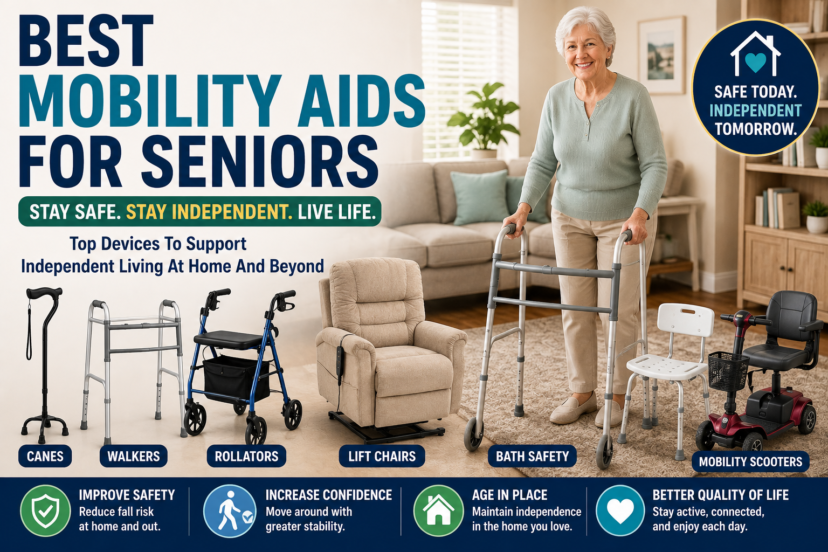
The best mobility aids for seniors depend on your balance, strength, and daily activities. Popular options include canes, walkers, rollators, grab bars, stair handrails, lift chairs, transfer benches, and mobility scooters. The right device should improve stability, reduce fall risk, increase confidence, and support safe, independent living both inside and outside the home.
Key Takeaways
Most Likely Cause: Mobility aids become helpful as balance, strength, flexibility, or endurance naturally change with age.
Usually Serious? Not necessarily. Many seniors use mobility aids proactively to stay active and reduce the risk of falls.
First Thing To Check: Identify where you feel least stable, such as walking outdoors, climbing stairs, or getting in and out of chairs or the bathtub.
Best Solution: Choose one of the best mobility aids for seniors that matches your mobility level, lifestyle, and home environment while supporting safe, independent movement.
🏡 Why Mobility Aids Can Improve Independence
Many people mistakenly believe that using a mobility aid means losing independence.
In reality, the opposite is often true.
The right device allows seniors to:
- Walk with greater confidence
- Stay physically active
- Continue shopping independently
- Visit family and friends
- Reduce fear of falling
- Maintain daily routines
Instead of limiting activity, mobility aids often make it easier to stay engaged and enjoy life.
🚶 Common Reasons Seniors Need Mobility Aids
Mobility changes happen gradually for many people.
Common reasons include:
- Arthritis
- Knee or hip pain
- Balance problems
- Muscle weakness
- Joint replacement recovery
- Osteoporosis
- Parkinson’s disease
- Stroke recovery
- Neuropathy
- Reduced endurance
Even mild mobility changes can benefit from additional support.
🦯 1. Canes
A cane is often the first mobility aid people use.
Best for:
- Mild balance issues
- Minor leg weakness
- Occasional joint pain
Benefits include:
- Lightweight
- Affordable
- Easy to transport
- Improves balance
- Reduces pressure on painful joints
Proper height adjustment is essential for comfort and safety.
🚶♂️ 2. Standard Walkers
Walkers provide greater stability than canes.
They work well for:
- Recovery after surgery
- Significant balance problems
- Lower-body weakness
Advantages include:
- Excellent stability
- Easy indoor use
- Lightweight aluminum frames
- Adjustable height
Walkers are especially helpful during rehabilitation.
🛞 3. Rollators
Rollators are walkers equipped with wheels, hand brakes, and a built-in seat.
Ideal for seniors who:
- Walk longer distances
- Tire easily
- Need occasional rest breaks
Benefits include:
- Smooth movement
- Storage baskets
- Comfortable seat
- Better outdoor mobility
Rollators are among the most popular mobility aids for active older adults.
🛵 4. Mobility Scooters
For individuals who can walk short distances but struggle with longer outings, a mobility scooter may provide greater freedom.
Common uses include:
- Grocery shopping
- Parks
- Museums
- Community events
- Medical appointments
Scooters help reduce fatigue while supporting an active lifestyle.
🪑 5. Lift Chairs
Standing up from a chair becomes more difficult with age.
Power lift chairs gently raise users into a standing position.
Benefits include:
- Reduced strain on knees
- Less pressure on hips
- Easier transfers
- Improved comfort
Many models also recline for relaxation.
🚿 6. Bathroom Mobility Aids
Bathrooms remain one of the highest-risk areas for falls.
Helpful equipment includes:
- Grab bars
- Shower chairs
- Transfer benches
- Raised toilet seats
- Handheld showerheads
- Non-slip bath mats
These inexpensive improvements greatly improve bathroom safety.
🛏️ 7. Bed Mobility Aids
Getting in and out of bed safely is important.
Helpful products include:
- Bed rails
- Transfer handles
- Adjustable beds
- Bed steps with handrails
- Overbed support poles
These devices reduce strain and improve confidence during nighttime movements.
🏠 Home Safety Equipment That Complements Mobility Aids
Mobility aids work best alongside simple home safety improvements.
Consider adding:
- Brighter lighting
- Motion-sensor nightlights
- Non-slip flooring
- Stair handrails
- Lever door handles
- Wider walkways
- Medical alert systems
- Reduced household clutter
Together, these upgrades create a safer aging-in-place environment.
💡 How To Choose The Right Mobility Aid
Not every device fits every person.
Ask yourself:
- Where do I feel unsteady?
- Do I mainly stay indoors?
- Do I walk long distances?
- Have I experienced recent falls?
- Can I safely operate brakes?
- Will I transport the device in my vehicle?
Comfort, stability, and ease of use should always come first.
Trying equipment before purchasing is often beneficial.
❤️ Benefits Beyond Physical Support
The best mobility aids for seniors offer emotional benefits as well.
Many users report:
- Greater confidence
- Less fear of falling
- Increased independence
- More social activities
- Improved quality of life
- Reduced caregiver stress
Feeling safe often encourages people to remain more physically active, which supports long-term health.
🚫 Common Mistakes To Avoid
Avoid these common errors:
- Choosing equipment without professional guidance
- Using the wrong height settings
- Ignoring worn tips or brakes
- Purchasing based only on price
- Waiting until after a serious fall
The right fit is more important than the newest model.
👷 When To Consult A Professional
If you or your loved one has experienced repeated falls, worsening balance, significant joint pain, weakness, or difficulty completing everyday tasks, consult a Certified Aging-in-Place Specialist (CAPS), occupational therapist, physical therapist, healthcare provider, or licensed home accessibility professional. These experts can evaluate your mobility, recommend the most appropriate assistive devices, and suggest home modifications that improve safety, accessibility, and independence while meeting local building codes.
❓ Frequently Asked Questions
1. What is the best mobility aid for seniors with balance problems?
Many seniors with mild balance concerns benefit from a cane, while those needing greater stability may do better with a walker or rollator. A healthcare professional can recommend the safest option.
2. How do I know if I need a walker instead of a cane?
If you frequently feel unsteady, have had falls, or need support on both sides of your body, a walker may provide better stability than a cane.
3. Are mobility scooters covered by Medicare?
In some cases, Medicare may help cover medically necessary mobility devices if specific eligibility requirements are met. Speak with your healthcare provider and Medicare plan for details.
4. Can using a mobility aid help prevent falls?
Yes. Properly fitted mobility aids can improve stability, reduce strain, and lower the risk of falls when used correctly.
5. Should I use grab bars even if I already use a walker?
Absolutely. Grab bars provide additional support in bathrooms and other areas where walkers may not be practical.
6. Can I choose my own mobility aid?
While some people purchase mobility aids independently, it’s often best to consult a healthcare provider or therapist to ensure the device fits your needs and is adjusted correctly.
7. How often should mobility aids be replaced?
Inspect mobility aids regularly for worn tips, damaged brakes, loose parts, or frame wear. Replace or repair equipment whenever safety is compromised.
🌟 Final Thoughts On Best Mobility Aids For Seniors
Choosing one of the best mobility aids for seniors isn’t about giving up independence—it’s about protecting it. The right mobility aid can help you move more confidently, stay active, reduce fall risks, and continue enjoying everyday life in the comfort of your own home.
Combined with practical home safety improvements such as better lighting, grab bars, and clutter-free walkways, mobility aids can help older adults remain independent for many years. Small investments today can make daily life safer, easier, and more enjoyable while supporting healthy aging and long-term peace of mind.
Disclaimer
This article is for general informational purposes only and should not be considered medical, healthcare, or professional accessibility advice. Always consult qualified healthcare providers, physical therapists, occupational therapists, Certified Aging-in-Place Specialists (CAPS), or other appropriate professionals before selecting mobility equipment, making significant home modifications, or beginning new exercise or rehabilitation programs. Follow local building codes and manufacturer instructions when installing accessibility or safety equipment.
 Explore more:
- Clutter And Fall Prevention For Seniors
- What Is The Walk-In Tub Cost?
- Best Medical Alert Systems For Seniors