What Is The Walk-In Tub Cost? Complete 2026 Guide To Prices And Value
As more Americans choose to remain in their own homes as they age, bathroom safety has become one of the most important parts of aging in place. One of the biggest questions homeowners ask is, what is the walk-in tub cost, and whether the investment is truly worthwhile. While a traditional bathtub may become difficult or even dangerous to use over time, a walk-in tub can make bathing safer, more comfortable, and less stressful for older adults with limited mobility or balance concerns.
The good news is that installing a walk-in tub doesn’t necessarily require a complete bathroom remodel. Today’s models come in a variety of sizes, features, and price ranges to fit different budgets and accessibility needs. Whether you’re planning ahead for yourself or helping an aging parent remain independent, understanding the costs, benefits, and available options can help you make a confident decision that supports long-term safety, comfort, and peace of mind.
⭐ Quick Answer: What Is The Walk-In Tub Cost?
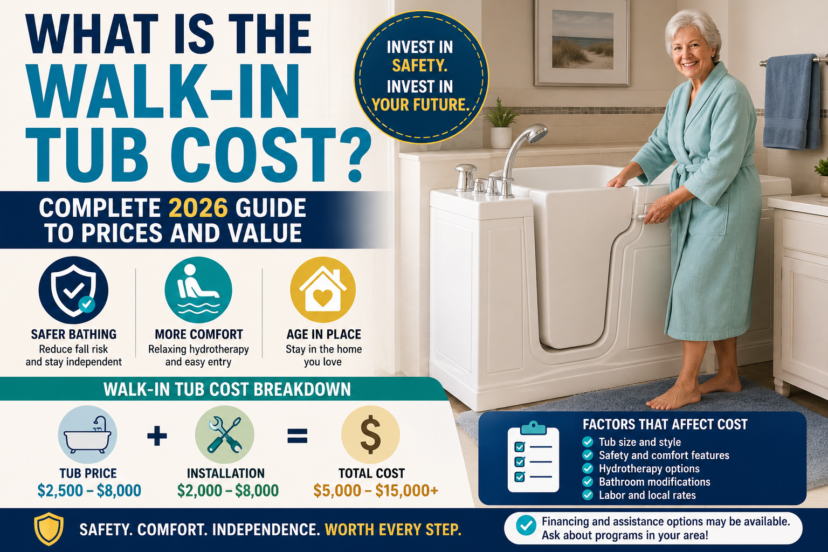
If you’re wondering what is the walk-in tub cost, most homeowners can expect to pay between $2,500 and $8,000 for the tub itself, while professional installation may add $2,000 to $8,000 or more, depending on plumbing, electrical work, and bathroom modifications. Total project costs commonly range from $5,000 to $15,000, although luxury models with hydrotherapy features may cost more.
Key Takeaways
Most Likely Cause: Many homeowners consider a walk-in tub after mobility changes, balance issues, or concerns about safely stepping over a traditional bathtub.
Usually Serious? It can be. Bathroom falls are a leading cause of injuries among older adults.
First Thing To Check: Measure your bathroom space and determine whether your plumbing and electrical systems can support a walk-in tub installation.
Best Solution: Understanding what the walk-in tub cost is helps you compare models, installation expenses, safety features, and financing options before making an investment.
🏡 Why More Seniors Are Choosing Walk-In Tubs
Bathrooms are among the most common places where falls occur. Stepping over the high side of a traditional bathtub can become increasingly difficult due to:
- Reduced balance
- Arthritis
- Knee or hip pain
- Muscle weakness
- Limited flexibility
- Recovery after surgery
Walk-in tubs reduce many of these risks by allowing users to enter through a watertight door and sit comfortably while bathing.
For many families, the added safety and confidence are well worth the investment.
💰 What Affects The Walk-In Tub Cost?
Several factors influence the total project price.
Tub Size
Larger tubs generally cost more than compact models designed to fit standard bathtub spaces.
Safety Features
Additional features may include:
- Low step-in threshold
- Built-in grab bars
- Anti-slip flooring
- Heated seats
- Quick-drain systems
More advanced safety options often increase the overall price.
Hydrotherapy Features
Premium models may offer:
- Whirlpool jets
- Air massage
- Heated backrests
- Chromotherapy lighting
- Aromatherapy
While these features add comfort, they also increase costs.
Installation Complexity
The installation cost depends on factors such as:
- Plumbing relocation
- Electrical upgrades
- Flooring modifications
- Door widening
- Water heater capacity
Simple replacements typically cost less than major bathroom renovations.
🚿 Average Walk-In Tub Price Ranges
Although prices vary by manufacturer, most homeowners can expect the following ranges.
Basic Models
Typical price:
- $2,500–$4,000 (tub only)
Best for:
- Basic safety
- Limited budgets
- Standard bathing needs
Mid-Range Models
Typical price:
- $4,000–$7,000
Often include:
- Better seating
- Faster draining
- Improved comfort
- Additional safety features
Luxury Models
Typical price:
- $7,000–$12,000+
May include:
- Whirlpool therapy
- Heated surfaces
- Premium finishes
- Multiple massage options
- Advanced controls
🔨 Installation Costs
Professional installation is strongly recommended.
Depending on your home, installation may involve:
- Removing the old bathtub
- Plumbing adjustments
- Electrical work
- Wall repairs
- New flooring
- Waterproofing
Installation commonly ranges from:
- $2,000–$8,000
More complicated renovations may exceed this range.
❤️ Benefits Beyond Safety
Many homeowners initially shop for a walk-in tub because of fall concerns.
However, additional benefits often include:
- Greater independence
- Easier bathing
- Reduced caregiver assistance
- Improved comfort
- Better relaxation
- Less anxiety about slipping
- Increased confidence at home
For many seniors, these improvements contribute significantly to quality of life.
🛁 Is A Walk-In Tub Worth The Investment?
For the right homeowner, the answer is often yes.
A walk-in tub may be especially worthwhile if you:
- Plan to age in place
- Have arthritis
- Experience balance issues
- Recently had joint replacement surgery
- Have limited mobility
- Need caregiver assistance while bathing
Although the upfront cost may seem high, preventing even one serious fall could help avoid expensive medical bills and lengthy recovery.
📋 Alternatives To A Walk-In Tub
Not everyone needs a full tub replacement.
Lower-cost bathroom safety improvements include:
- Grab bars
- Shower chairs
- Handheld showerheads
- Raised toilet seats
- Non-slip flooring
- Walk-in showers
- Better lighting
These upgrades may provide adequate safety for people with mild mobility limitations.
💡 Ways To Save Money
If you’re concerned about cost, consider these strategies.
Request Multiple Estimates
Compare quotes from several licensed contractors.
Ask About Financing
Many manufacturers offer payment plans.
Look For Local Assistance Programs
Some nonprofit organizations, veterans’ benefits, Medicaid waiver programs, or state aging agencies may provide financial assistance for accessibility improvements.
Install Before An Emergency
Planning ahead often allows more time to compare prices and avoid rushed decisions.
🏠 Other Bathroom Improvements That Complement A Walk-In Tub
To maximize safety, combine your walk-in tub with:
- ✔ Grab bars
- ✔ Bright LED lighting
- ✔ Motion-sensor nightlights
- ✔ Non-slip flooring
- ✔ Lever faucet handles
- ✔ Comfort-height toilets
- ✔ Wider doorways if needed
Together, these improvements create a safer bathroom for long-term independent living.
👷 When To Consult A Professional
Before investing in a walk-in tub, consider consulting a Certified Aging-in-Place Specialist (CAPS), occupational therapist, healthcare provider, licensed contractor, or home accessibility installer. These professionals can evaluate your mobility needs, assess your bathroom layout, recommend the most appropriate accessibility features, and determine whether a walk-in tub, walk-in shower, or other modifications may better suit your situation. They can also ensure that installation complies with local building codes and safety standards.
❓ Frequently Asked Questions
1. What is the average walk-in tub cost?
Most homeowners spend between $5,000 and $15,000 for the tub and professional installation combined, depending on the model and bathroom modifications required.
2. Does Medicare pay for walk-in tubs?
Original Medicare generally does not cover walk-in tubs. However, some Medicare Advantage plans, Medicaid waiver programs, veterans’ benefits, or local assistance programs may help with accessibility improvements.
3. How long does installation take?
Many installations can be completed in one to three days, although more extensive bathroom remodeling may take longer.
4. Do walk-in tubs increase home value?
While they may appeal to buyers seeking accessible homes, walk-in tubs are primarily considered a lifestyle and safety investment rather than a guaranteed home value upgrade.
5. Can a walk-in tub fit where my old bathtub is?
In many cases, yes. Many walk-in tubs are designed to fit into the space occupied by a standard bathtub, although plumbing or structural modifications may still be necessary.
6. Are walk-in tubs difficult to clean?
No. Most models feature durable acrylic surfaces that are relatively easy to clean using non-abrasive household cleaners.
7. Is a walk-in tub better than a walk-in shower?
It depends on your needs. A walk-in tub offers seated bathing and therapeutic features, while a walk-in shower may be more suitable for wheelchair users or those who prefer standing showers with minimal step-in height.
🎯 Conclusion: What Is The Walk-In Tub Cost
If you’ve been asking, what is the walk-in tub cost, remember that the answer involves more than the purchase price alone. A walk-in tub is an investment in safety, comfort, and independence that can help older adults remain in their own homes with greater confidence. While the upfront expense may seem significant, many families find that the added peace of mind and reduced fall risk make it a worthwhile long-term improvement.
By comparing models, understanding installation costs, and exploring available financial assistance, you can choose a solution that fits your budget while supporting a safer, more enjoyable aging-in-place lifestyle.
Disclaimer
This article is for general informational purposes only and should not be considered medical, healthcare, financial, or home accessibility advice. Always consult qualified healthcare providers, Certified Aging-in-Place Specialists (CAPS), licensed contractors, occupational therapists, or other appropriate professionals before making significant home modifications. Follow local building codes, manufacturer instructions, and safety recommendations when installing accessibility equipment or remodeling your bathroom.
 Explore more:
- Clutter And Fall Prevention For Seniors
- Aging In Place Home Safety
- Best Medical Alert Systems For Seniors