Best Night Lights For Seniors: 10 Safer Ways To Prevent Falls After Dark
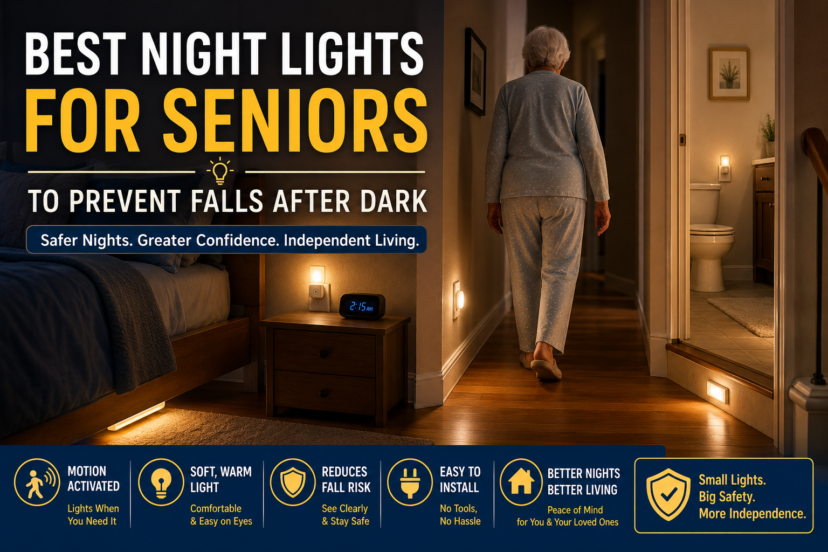
Choosing the best night lights for seniors is one of the simplest and most affordable ways to improve nighttime safety without remodeling the home. The right lighting can illuminate walking paths, highlight changes in floor level, make bathroom fixtures easier to see, and reduce the need to search for a wall switch in the dark.
This matters because vision commonly changes with age, and navigating unfamiliar or poorly illuminated spaces can become more difficult. Fortunately, improving nighttime lighting does not have to mean keeping bright overhead lights on all night.
With carefully positioned night lights, motion sensors, and low-level pathway lighting, older adults can move around their homes with greater confidence while maintaining a comfortable environment for sleep.
💡 Quick Answer: Best Night Lights For Seniors
The best night lights for seniors provide soft, dependable illumination along common nighttime walking routes without creating harsh glare. Motion-activated plug-in lights, low-level LED pathway lights, illuminated outlet covers, and under-bed motion lights are useful options. Prioritize automatic operation, easy installation, adequate brightness, and strategic placement between the bed, bathroom, hallway, and stairs.
Key Takeaways
- Most likely cause: Poor nighttime visibility, glare, shadows, and difficulty locating switches can make moving around after dark more challenging.
- Usually serious? Poor lighting alone may seem minor, but it can contribute to dangerous trips and falls, especially when combined with balance or mobility limitations.
- First thing to check: Walk the normal nighttime route from the bedroom to the bathroom and identify dark areas, obstacles, stairs, and sudden changes in lighting.
- Best solution: Choose the best night lights for seniors for each location, focusing on automatic, low-level lighting that clearly illuminates the walking path without excessive glare.
🌙 Why Nighttime Lighting Becomes More Important With Age
A home that feels perfectly easy to navigate during the day can feel completely different after the lights go out.
Age-related vision changes may make it harder to adjust quickly between darkness and bright light, distinguish objects from their surroundings, or see clearly in low-light conditions. Prescription medications, fatigue, mobility limitations, and the need to use the bathroom during the night can add to the challenge.
The solution is not necessarily brighter lighting everywhere.
Very bright lights can create uncomfortable glare and abrupt changes in illumination. Instead, the goal should be consistent, gentle lighting that helps someone recognize the floor, furniture, doorways, and other important features.
A useful nighttime lighting plan creates an easy-to-follow visual path through the home.
🏠 Best Types Of Night Lights For Seniors
Different rooms may require different solutions. Instead of purchasing identical lights for the entire house, think about how each space is actually used after dark.
1. Motion-Activated Plug-In Night Lights
For many households, motion-activated plug-in lights are one of the easiest solutions.
They remain off or dim until movement is detected and then automatically illuminate the area.
They work particularly well in:
- Hallways
- Bathrooms
- Bedrooms
- Entryways
- Near Stair Landings
Automatic operation means there is no need to find a small switch in the dark.
When choosing motion lights, check the detection range and how long the light remains illuminated. You want enough time to move comfortably through the space.
2. Dusk-To-Dawn Night Lights
Dusk-to-dawn lights contain sensors that automatically switch the light on as the room becomes dark.
These are useful when you want consistent low-level illumination throughout the night.
A hallway between the bedroom and bathroom, for example, can remain softly illuminated without anyone having to remember to turn the light on.
LED versions typically use very little electricity and may last for years under normal use.
3. Under-Bed Motion Lights
Under-bed lighting can be particularly helpful for nighttime bathroom trips.
A motion sensor detects when someone gets out of bed and activates a low-level strip or similar light beneath the bed.
Because the light is positioned near floor level, it can illuminate the immediate walking area without filling the entire bedroom with bright light.
Make sure cords and components are secured so the lighting itself does not create a trip hazard.
4. LED Pathway Lights
Small LED lights positioned near floor level can create a visual route through longer hallways or open areas.
The goal is similar to pathway lighting outdoors: show someone where to walk without overwhelming the space with unnecessary brightness.
The best night lights for seniors should make the route obvious while keeping floors free from cords and obstacles.
5. Illuminated Outlet Covers
Some replacement outlet covers include built-in LED lights that automatically illuminate when the room becomes dark.
They can provide low-level lighting without occupying an electrical receptacle with a traditional plug-in night light.
Installation requirements vary. If electrical work is involved or you are unsure how to install the device safely, use a qualified electrician.
6. Rechargeable Night Lights
Rechargeable lights provide more flexibility because they do not always need to remain plugged into an outlet.
Some attach magnetically or use removable mounts, making them convenient for areas without well-positioned receptacles.
Check battery life regularly. A rechargeable light is only helpful if it is charged when needed.
7. Battery-Powered Motion Lights
Battery-powered lights can be installed in locations where outlets are unavailable.
They can work well near closets, stairs, doorways, or other dark corners.
The main disadvantage is maintenance. Batteries should be checked and replaced before the light becomes unreliable.
8. Bathroom Night Lights
Bathrooms deserve special attention because nighttime bathroom trips are common and bathrooms may contain hard surfaces, thresholds, rugs, or wet floors.
Low-level motion lighting can make the toilet, sink, doorway, and walking path easier to identify.
Avoid relying on decorative lights that illuminate only the toilet bowl while leaving the surrounding floor dark. The priority is seeing the entire walking route safely.
9. Stairway Lighting
Stairs require more than a tiny night light at one end of the staircase.
Ideally, lighting should make individual steps, landings, and handrails easier to recognize.
Depending on the home, this may involve wall-mounted step lights, motion-activated fixtures, or properly positioned hallway lighting.
Stairs are one area where professional guidance may be worthwhile if the existing lighting is inadequate.
10. Smart Night Lights
Smart lights offer more control for older adults who are comfortable with technology.
Lights can potentially be scheduled to turn on automatically at sunset, controlled with voice commands, or integrated with motion sensors.
For example, saying “turn on the hallway lights” may be easier than walking across a dark room to reach a switch.
However, technology should simplify the home rather than complicate it. A basic automatic night light may be better than a smart system requiring multiple apps and settings.
🔍 What To Look For In The Best Night Lights For Seniors
There is no single night light that is perfect for every older adult. Look for features that match the home’s layout and the person’s needs.
Automatic Operation
Motion or darkness sensors remove the need to locate switches.
Comfortable Brightness
The light should illuminate the floor and nearby obstacles clearly without producing uncomfortable glare.
Reliable Performance
Avoid devices that frequently disconnect, require complicated resets, or depend entirely on an internet connection for basic operation.
Simple Installation
Plug-in and battery-powered lights can usually be installed without modifying the home.
Secure Placement
Night lights, electrical cords, and battery packs should never become new trip hazards.
Easy Maintenance
Choose products with long-lasting LEDs and accessible batteries or charging ports.
The best aging-in-place products are often the ones people can use every day without thinking about them.
🛏️ Where Should Night Lights Be Placed?
Placement can matter as much as the type of night light you buy.
Start in the bedroom and follow the route someone would normally take during the night.
Pay special attention to:
- Beside Or Near The Bed
- Bedroom Doorways
- Hallways
- Stairways And Landings
- Bathroom Entrances
- Inside Bathrooms
- Changes In Floor Level
- Areas Near Furniture Or Corners
Lights should overlap enough that someone does not repeatedly walk from a lit area into complete darkness.
If possible, evaluate the route after sunset rather than relying on how it looks during daylight hours.
⚠️ Night-Light Mistakes That Can Increase Fall Risk
Installing more lights does not automatically create a safer environment.
One common mistake is using a single extremely bright night light. Bright points of light surrounded by darkness can create glare and make nearby objects more difficult to distinguish.
Another mistake is putting lights too far apart.
Also avoid:
- Loose Extension Cords Across Walking Areas
- Unsecured LED Strips
- Lights Blocked By Furniture
- Motion Sensors That Activate Too Late
- Batteries That Are Rarely Checked
- Lights That Shine Directly Into The Eyes
- Creating Strong Bright-To-Dark Transitions
Test the lighting from the perspective of the person who will actually use it.
🚶 Combine Night Lights With Other Fall-Prevention Strategies
Even the best night lights for seniors cannot eliminate every fall hazard.
Lighting works best as one part of a broader home safety plan.
Clear the route between the bed and bathroom of shoes, electrical cords, baskets, and unnecessary furniture. Secure or remove loose rugs that can slide or catch a foot.
Make sure frequently used walking routes have stable flooring and adequate hand support where appropriate.
Also consider whether the bed height makes getting up difficult. Someone who feels unsteady immediately after standing may need more than additional lighting.
A safer nighttime environment combines good visibility with clear pathways and appropriate mobility support.
🛒 How Many Night Lights Does A Senior Need?
There is no ideal number.
Instead of counting lights, focus on creating continuous visibility along important nighttime routes.
A small one-bedroom home might require only a few carefully positioned lights. A two-story house may need considerably more, particularly around hallways and staircases.
Start with the route from the bed to the bathroom because it is often one of the most frequently traveled paths after dark.
Then evaluate stairs, the kitchen, entryways, and other areas the person may use at night.
You can always add additional lighting after testing the initial setup.
👷 When To Consult A Professional
Night lights are a simple safety improvement, but repeated falls or difficulty navigating the home may indicate a need for a more complete evaluation.
Consider consulting a healthcare provider or occupational therapist if an older adult has experienced falls, dizziness, major vision changes, balance difficulties, or significant changes in mobility.
A certified aging-in-place specialist (CAPS), home accessibility professional, qualified contractor, or electrician may be helpful when improving stairway lighting, adding permanent fixtures, installing new electrical outlets, or making larger accessibility modifications.
Professional guidance can help ensure improvements address the person’s individual needs rather than relying on a one-size-fits-all approach.
❓ FAQs: Best Night Lights For Seniors
What Are The Best Night Lights For Seniors?
Motion-activated and dusk-to-dawn LED lights are often practical choices because they operate automatically. Look for comfortable brightness, reliable sensors, simple installation, and placement that clearly illuminates walking paths.
What Color Night Light Is Best For Seniors?
A warm or soft light is often more comfortable at night than a harsh, cool-toned light. However, visibility is the priority. Choose lighting that allows the individual to clearly distinguish the floor, obstacles, steps, and doorways without uncomfortable glare.
Are Motion-Sensor Night Lights Good For Seniors?
Yes, they can be especially useful because they activate automatically when someone gets out of bed or enters a hallway. Make sure the sensor detects movement early enough to illuminate the route before the person reaches a dark area.
Where Should Night Lights Be Placed For Fall Prevention?
Focus on bedrooms, hallways, bathrooms, stairs, landings, and changes in floor level. The walking route between the bed and bathroom is a particularly important place to evaluate.
Should Seniors Leave A Night Light On All Night?
A low-level dusk-to-dawn light can remain on throughout the night if it provides useful visibility without disturbing sleep. Motion-activated lights are another option when continuous illumination is unnecessary.
How Bright Should A Night Light Be For An Older Adult?
It should be bright enough to identify the floor, obstacles, furniture, and changes in elevation without creating excessive glare. The ideal brightness depends on the person’s vision and the room’s layout.
Can Night Lights Prevent Falls In Older Adults?
Night lights cannot guarantee that a fall will not occur, but improved nighttime visibility can address one important environmental risk factor. Lighting should be combined with clear pathways, stable flooring, appropriate handrails or grab bars, and professional assessment when needed.
🎯 Final Thoughts On Best Night Lights For Seniors
Creating a safer home does not always require an expensive renovation.
Sometimes the biggest improvements come from noticing the small difficulties that happen every day—or every night.
Installing the best night lights for seniors along the route between the bedroom and bathroom can be an inexpensive place to start. From there, look at hallways, stairs, entrances, and other areas where darkness could make movement more difficult.
The goal is not to light the home like daytime. It is to create gentle, consistent visibility that helps an older adult understand exactly where they are stepping.
A few thoughtfully placed lights, combined with clear pathways and other basic safety improvements, can help make nighttime movement less stressful and support the confidence and independence that make aging at home more comfortable.
Disclaimer: This article is for general informational purposes only and is not a substitute for professional medical, healthcare, home safety, or accessibility advice. Follow applicable local building and electrical codes and product instructions. Consult qualified healthcare providers, occupational therapists, contractors, electricians, or certified aging-in-place specialists before making significant home modifications or beginning new exercise routines.
 Explore more:
- How To Help Aging Parents Stay At Home?
- Best Smart Home Devices For Seniors
- Best Mobility Aids For Seniors