Helping Elderly Parents: 12 Biggest Mistakes Families Make And How To Avoid Them
Growing older at home can provide something deeply valuable: familiarity, independence, privacy, and a sense of control. But when parents begin needing more assistance, even well-meaning families can accidentally make changes that create frustration rather than making daily life easier. When helping elderly parents, the goal should not be to take over everything they do. A better approach is to identify the areas where a little support can reduce risk while allowing your parents to continue making choices and doing as much as they safely can for themselves.
That might mean improving bathroom safety, organizing medications, adding better lighting, simplifying household chores, or simply having a conversation about what is becoming difficult.
Fortunately, supporting aging parents does not always require expensive renovations or dramatic lifestyle changes. Small, thoughtful improvements can make a home safer, easier to navigate, and more comfortable while helping preserve the independence that matters so much to older adults.
💡 Quick Answer: What Are The Biggest Mistakes When Helping Elderly Parents?
The biggest mistakes when helping elderly parents include taking over too quickly, ignoring their preferences, waiting for an accident before improving home safety, overlooking mobility changes, and trying to handle every caregiving responsibility alone. Families can often provide better support by planning early, making gradual safety improvements, encouraging independence, and involving qualified professionals when necessary.
Key Takeaways
Most likely cause: Families often make mistakes because they react to problems instead of creating an aging-in-place plan before needs become urgent.
Usually serious? Not every mistake creates an immediate danger, but overlooked fall hazards, medication problems, mobility limitations, and inaccessible home features can become significant safety concerns.
First thing to check: Walk through the home with your parent and identify what feels difficult, unsafe, tiring, or frustrating during everyday activities.
Best solution: When helping elderly parents, focus on gradual improvements that increase safety while preserving independence, dignity, comfort, and personal choice.
🏠 1. Taking Over Before Help Is Actually Needed
One of the easiest mistakes to make is assuming that helping means doing everything for an aging parent.
Adult children may begin shopping, cooking, cleaning, driving, paying bills, or organizing appointments because they want life to be easier. But taking over tasks that a parent can still perform safely may unintentionally reduce independence.
Instead, look for ways to provide the minimum effective assistance.
For example:
- Carry heavy groceries while your parent organizes them.
- Arrange transportation for difficult trips while allowing safe local driving when appropriate.
- Hire occasional yard help instead of taking over the entire household.
- Install easier-to-use hardware instead of assuming a task can no longer be performed.
Supporting independence often means making activities easier rather than eliminating them.
🗣️ 2. Making Decisions Without Including Your Parents
Families sometimes begin discussing what Mom or Dad “needs” without actually asking them.
This can quickly create resistance.
Whenever possible, involve your parents in decisions about their home, routines, transportation, caregiving, finances, and future plans.
Try questions such as:
- “Is anything around the house becoming harder lately?”
- “What would make the bathroom easier to use?”
- “Are there chores you’d rather have someone else handle?”
- “What would help you feel more comfortable staying here?”
When helping elderly parents, collaboration can make changes feel like improvements rather than restrictions.
⚠️ 3. Waiting For A Fall Before Improving Home Safety
Families often become serious about fall prevention only after someone falls.
A proactive home safety check is much better.
According to the CDC, falls are a major health concern for adults age 65 and older. Many everyday household conditions can also make navigating a home more difficult.
Look for:
- Loose rugs
- Electrical cords across walkways
- Poorly illuminated stairs
- Cluttered hallways
- Slippery bathroom surfaces
- Missing stair handrails
- Difficult bathtub entrances
- Frequently used items stored too high
Many improvements are inexpensive.
Removing a loose rug costs nothing. Better lighting, nonslip surfaces, sturdy handrails, and professionally installed grab bars can also make everyday movement safer.
🚶 4. Ignoring Small Changes In Mobility
Mobility changes are not always dramatic.
A parent might begin holding onto furniture, hesitating before stepping into the bathtub, struggling to rise from a chair, or avoiding stairs.
These changes deserve attention.
Instead of simply saying, “Be careful,” determine what is making the activity difficult.
Possibilities include reduced strength, balance problems, pain, vision changes, medication side effects, inappropriate footwear, or an environment that has become harder to navigate.
An occupational therapist, physical therapist, or healthcare provider may be able to evaluate the problem and recommend appropriate strategies.
The earlier families notice mobility challenges, the easier it may be to adapt the home.
🛁 5. Overlooking The Bathroom
If you are helping elderly parents remain at home, the bathroom deserves special attention because it combines slippery surfaces, water, hard fixtures, and movements such as sitting, standing, bending, and stepping.
Simple improvements may include:
- Nonslip flooring or surfaces
- Brighter lighting
- Accessible storage
- A hand-held showerhead
- A shower chair when appropriate
- A comfort-height toilet
- Properly installed grab bars
Avoid relying on towel racks as grab bars. They generally are not designed to support a person’s body weight.
For major accessibility work, consult a qualified contractor or Certified Aging-in-Place Specialist (CAPS).
💊 6. Assuming Medication Management Is Under Control
Medication routines can become complicated, particularly when several prescriptions, over-the-counter products, or supplements are involved.
Families should not independently change medication schedules, but they can help make the system easier to manage.
With the parent’s permission, consider keeping an updated medication list and reviewing it with their healthcare provider or pharmacist.
Ask about:
- Duplicate medications
- Possible interactions
- Difficult schedules
- Side effects
- Dizziness or drowsiness
- Trouble opening containers
A simple organizational system may reduce confusion, but medication concerns should always be discussed with qualified healthcare professionals.
💡 7. Underestimating The Importance Of Lighting
Lighting is one of the simplest aging-in-place improvements, yet it is frequently overlooked.
Older adults may benefit from additional illumination for stairs, hallways, entrances, bathrooms, kitchens, and nighttime routes between the bedroom and bathroom.
Consider:
- Brighter appropriate bulbs
- Motion-activated night lights
- Illuminated light switches
- Stair lighting
- Bedside lamps within easy reach
- Exterior motion lighting
Also reduce glare whenever possible. More light is useful only when it improves visibility and comfort.
🧹 8. Focusing On Big Renovations Instead Of Everyday Problems
Families sometimes assume aging in place requires remodeling an entire house.
It often doesn’t.
Before considering major construction, observe the small frustrations your parent experiences every day.
Perhaps a cabinet is difficult to reach. A doorknob is painful to turn. The laundry basket is too heavy. The microwave is positioned awkwardly.
Solutions could be surprisingly simple:
- Lever-style door handles
- Pull-out shelves
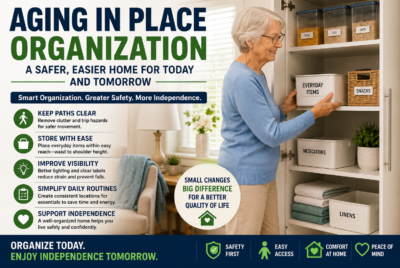
- Frequently used items moved between waist and shoulder height
- Lightweight cleaning equipment
- Easy-grip kitchen tools
- A rolling laundry cart
Effective help for elderly parents often comes from solving dozens of small inconveniences rather than completing one enormous renovation.
📱 9. Buying Technology That Is Too Complicated
Smart home technology can support independent living, but only when the person actually feels comfortable using it.
Families sometimes purchase complicated devices and assume their parents will adapt.
Start with technology that solves a specific problem.
Useful examples may include video doorbells, voice assistants, automatic lighting, smart thermostats, medication reminders, or medical alert systems.
Keep interfaces simple, write down instructions, and practice using important features together.
The best technology is not necessarily the most advanced. It is the technology your parent will reliably use.
❤️ 10. Forgetting About Social Connection
Home safety is important, but quality of life involves much more than preventing accidents.
Isolation can become a concern when an older adult stops driving, loses a spouse, develops mobility limitations, or gradually participates in fewer activities.
When helping elderly parents, consider how they will maintain relationships and meaningful routines.
That could involve family dinners, senior center activities, community groups, hobbies, volunteer opportunities, faith communities, neighborhood walks, or regular calls with friends.
A safer home should support a fuller life—not simply create a protected environment.
📋 11. Waiting Until A Crisis To Discuss The Future
Emergency situations are terrible times to begin discussing long-term plans.
Families benefit from having conversations while parents can participate fully and everyone has time to consider the options.
Topics may include:
- Preferred living arrangements
- Transportation
- Household assistance
- Emergency contacts
- Healthcare preferences
- Financial organization
- Important documents
- Future accessibility needs
You do not need to solve everything during one conversation.
Think of aging-in-place planning as an ongoing family discussion that changes as circumstances change.
👨👩👧 12. Trying To Handle Everything Yourself
Supporting an aging parent can gradually become a second job.
One family member may end up coordinating appointments, groceries, transportation, repairs, medications, paperwork, and household tasks.
Eventually, that system can become difficult to sustain.
Divide responsibilities when possible. One person might manage appointments while another handles groceries or home maintenance.
Outside assistance may also be useful.
Depending on your parent’s needs and resources, options might include meal delivery, transportation programs, housekeeping, home health services, adult day programs, or local aging services.
Accepting help is not giving up responsibility. It can make the support system more sustainable.
🛠️ A Better Approach To Helping Elderly Parents Age In Place
Rather than attempting to “senior-proof” the entire house overnight, start with the places and activities your parent uses most.
Walk through a normal day together.
Watch how your parent gets out of bed, enters the bathroom, prepares breakfast, reaches cabinets, uses stairs, collects mail, does laundry, and gets in and out of the house.
Then ask three simple questions:
Is it safe? Is it comfortable? Is there an easier way?
Prioritize changes that solve real problems.
You might spend the first weekend removing clutter and improving lighting. Later, you might add handrails or reorganize the kitchen.
If mobility needs change, larger accessibility modifications can be considered.
This gradual approach keeps costs manageable while making helping elderly parents feel less overwhelming for everyone involved.
👷 When To Consult A Professional
Some aging-in-place challenges require more than a DIY solution.
Consider consulting a Certified Aging-in-Place Specialist (CAPS), occupational therapist, accessibility contractor, physical therapist, or healthcare provider when your parent experiences repeated falls, significant balance problems, difficulty transferring between surfaces, sudden mobility changes, or increasing difficulty completing everyday activities.
Professional guidance is also advisable before major modifications such as ramps, widened doorways, accessible showers, stair lifts, structural grab-bar installations, or substantial electrical and plumbing changes.
Healthcare professionals should evaluate new or worsening weakness, dizziness, confusion, pain, or other health-related changes.
❓ FAQs About Helping Elderly Parents
How Can I Help My Elderly Parents Stay Independent?
Focus on supporting activities they can still perform safely. Improve lighting, reduce household hazards, simplify difficult tasks, arrange assistance where genuinely needed, and involve your parents in decisions about their daily lives.
What Do Aging Parents Need Most?
Needs vary widely, but many older adults value safety, independence, social connection, reliable transportation, manageable household routines, appropriate healthcare, and having control over decisions affecting their lives.
How Can I Make My Elderly Parent’s Home Safer?
Start by improving lighting, clearing walking paths, securing or removing loose rugs, checking stair railings, reducing bathroom slip hazards, and keeping frequently used items within comfortable reach.
What Should I Do If My Elderly Parent Refuses Help?
Begin by listening rather than arguing. Determine why the proposed assistance feels unnecessary or uncomfortable. Offering smaller choices and involving your parent in the solution may produce better results than trying to impose major changes.
When Should Elderly Parents No Longer Live Alone?
There is no single age when someone should stop living alone. The decision depends on factors such as mobility, cognition, ability to manage daily activities, medication safety, nutrition, emergency response capabilities, and available support. A professional assessment can help when concerns arise.
How Can I Help Aging Parents Without Taking Away Their Independence?
Offer assistance with specific difficult or risky tasks while allowing your parents to continue doing activities they can safely manage. Adaptive equipment and small home modifications can sometimes preserve abilities that might otherwise be lost.
What Home Improvements Are Best For Aging In Place?
Useful improvements commonly include better lighting, sturdy handrails, safer bathroom features, accessible entrances, nonslip surfaces, lever-style handles, easier-to-reach storage, and reduced tripping hazards. The best modifications depend on the individual and the home.
🏡 Final Thoughts On Helping Elderly Parents
Helping elderly parents successfully is less about taking control and more about creating the right environment for them to continue living their lives.
Start small. Clear one dangerous walkway. Improve one poorly lit staircase. Reorganize one difficult cabinet. Ask your parent which daily task they would most like to make easier.
Those modest improvements can add up to a home that feels safer, more comfortable, and easier to manage.
Most importantly, keep your parent involved. Aging in place works best when safety and independence are treated as partners rather than competing goals.
With thoughtful planning, practical home improvements, appropriate professional guidance, and open family communication, many older adults can continue enjoying the familiarity and independence of home while families gain greater peace of mind.
Disclaimer: This content is for general informational purposes only and is not a substitute for professional medical, healthcare, mobility, or home accessibility advice. Follow applicable local building codes and consult qualified healthcare providers, contractors, occupational or physical therapists, or Certified Aging-in-Place Specialists before making significant home modifications or beginning a new exercise or mobility routine.
 Explore more: