
Aging In Place Organization: 15 Smart Ways To Make Your Home Safer And Easier To Live In
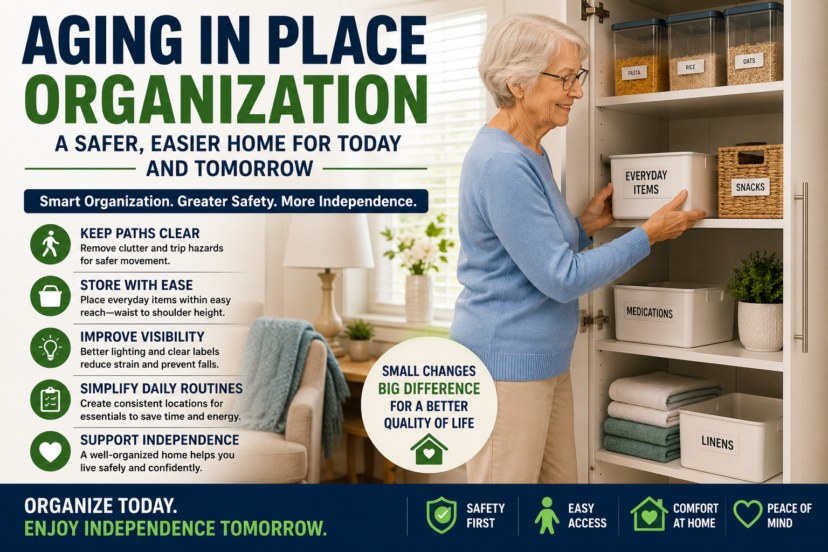
A home does not have to be perfectly tidy to be safe and comfortable. But when everyday items become difficult to reach, hallways fill with clutter, or frequently used belongings are stored too high or too low, simple routines can become unnecessarily tiring. Thoughtful aging in place organization can make a surprisingly big difference. Instead of focusing on having a picture-perfect home, the goal is to arrange belongings around how you actually live. That means keeping important items within comfortable reach, creating clear walking paths, reducing unnecessary bending and climbing, and making frequently used things easier to find.
These changes can help older adults preserve energy, reduce frustration, and move through the home with greater confidence. Better yet, many improvements cost little or nothing.
Whether you are preparing your own home for the future or helping a parent, you can start one drawer, shelf, or room at a time and gradually create a home that supports independence rather than making daily life harder.
🏠 Quick Answer: Aging In Place Organization
Good aging in place organization means arranging the home so frequently used items are easy to see, reach, and use without unnecessary bending, stretching, climbing, or carrying. Start by clearing walking paths, removing trip hazards, moving everyday items between knee and shoulder height, improving lighting, and creating consistent storage locations. The goal is not minimalism—it is making everyday life safer and simpler.
Key Takeaways
- Most likely cause: Clutter, inconvenient storage, poor lighting, and frequently used items stored too high or low can make everyday activities more difficult.
- Usually serious? Disorganization is not necessarily dangerous by itself, but cluttered walking paths and difficult-to-reach storage can contribute to falls and unnecessary physical strain.
- First thing to check: Walk through the home and identify cluttered pathways, loose rugs, electrical cords, unstable storage, and everyday items that require excessive reaching or bending.
- Best solution: Use aging in place organization to create clear walking routes, easy-to-reach storage, simple routines, and predictable locations for important household items.
🌿 Why Home Organization Matters More As We Age
The way a home is organized can quietly affect almost every part of daily life.
Think about how many times you reach into a cabinet, bend toward a drawer, carry something from one room to another, or step around an object during a normal day.
When strength, balance, vision, flexibility, or mobility changes, those small movements can require more effort.
A mixing bowl stored above the refrigerator may require a step stool. A laundry basket in a hallway may narrow the walking path. Shoes left beside the front door can become trip hazards.
Better organization removes unnecessary obstacles.
It can also make the home easier for family members and caregivers to navigate without making the older adult feel as though someone has taken control of their personal space.
🚶 1. Start With Clear Walking Paths
Before buying storage bins or reorganizing closets, focus on the floor.
Walk through every major route in the house, especially:
- Bedroom To Bathroom
- Bedroom To Kitchen
- Living Room To Bathroom
- Hallways
- Stairways And Landings
- Front And Back Entrances
Look for shoes, baskets, small tables, cords, pet toys, packages, or other objects that narrow the path.
A key principle of aging in place organization is simple: important walking routes should remain predictable and unobstructed.
This becomes especially important if someone uses a cane, walker, or other mobility aid.
🧺 2. Keep Frequently Used Items Within Easy Reach
Everyday items should be the easiest things in the house to access.
Store frequently used belongings roughly between knee and shoulder height whenever practical.
This may include:
- Everyday Dishes
- Towels
- Toiletries
- Cleaning Supplies
- Clothing
- Pantry Foods
- Medications
- Small Appliances
Reserve very high and very low shelves for lightweight items that are rarely needed.
If you regularly need a step stool to reach something, that item probably belongs somewhere else.
📦 3. Declutter Without Trying To Become A Minimalist
Decluttering does not mean getting rid of everything you enjoy.
The purpose is to remove items that interfere with daily life.
Start with obvious categories: broken items, empty boxes, expired products, duplicate household supplies, old paperwork, and things nobody has used in years.
Then stop.
Trying to empty an entire home in one weekend can become physically and emotionally exhausting.
A drawer, cabinet, or small area each day is enough.
The goal is a functional home, not an empty one.
🛏️ 4. Simplify The Bedroom
The bedroom should be especially easy to navigate because people often use it when tired or in low light.
Keep the route between the bed, doorway, closet, and bathroom clear.
Avoid placing baskets or storage boxes beside the bed where they could become nighttime trip hazards.
Frequently worn clothing should be easy to reach without climbing or deep bending.
Consider using:
- Lower Closet Rods
- Easy-Open Drawers
- Open Shelving
- Large Drawer Labels
- Bedside Storage
- Motion-Activated Night Lights
Keep eyeglasses, a phone, and other nighttime essentials in a predictable location.
🍳 5. Reorganize The Kitchen Around Daily Use
Kitchen storage is often based on where things fit rather than how frequently they are used.
Reverse that thinking.
Everyday plates, glasses, pots, pans, and ingredients should be easy to reach.
Heavy cookware should not be stored overhead.
Items used once or twice a year can go on less convenient shelves.
A good aging in place organization strategy also reduces unnecessary movement. Coffee, mugs, filters, and related supplies, for example, can be stored near the coffee maker rather than scattered around the kitchen.
Grouping items by activity makes routines faster and easier.
🚿 6. Keep The Bathroom Simple And Clutter-Free
Bathrooms are usually small, so even minor clutter can interfere with movement.
Keep the floor clear of clothing, baskets, and unnecessary decorative objects.
Store daily toiletries where they can be reached without stretching.
Avoid putting commonly used items in very low cabinets if bending is difficult.
Shower products should be accessible from a stable position rather than requiring someone to reach across a wet surface.
Organization should complement other bathroom safety improvements such as appropriate grab bars, nonslip surfaces, and adequate lighting.
👕 7. Make Closets Easier To Use
Closets often contain years of accumulated belongings.
Start by moving frequently worn clothing to the easiest-to-reach locations.
Seasonal or rarely used items can be placed farther away.
Consider simple modifications such as:
- Lower Hanging Rods
- Pull-Down Closet Rods
- Open Baskets
- Shelf Dividers
- Large Labels
- Easy-Grip Hangers
Avoid storing heavy boxes on high shelves.
Closet organization should reduce reaching, lifting, and searching—not create an elaborate system that is difficult to maintain.
🧹 8. Create A Safer System For Cleaning Supplies
Cleaning products often end up scattered under sinks, in garages, bathrooms, and utility closets.
Choose a few practical storage locations and keep similar supplies together.
Avoid placing heavy bottles on shelves that require reaching overhead.
If bending under a sink is uncomfortable, consider moving frequently used supplies to a waist-height cabinet.
Keep products in their original labeled containers and follow manufacturer safety instructions.
A lightweight cleaning kit can also reduce the need to carry multiple bottles from room to room.
💊 9. Create One Consistent Medication Area
Medication organization deserves special attention.
Choose a well-lit, consistent location away from children, pets, excess heat, and moisture, while following each medication’s storage instructions.
A pill organizer or reminder system may help some people follow an established medication schedule.
Avoid mixing medications into unlabeled containers.
If there is uncertainty about timing, interactions, missed doses, or medication storage, speak with a pharmacist or healthcare provider.
Home organization can support a medication routine, but it should never replace professional medication guidance.
📄 10. Organize Important Documents
Important information should be easy to locate during an emergency.
Consider creating one clearly identified location for essential documents and contact information.
Depending on individual circumstances, this might include copies or information related to:
- Healthcare Contacts
- Medication Lists
- Insurance Information
- Emergency Contacts
- Home Maintenance Records
- Legal Or Financial Documents
Sensitive documents should be stored securely.
A trusted family member may also need to know how to access essential information when appropriate and with permission.
💡 11. Improve Visibility Inside Storage Areas
A beautifully organized cabinet is not very useful if you cannot see what is inside it.
Improve lighting in closets, pantries, laundry areas, and other storage spaces.
Battery-operated or motion-activated LED lights can provide a simple solution in some locations.
Use large, high-contrast labels where helpful.
Clear containers can also make contents easier to identify without opening several boxes.
Better visibility reduces searching, reaching, and unnecessary handling of stored items.
🧴 12. Use Simple Containers Instead Of Complicated Systems
Storage systems do not need to look like a magazine photo.
In fact, overly complicated organization can make a home harder to use.
Choose containers that are lightweight and easy to open.
Avoid heavy bins stacked on top of each other because reaching an item on the bottom may require lifting several boxes.
Open baskets can work well for frequently used items.
Clear bins are useful when seeing the contents is important.
Simple organization is usually easier to maintain long term.
🧺 13. Make Laundry Less Physically Demanding
Laundry can involve carrying, bending, lifting, reaching, and walking between floors.
Look for ways to remove unnecessary steps.
Keep detergent within comfortable reach. Use smaller containers if large bottles are difficult to lift.
Consider a lightweight laundry basket or smaller loads rather than carrying one heavy basket.
If the laundry room is on another floor, carrying baskets on stairs may become an important safety concern.
In that situation, an occupational therapist or aging-in-place professional may help identify safer alternatives.
🔑 14. Give Important Everyday Items A Permanent Home
Searching for keys, glasses, phones, hearing devices, or wallets can create unnecessary frustration.
Create one obvious location for each frequently used item.
For example, a small tray near the entrance could hold keys and a wallet. Eyeglasses might always go in the same bedside location.
The system does not need to be sophisticated.
Consistency is more valuable than complexity.
This type of aging in place organization can make everyday routines easier while reducing the chance that important items are misplaced.
📅 15. Build Small Organization Habits Into The Day
A home becomes cluttered gradually, so keeping it organized also works best as a gradual process.
Try a simple five- or ten-minute reset each day.
Return items to their normal locations, clear the kitchen counter, remove objects from walkways, and deal with mail before it accumulates.
Small habits are usually easier to maintain than occasional all-day cleaning sessions.
If a task requires moving heavy furniture, climbing ladders, or lifting bulky boxes, ask for assistance rather than taking unnecessary risks.
🛠️ Low-Cost Aging In Place Organization Ideas
You can make meaningful improvements without expensive custom storage.
Useful low-cost options include:
- Clear Storage Containers
- Large High-Contrast Labels
- Drawer Dividers
- Lazy Susans
- Lightweight Baskets
- Motion-Activated Closet Lights
- Easy-Grip Cabinet Hardware
- Wall Hooks At Comfortable Heights
Before buying anything, however, declutter and reorganize what you already own.
You may discover that you need fewer storage products than expected.
❤️ Organize With The Older Adult, Not For Them
When helping a parent or loved one, avoid reorganizing the entire home without their participation.
People develop personal systems over decades.
Moving everything may make the home look cleaner to you while making it confusing for the person who lives there.
Ask what is difficult.
Which cabinets are frustrating? What objects are too heavy? Where does clutter accumulate? Which belongings are important?
The best aging-in-place solutions preserve control and independence while improving safety.
👷 When To Consult A Professional
Consider professional guidance when clutter, mobility limitations, repeated falls, significant vision changes, memory concerns, or physical difficulties make everyday household tasks unsafe.
An occupational therapist can observe how someone uses the home and recommend changes based on their abilities and routines.
A certified aging-in-place specialist (CAPS), home accessibility installer, or qualified contractor can help when organization alone cannot solve problems involving stairs, bathrooms, entrances, cabinetry, flooring, or structural accessibility.
Healthcare providers should be consulted when sudden changes in strength, balance, memory, or mobility affect the ability to manage everyday activities safely.
❓ FAQs About Aging In Place Organization
How Do You Organize A Home For Aging In Place?
Start by clearing walking paths, moving frequently used items within easy reach, improving lighting, reducing clutter, and creating consistent locations for everyday belongings.
What Should Seniors Declutter First?
Begin with items that directly affect safety, including objects on floors, loose rugs, crowded hallways, unstable stacks, and clutter around stairs or doorways.
How Can Seniors Organize A Home Without Getting Overwhelmed?
Work on one small area at a time. A single drawer, cabinet, shelf, or countertop is enough for one session. Avoid trying to reorganize the entire house at once.
What Items Should Seniors Keep Within Easy Reach?
Frequently used kitchen supplies, clothing, toiletries, medications, cleaning supplies, and other everyday items should generally be stored where they can be reached without excessive bending, stretching, or climbing.
How Can You Make A Home Easier To Maintain For Seniors?
Reduce clutter, simplify storage systems, keep frequently used supplies near where they are needed, choose easy-to-clean surfaces, and avoid storing unnecessary items.
How Can I Help My Elderly Parents Declutter Their Home?
Work with them rather than making decisions for them. Focus first on safety and everyday convenience, and respect the emotional or practical importance of personal belongings.
Does Decluttering Help Prevent Falls?
Removing objects from walking paths can eliminate potential trip hazards. However, fall prevention also involves lighting, footwear, mobility, vision, flooring, medications, health factors, and other considerations.
🎯 Conclusion: Aging In Place Organization
You do not need expensive cabinets, custom closets, or a perfectly minimalist house to make aging at home easier.
Effective aging in place organization is really about removing unnecessary effort.
Clear the hallway. Move the heavy pan to a lower shelf. Put everyday clothing where it is easier to reach. Give the keys a permanent home. Improve the light inside a dark closet.
Each change may seem small, but together they can create a home that is easier to navigate and less physically demanding.
Most importantly, make changes gradually and involve the person who lives in the home.
Aging in place is not about giving up familiar routines. It is about adjusting the environment so those routines remain practical for as long as possible.
A safer, calmer, easier-to-manage home can support something far more valuable than organization itself: greater confidence, comfort, and independence.
Disclaimer: This content is for general informational purposes only and is not a substitute for professional medical, healthcare, home accessibility, or safety advice. Follow applicable local building codes and product instructions. Consult qualified healthcare providers, occupational therapists, contractors, accessibility professionals, or certified aging-in-place specialists before making significant home modifications or beginning new exercise routines.
 Explore more:
- Stair Safety For Seniors: Why Staircases
- Typical Stair Lift Cost: What Most Families
- Kitchen Safety For Seniors



Comments are closed.