Lighting For Seniors: Best Lighting Ideas For Older Adults With Poor Vision
As we age, changes in vision are a normal part of life. Reading small print becomes harder, glare becomes more bothersome, and dim rooms that once seemed comfortable may suddenly feel unsafe. The good news is that improving lighting for seniors is one of the easiest and most affordable ways to create a safer home.
Better lighting doesn’t just make rooms brighter. It can help reduce fall risks, improve confidence, support independence, and make everyday activities more enjoyable.
Whether you’re planning ahead for yourself or helping an aging parent, these lighting ideas can make a meaningful difference without requiring expensive renovations.
⭐ Quick Answer: Lighting For Seniors
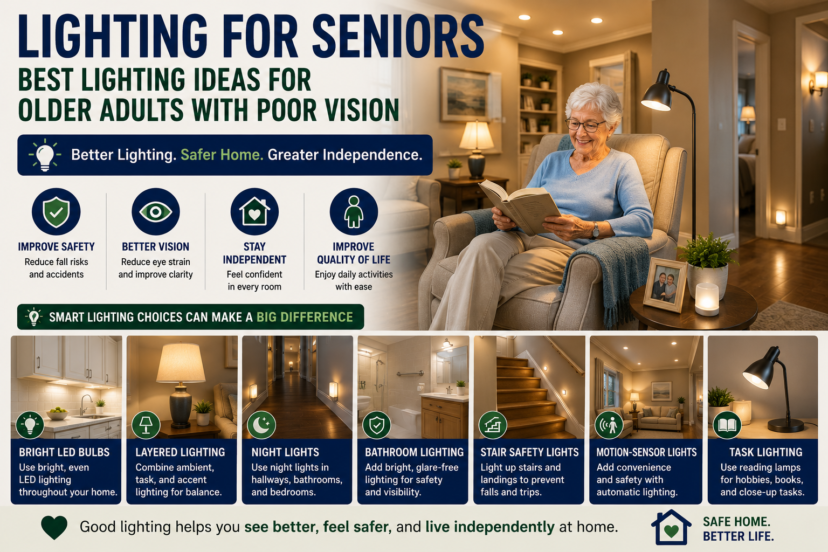
The best lighting for seniors includes bright LED bulbs, layered lighting, motion-sensor lights, under-cabinet lighting, night lights, and task lighting. These improvements can help older adults with poor vision stay safer and maintain independence at home.
Key Takeaways
Most likely cause: Age-related changes in vision, increased sensitivity to glare, and dimly lit living spaces can make everyday activities more difficult and increase fall risks.
Usually serious? It can be. Poor lighting may contribute to falls, eye strain, and reduced confidence when moving around the home, especially at night.
First thing to check: Walk through the home and identify dark hallways, stairways, bathrooms, entrances, and work areas that could benefit from brighter or more targeted lighting.
Best solution: Improve lighting for seniors by using bright LED bulbs, layered and task lighting, motion-sensor lights, under-cabinet lighting, and night lights to create a safer, more comfortable home.
💡 Why Lighting For Seniors Matters
As people age, they often need significantly more light to see comfortably.
Common vision changes include:
- Reduced contrast sensitivity
- Increased sensitivity to glare
- Difficulty seeing in dim rooms
- Slower adjustment between light and dark areas
- Age-related eye conditions, such as cataracts or macular degeneration
Poor lighting may contribute to:
- Falls
- Eye strain
- Reduced confidence
- Difficulty reading
- Trouble preparing meals
- Problems navigating stairs
Improving lighting for seniors helps support safer and more comfortable living.
🏡 Benefits Of Better Lighting For Seniors
Good lighting can:
- Reduce fall risks
- Improve visibility
- Increase independence
- Support aging in place
- Make reading easier
- Improve comfort
- Enhance home security
- Provide peace of mind for caregivers
Many improvements are inexpensive and easy to install.
🔆 Use Bright LED Bulbs
LED bulbs are one of the best choices for seniors.
Benefits include:
- Bright, even light
- Lower energy costs
- Longer lifespan
- Reduced heat production
Many experts recommend bulbs in the 800-1600 lumen range, depending on the room.
Look for bulbs with a color temperature between 2700K and 4000K for comfortable indoor lighting.
🛋 Create Layered Lighting
One overhead light is often not enough.
Layered lighting combines:
Ambient Lighting
General room lighting.
Examples:
- Ceiling fixtures
- Recessed lighting
Task Lighting
Focused lighting for activities.
Examples:
- Reading lamps
- Desk lamps
- Under-cabinet lighting
Accent Lighting
Additional lighting that improves visibility and reduces shadows.
Layering light creates a more comfortable environment for older eyes.
🚶 Install Motion-Sensor Lights
Motion lights improve both convenience and safety.
Excellent locations include:
- Hallways
- Bathrooms
- Bedrooms
- Garages
- Entryways
These lights automatically turn on when movement is detected, helping seniors avoid walking in the dark.
🌙 Add Night Lights
Nighttime bathroom trips are one of the most common situations where falls occur.
Night lights can:
- Improve visibility
- Reduce confusion
- Increase confidence
Ideal locations include:
- Bedrooms
- Hallways
- Bathrooms
- Stairways
LED plug-in night lights are affordable and energy efficient.
🍳 Improve Kitchen Lighting
Kitchens require excellent visibility.
Helpful upgrades include:
Under-Cabinet Lighting
These lights illuminate countertops and improve food preparation safety.
Pendant Lighting
Task lighting above islands and sinks can reduce shadows.
Brighter Overhead Fixtures
Good lighting makes labels and ingredients easier to see.
📚 Use Adjustable Reading Lamps
Reading becomes more difficult with age.
Look for lamps that offer:
- Adjustable brightness
- Flexible necks
- Reduced glare
- Warm white light
These lamps are useful for:
- Reading books
- Paying bills
- Hobbies and crafts
🚿 Upgrade Bathroom Lighting
Bathrooms are among the highest-risk areas for falls.
Helpful solutions include:
- Bright vanity lights
- LED mirrors
- Motion-sensor lights
- Shower lighting
- Night lights
Proper lighting can make grooming tasks easier and improve safety.
🪜 Improve Stair Lighting
Stairs become more dangerous when visibility is poor.
Helpful upgrades include:
- Step lights
- Wall sconces
- Motion lighting
- Contrasting stair edges
Good stair lighting can help prevent accidents.
☀ Reduce Glare
Older eyes are often more sensitive to bright reflections.
Reduce glare by:
- Using lampshades
- Choosing matte surfaces
- Installing blinds or curtains
- Avoiding exposed bulbs
Balanced lighting is usually more comfortable than extremely bright lighting.
📱 Smart Lighting For Seniors
Smart home technology can make life easier.
Popular options include:
Voice-Controlled Lights
Systems like Amazon Alexa or Google Home allow seniors to control lights without getting up.
Scheduled Lighting
Lights can automatically turn on at specific times.
Smartphone Controls
Family members may also help manage lighting remotely.
These features support aging in place and independence.
❤️ Small Lighting Changes Can Make A Big Difference
Many people assume improving lighting requires expensive remodeling.
Fortunately, simple upgrades like:
- New bulbs
- Night lights
- Reading lamps
- Motion sensors
can dramatically improve safety and comfort.
You don’t need to become an expert or spend thousands of dollars to make a meaningful difference.
🚨 Signs Your Home Needs Better Lighting
Consider upgrades if:
- Reading has become difficult.
- Rooms feel dark.
- Falls or near-falls have occurred.
- Shadows make walking uncomfortable.
- Stairways seem harder to navigate.
- Nighttime bathroom trips feel unsafe.
Planning ahead can help avoid problems later.
👨🔧 When To Consult A Professional
Professional guidance may be helpful when:
- Major electrical upgrades are needed.
- New fixtures require wiring changes.
- Vision loss significantly affects safety.
- Accessibility modifications are being planned.
Consider consulting:
- Certified Aging-In-Place Specialists (CAPS)
- Occupational therapists
- Electricians
- Healthcare providers
- Home accessibility contractors
These professionals can recommend solutions based on individual needs.
❓ FAQs: Lighting For Seniors
What type of lighting is best for seniors?
Bright LED lighting with reduced glare is often recommended.
Why do seniors need more light?
Aging eyes typically require more light to see clearly and comfortably.
Are LED bulbs good for older adults?
Yes. LED bulbs provide bright, energy-efficient illumination and last for years.
What color temperature is best for seniors?
Many experts recommend warm white to neutral white light between 2700K and 4000K.
Do night lights help prevent falls?
Yes. Night lights improve visibility during nighttime movement.
What rooms should be upgraded first?
Bathrooms, stairways, hallways, kitchens, and bedrooms are often the highest priorities.
Are smart lights useful for seniors?
Many older adults appreciate the convenience and safety provided by smart lighting systems.
📌 Final Thoughts
Improving lighting for seniors is one of the simplest ways to create a safer and more comfortable home.
Small changes today can help older adults maintain independence, reduce fall risks, and continue enjoying daily life with confidence.
You don’t need expensive renovations to make a meaningful difference.
Sometimes a brighter room can create a brighter future.
Disclaimer
This article is for informational purposes only and does not replace professional medical, healthcare, or home accessibility advice. Always follow local building codes and consult qualified healthcare providers, contractors, or Certified Aging-In-Place Specialists before making significant home modifications or beginning exercise programs.
 Explore more: