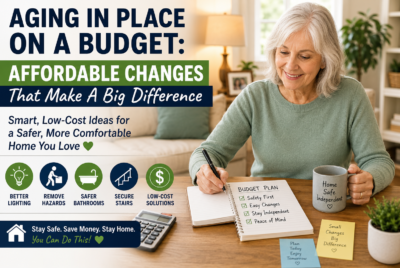
Aging In Place Modifications: 10 Smart Home Changes That Help Seniors Stay Independent
Smart aging in place modifications for your home? Growing older doesn’t mean giving up the comfort of home. For many older adults, remaining in familiar surroundings provides a sense of independence, security, and peace of mind.
The good news is that staying at home longer often doesn’t require expensive renovations or turning a house into a medical facility. Many aging-in-place modifications are simple, affordable, and designed to make everyday life easier.
Whether you’re planning ahead for yourself or helping an aging parent, these practical home improvements can support safety, mobility, and quality of life for years to come.
⭐ Quick Answer: Aging In Place Modifications
Aging in place modifications are home improvements designed to help older adults remain safe and independent. Popular upgrades include grab bars, improved lighting, walk-in showers, non-slip flooring, wider doorways, and smart home technology.
Key Takeaways
Most likely cause: Many homes were not designed to meet the changing mobility, balance, vision, and accessibility needs that often come with aging.
Usually serious? It can be. Without appropriate home modifications, the risk of falls, injuries, and loss of independence may increase over time.
First thing to check: Walk through the home to identify common safety concerns such as poor lighting, slippery floors, narrow walkways, difficult bathroom access, and stairs without secure handrails.
Best solution: Make practical aging in place modifications such as installing grab bars, improving lighting, adding non-slip flooring, upgrading to walk-in showers, and using smart home technology to support long-term safety and independence.
🏡 Why Aging In Place Modifications Matter
According to AARP surveys, most Americans over age 50 want to remain in their homes as they age.
However, normal age-related changes can create challenges such as:
- Reduced mobility
- Balance issues
- Arthritis
- Vision changes
- Muscle weakness
- Recovery after surgery
The right aging in place modifications can help:
- Prevent falls
- Support independence
- Reduce caregiver stress
- Improve confidence
- Increase comfort
- Delay the need for assisted living
The goal isn’t to make life complicated. It’s to make daily activities easier and safer.
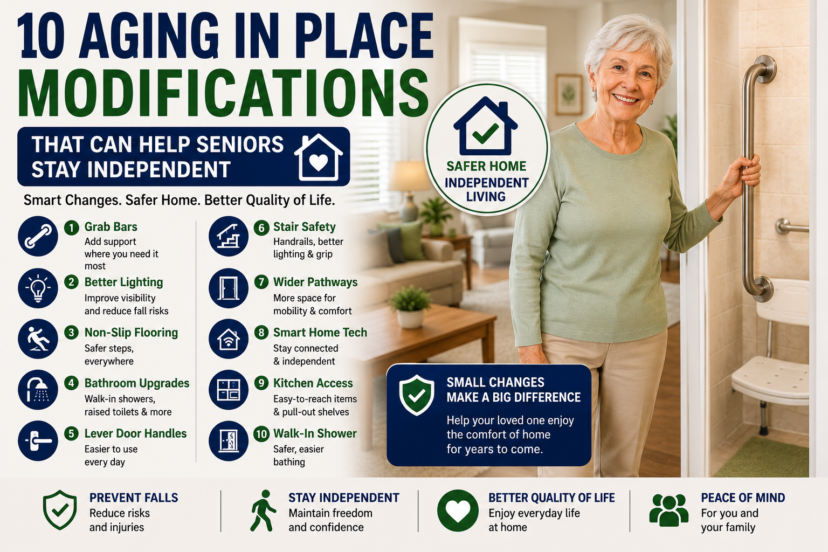
1. Install Grab Bars
Grab bars are among the most valuable aging-in-place modifications.
They provide support when:
- Entering the shower
- Standing from the toilet
- Stepping out of the bathtub
Properly installed grab bars can help reduce fall risks and improve confidence.
2. Improve Lighting Throughout The Home
Poor lighting contributes to many accidents.
Helpful upgrades include:
- Bright LED bulbs
- Motion-sensor lights
- Under-cabinet lighting
- Night lights in bathrooms and hallways
Better lighting supports safer movement and improved visibility.
3. Add Non-Slip Flooring
Slippery floors can become dangerous.
Popular options include:
- Textured vinyl
- Cork flooring
- Slip-resistant tile
- Low-pile carpeting
Remove loose rugs whenever possible.
4. Upgrade The Bathroom
Bathrooms are one of the most common locations for falls.
Helpful bathroom modifications include:
- Shower chairs
- Handheld shower heads
- Raised toilet seats
- Walk-in showers
- Grab bars
Even small improvements can make bathing easier and safer.
5. Install Lever Door Handles
Round doorknobs can become difficult for people with arthritis.
Lever handles:
- Requires less grip strength
- Improve accessibility
- Make everyday tasks easier
This simple change can benefit the entire household.
6. Improve Stair Safety
Stairs can become challenging with age.
Consider:
- Handrails on both sides
- Brighter lighting
- Non-slip stair treads
- Contrasting step edges
For some families, relocating essential living spaces to the first floor may also help.
7. Create Wider Pathways
Walkers and wheelchairs require additional space.
Helpful modifications include:
- Rearranging furniture
- Removing clutter
- Widening doorways when necessary
Clear pathways improve mobility and reduce tripping hazards.
8. Use Smart Home Technology
Technology can support independent living.
Popular options include:
Smart Speakers
Devices like Amazon Alexa can help with:
- Medication reminders
- Weather updates
- Shopping lists
Video Doorbells
These systems provide added security and help prevent scams.
Smart Lighting
Automatic lighting reduces nighttime risks.
Medical Alert Systems
Emergency devices provide peace of mind for seniors and caregivers.
9. Improve Kitchen Accessibility
Cooking is an important part of independent living.
Simple modifications include:
- Pull-out shelves
- Easy-to-reach storage
- Lightweight cookware
- Large-print labels
Keeping everyday items within reach helps reduce bending and stretching.
10. Install A Walk-In Shower
Traditional tubs may become difficult to enter safely.
Walk-in showers provide:
- Easier access
- Better mobility support
- Reduced tripping hazards
- Compatibility with shower chairs
Although more expensive than some upgrades, walk-in showers are one of the most popular long-term aging-in-place modifications.
❤️ Small Changes Can Have A Big Impact
Many people assume home modifications require major construction.
In reality, some of the most effective improvements are inexpensive and easy to complete.
You don’t need to become a contractor or spend thousands of dollars.
Simple upgrades can:
- Improve confidence
- Increase independence
- Reduce stress
- Support healthy aging
Every small improvement adds up over time.
🚨 Signs Your Home May Need Modifications
Consider evaluating your home if:
- Falls have occurred.
- Mobility is decreasing.
- Arthritis makes everyday tasks difficult.
- Stairs are becoming challenging.
- Fear of falling is increasing.
- Recovery from surgery is underway.
Planning ahead often leads to better outcomes.
👨🔧 When To Consult A Professional
Some aging in place modifications are simple DIY projects, while others require expert guidance.
Consider consulting:
- Certified Aging-In-Place Specialists (CAPS)
- Occupational therapists
- Healthcare providers
- Home accessibility contractors
- Physical therapists
Professional assistance may be especially valuable when:
- Wheelchair access is needed.
- Major renovations are planned.
- Cognitive decline affects safety.
- Frequent falls are occurring.
- Complex mobility issues are present.
❓ FAQs: Aging In Place Modifications
What are aging in place modifications?
They are home improvements that help seniors remain safe, comfortable, and independent.
What is the most important aging in place upgrade?
Many experts consider grab bars and fall prevention improvements among the most valuable changes.
Are aging in place modifications expensive?
Not always. Many upgrades are affordable and can be completed gradually.
Does Medicare pay for home modifications?
Coverage varies, and many home modifications are not fully covered. Families should review their individual plans.
What room should be modified first?
Bathrooms are often the highest priority because they present greater fall risks.
Are smart home devices useful for seniors?
Yes. Smart technology can improve convenience, safety, and communication.
When should families start planning for aging in place?
Experts often recommend planning before major mobility challenges develop.
📌 Final Thoughts
The best aging in place modifications aren’t about changing everything overnight.
They’re about creating a home that works with you instead of against you.
Small improvements today can help older adults remain independent, reduce stress for caregivers, and enjoy greater comfort for years to come.
You don’t need expensive renovations to make a meaningful difference. Sometimes the smallest changes provide the greatest peace of mind.
Disclaimer
This article is for informational purposes only and does not replace professional medical, healthcare, or home accessibility advice. Always follow local building codes and consult qualified healthcare providers, contractors, or Certified Aging-In-Place Specialists before making significant home modifications or beginning exercise programs.
 Explore more: