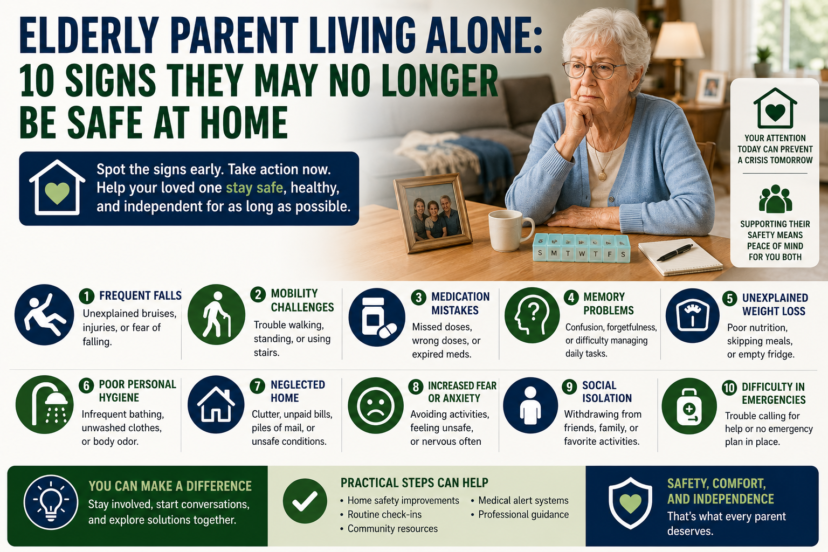
Elderly Parent Living Alone: 10 Signs Your Loved One May No Longer Be Safe At Home
Are your elderly parent living alone and no longer safe at home? Watching a parent grow older can be emotional. Many older adults value their independence and want to remain in the homes they love for as long as possible. In fact, aging in place is a goal shared by millions of seniors across the United States.
However, there may come a time when an elderly parent living alone begins to experience challenges that affect their safety and quality of life.
Recognizing these warning signs early doesn’t mean taking away independence. Instead, it provides an opportunity to make thoughtful changes that can help your loved one remain safer, more comfortable, and better supported.
Whether you’re concerned about Mom, Dad, or another aging family member, understanding these signs can help you make informed decisions with compassion and confidence.
💡 Quick Answer: Elderly Parent Living Alone
An elderly parent living alone may no longer be safe if they experience frequent falls, medication mistakes, memory problems, poor hygiene, weight loss, mobility challenges, or difficulty managing daily activities. Early intervention and home safety improvements can help support independence and quality of life.
Key Takeaways
Most likely cause: An elderly parent living alone may become less safe due to age-related changes in mobility, memory, vision, balance, or the ability to manage everyday tasks independently.
Usually serious? It can be. Frequent falls, medication errors, confusion, poor nutrition, or difficulty with daily activities may increase the risk of injury and indicate that additional support is needed.
First thing to check: Look for changes in personal hygiene, mobility, weight, home cleanliness, medication management, memory, and the ability to safely perform routine daily activities.
Best solution: Improve safety for an elderly parent living alone by addressing home hazards, arranging regular check-ins, considering assistive devices or in-home support, and discussing long-term care needs before a crisis occurs.
🏡 Why Monitoring An Elderly Parent Living Alone Matters
Living independently can provide:
- Comfort
- Familiar surroundings
- Emotional well-being
- Greater freedom
However, aging may bring changes that affect:
- Mobility
- Vision
- Memory
- Balance
- Strength
- Judgment
The goal is not to remove independence but to create a safer environment that supports healthy aging.
⚠ Sign #1: Frequent Falls Or Near-Falls
Falls are one of the biggest warning signs.
Watch for:
- Bruises
- Unexplained injuries
- Fear of walking
- Holding onto furniture for support
Even near-falls should be taken seriously.
Simple improvements like grab bars, better lighting, and removing tripping hazards may help reduce risks.
🚶 Sign #2: Difficulty Walking Or Standing
Mobility changes often develop gradually.
Warning signs include:
- Trouble getting out of chairs
- Slow walking speed
- Difficulty using stairs
- Needing support from walls or counters
These changes may indicate that additional assistance or home modifications are needed.
💊 Sign #3: Medication Mistakes
Medication management becomes more complicated with age.
Possible warning signs include:
- Missed doses
- Duplicate medications
- Confusion about prescriptions
- Expired medications
Weekly pill organizers and medication reminder systems may help.
🧠 Sign #4: Memory Problems Or Increasing Confusion
Occasional forgetfulness is normal, but more serious changes may require attention.
Examples include:
- Repeating the same questions
- Missing appointments
- Forgetting to pay bills
- Leaving appliances on
- Becoming disoriented
Memory concerns should be discussed with a healthcare provider.
🍽 Sign #5: Unexplained Weight Loss
Poor nutrition can affect health and safety.
Warning signs include:
- Empty refrigerators
- Spoiled food
- Missed meals
- Noticeable weight loss
Meal delivery services and family support may help maintain proper nutrition.
🛁 Sign #6: Changes In Personal Hygiene
Declining hygiene may indicate difficulty with daily tasks.
Look for:
- Unwashed clothing
- Body odor
- Infrequent bathing
- Poor grooming
Bathroom safety upgrades can often make personal care easier.
🏠 Sign #7: A Neglected Home Environment
An elderly parent living alone may struggle with household responsibilities.
Signs include:
- Piles of mail
- Dirty dishes
- Laundry accumulation
- Excessive clutter
- Home maintenance problems
These issues may increase fall risks and create additional stress.
😟 Sign #8: Increased Fear Or Anxiety
Some older adults become fearful after experiencing a fall or health issue.
Common signs include:
- Avoiding activities
- Fear of leaving the house
- Reluctance to use stairs
- Increased isolation
Emotional well-being is just as important as physical safety.
📞 Sign #9: Social Isolation
Loneliness can affect overall health.
Watch for:
- Fewer social interactions
- Missed family events
- Withdrawal from hobbies
- Depression symptoms
Regular visits, phone calls, and community programs can provide valuable support.
🚨 Sign #10: Difficulty Responding To Emergencies
Ask yourself:
- Can they call for help quickly?
- Do they know emergency numbers?
- Are medical alert devices available?
Emergency preparedness is an important part of aging in place.
❤️ Supporting Independence Doesn’t Mean Giving Up Freedom
Many families worry that discussing safety will upset their loved one.
Instead of focusing on limitations, focus on goals:
- Remaining at home longer
- Maintaining independence
- Improving comfort
- Preventing injuries
Often, small changes can make a tremendous difference.
Examples include:
- Better lighting
- Grab bars
- Shower chairs
- Medication organizers
- Smart home devices
- Medical alert systems
These improvements can help an elderly parent living alone continue enjoying life with greater confidence.
🔍 Questions Families Should Ask
Consider these questions:
- Has your parent fallen recently?
- Are they forgetting medications?
- Is cooking becoming difficult?
- Are they struggling with housekeeping?
- Are they becoming isolated?
- Are mobility problems increasing?
Answering these questions honestly can help guide future decisions.
👨🔧 When To Consult A Professional
Professional guidance may be helpful when:
- Falls are becoming frequent.
- Memory problems are increasing.
- Mobility limitations are worsening.
- Home modifications are needed.
- Daily activities are becoming difficult.
Consider consulting:
- Certified Aging-In-Place Specialists (CAPS)
- Occupational therapists
- Physical therapists
- Healthcare providers
- Home accessibility contractors
These professionals can provide personalized recommendations based on individual needs.
❓ FAQs: Elderly Parent Living Alone
How do I know if my elderly parent can no longer live alone?
Frequent falls, memory problems, poor hygiene, and difficulty managing daily activities are common warning signs.
What is the biggest risk for seniors living alone?
Falls are among the leading safety concerns for older adults.
How often should I check on an elderly parent living alone?
The ideal schedule depends on health conditions, mobility, and available support systems.
Are medical alert systems worth it?
Many families find that they provide valuable peace of mind.
Can home modifications help seniors remain independent?
Yes. Simple changes can improve safety and support aging in place.
When should I discuss assisted living?
Conversations are often appropriate when safety concerns begin affecting quality of life.
What if my parent refuses help?
Approach conversations with empathy and focus on preserving independence rather than restricting it.
📌 Final Thoughts
Recognizing warning signs early doesn’t mean giving up hope or independence.
In many cases, an elderly parent living alone can continue enjoying the comfort of home with the right support, thoughtful planning, and practical safety improvements.
Small changes today can help prevent larger problems tomorrow.
The ultimate goal is not simply living longer—it’s living safely, comfortably, and with dignity.
Disclaimer
This article is for informational purposes only and is not a substitute for professional medical, healthcare, or home accessibility advice. Always follow local building codes and consult qualified healthcare providers, contractors, or Certified Aging-In-Place Specialists before making significant home modifications or beginning exercise programs.
 Explore more: