Best Non-Slip Flooring For Seniors: Safe Options For Every Room
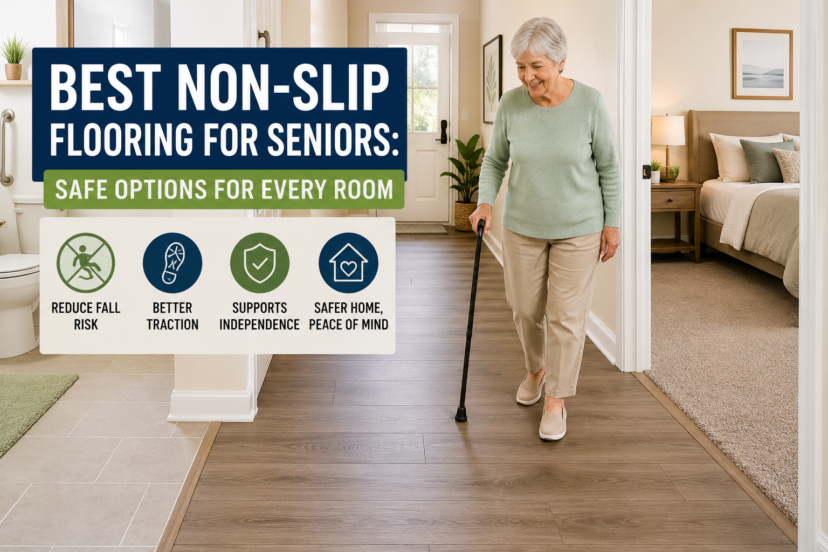
What is the best non-slip flooring for seniors? Growing older doesn’t mean giving up independence. In fact, many older adults want to remain in their homes for as long as possible, enjoying familiar surroundings and maintaining their daily routines. One of the most overlooked parts of a safe home, however, is what’s directly under our feet.
Falls are one of the leading causes of injuries among older adults in the United States, and slippery floors can increase those risks. The good news is that creating a safer home doesn’t always require expensive renovations or major remodeling projects.
Choosing the best non-slip flooring for seniors can help improve confidence, reduce stress, and support a safer aging-in-place lifestyle. Whether you’re helping a parent remain independent or planning for your own future, small flooring upgrades can make a big difference.
⭐ Quick Answer: Best Non-Slip Flooring For Seniors
The best non-slip flooring for seniors typically includes luxury vinyl plank (LVP), cork flooring, rubber flooring, low-pile carpet, and textured tile with slip-resistant finishes. These materials provide better traction, are easier to walk on, and may help reduce the risk of falls while supporting comfortable aging in place.
Key Takeaways
Most likely cause: Slippery, uneven, or worn flooring can increase the risk of falls as balance, mobility, and vision change with age.
Usually serious? It can be. Falls are a leading cause of injury among older adults, making safe flooring an important part of aging in place.
First thing to check: Inspect your home for smooth or damaged flooring, loose rugs, uneven transitions between rooms, and areas that become slippery when wet.
Best solution: Choose the best non-slip flooring for seniors, such as luxury vinyl plank, cork, rubber flooring, low-pile carpet, or textured tile, and combine it with good lighting and clutter-free walkways to improve safety and support independent living.
🏡 Why Non-Slip Flooring Matters For Seniors
As people age, changes in balance, vision, strength, and mobility can increase fall risks. Conditions such as arthritis, neuropathy, Parkinson’s disease, and joint pain may also make slippery surfaces more dangerous.
Safer flooring can help:
- ✔ Reduce the risk of slips and falls
- ✔ Increase confidence when walking
- ✔ Support walker and wheelchair use
- ✔ Improve comfort underfoot
- ✔ Make daily activities easier
- ✔ Help older adults stay independent longer
For many families, upgrading flooring is one of the most practical aging-in-place improvements available.
🚶 Features To Look For In The Best Non-Slip Flooring For Seniors
Not all flooring materials are equally safe. When comparing options, consider these important characteristics:
Slip Resistance
Look for textured surfaces or flooring specifically designed to improve traction.
Cushioning
Some flooring materials provide extra shock absorption, which may help reduce injury severity during a fall.
Ease Of Maintenance
Simple cleaning routines can help seniors maintain their homes without unnecessary physical strain.
Mobility Aid Compatibility
Walkers, canes, and wheelchairs should move smoothly without catching or creating hazards.
Low Thresholds
Transitions between rooms should be smooth and level to reduce tripping risks.
⭐ Best Non-Slip Flooring For Seniors Throughout The Home
Several flooring materials stand out for safety, comfort, and practicality.
Luxury Vinyl Plank (LVP)
Luxury vinyl plank has become one of the most popular choices for aging in place.
Benefits Of Luxury Vinyl Flooring
- Water-resistant
- Durable and long-lasting
- Soft underfoot compared to tile
- Available in slip-resistant finishes
- Easy to clean
- Affordable for many homeowners
LVP works especially well in:
- Kitchens
- Living rooms
- Hallways
- Bedrooms
- Bathrooms with waterproof options
Because it resembles hardwood without the slippery finish, many experts consider it among the best non-slip flooring for seniors.
Cork Flooring
Cork offers natural cushioning and warmth.
Advantages Of Cork Flooring
- Softer than hardwood
- Naturally slip-resistant
- Reduces joint stress
- Provides some insulation from noise
- Comfortable for standing
Cork may be especially helpful for older adults with:
- Arthritis
- Knee pain
- Hip discomfort
- Foot sensitivity
However, cork requires proper sealing and maintenance to protect against moisture.
Rubber Flooring
Rubber flooring is commonly used in hospitals, rehabilitation centers, and senior-friendly homes.
Benefits Include
- Excellent traction
- High shock absorption
- Durable surface
- Easy cleaning
- Comfortable walking surface
Rubber flooring works particularly well in:
- Home gyms
- Laundry rooms
- Bathrooms
- Entryways
Although it has a more functional appearance, safety often outweighs aesthetics for many families.
Low-Pile Carpet
While thick carpeting can create tripping hazards, low-pile carpet remains one of the safest options for certain areas.
Benefits Of Carpet For Seniors
- Soft landing surface
- Improved traction
- Added warmth
- Noise reduction
- Increased comfort
Choose carpet with:
- Low pile height
- Firm padding
- Secure installation
- Minimal seams
Low-pile carpet is often ideal for:
- Bedrooms
- Living rooms
- Family rooms
Slip-Resistant Tile
Traditional glossy tile can become slippery when wet, but textured tile provides much better traction.
Look for:
- Matte finishes
- High slip-resistance ratings
- Textured surfaces
Slip-resistant tile works well in:
- Bathrooms
- Kitchens
- Mudrooms
- Laundry areas
Adding non-slip bath mats can provide additional protection.
🚿 Best Non-Slip Flooring For Bathrooms
Bathrooms are one of the highest-risk areas for falls.
The best non-slip flooring for seniors in bathrooms often includes:
Luxury Vinyl Tile
- Waterproof
- Easy maintenance
- Better traction than ceramic tile
Rubber Flooring
- Excellent grip when wet
- Comfortable underfoot
Textured Porcelain Tile
- Durable and attractive
- Designed for moisture exposure
Additional bathroom safety upgrades include:
- Grab bars
- Walk-in showers
- Raised toilet seats
- Shower benches
- Handheld showerheads
🍳 Best Kitchen Flooring For Older Adults
Kitchens involve standing, carrying items, and exposure to spills.
Good choices include:
- Luxury vinyl plank
- Cork flooring
- Slip-resistant tile
Avoid:
- Highly polished stone
- Glossy ceramic surfaces
- Uneven flooring transitions
Keeping frequently used items within easy reach can also help reduce accidents.
🛏 Bedroom Flooring Options For Aging In Place
Bedrooms should provide comfort and easy nighttime navigation.
Popular choices include:
Low-Pile Carpet
Provides warmth and cushioning.
Luxury Vinyl Plank
Offers easy mobility for walkers and wheelchairs.
Cork Flooring
Adds softness while reducing pressure on joints.
Nightlights and motion-sensor lighting can further improve safety.
⚠ Flooring Materials Seniors May Want To Avoid
Some flooring types can increase fall risks.
Highly Polished Hardwood
Glossy finishes may become slippery.
Thick Plush Carpet
Walkers and wheelchairs may become difficult to maneuver.
Loose Area Rugs
These are among the most common tripping hazards in American homes.
Uneven Flooring Surfaces
Raised thresholds and damaged floors can increase fall risks.
If rugs are used, secure them with non-slip backing or remove them altogether.
🧹 Maintenance Tips For Safer Floors
Even the best non-slip flooring for seniors requires proper care.
Keep Floors Dry
Wipe spills immediately.
Remove Clutter
Clear pathways throughout the home.
Inspect For Damage
Repair loose boards or lifted flooring promptly.
Use Appropriate Cleaning Products
Some cleaners leave slippery residue behind.
Improve Lighting
Good visibility helps reduce accidents.
Simple maintenance habits can greatly improve long-term safety.
❤️ Aging In Place Doesn’t Require Expensive Renovations
Many families assume creating a safer home requires major remodeling. Fortunately, that isn’t always true.
Affordable improvements may include:
- Replacing slippery rugs
- Installing non-slip mats
- Updating one room at a time
- Adding brighter lighting
- Using furniture with stable support
These small changes can help older adults maintain dignity, independence, and confidence without overwhelming expenses.
👨🔧 When To Consult A Professional
While many flooring improvements are straightforward, some situations benefit from expert guidance.
Consider consulting:
- A Certified Aging-In-Place Specialist (CAPS)
- An occupational therapist
- A licensed contractor
- A home accessibility installer
- A healthcare provider
Professional assistance may be especially important when:
- A senior has experienced recent falls.
- Mobility devices are required.
- Wheelchair accessibility is needed.
- Structural modifications are being considered.
- Medical conditions affect balance or walking.
Expert recommendations can help ensure modifications meet safety needs and local building codes.
❓ FAQs: Best Non-Slip Flooring For Seniors
What Is The Safest Flooring For Elderly People?
Luxury vinyl plank, rubber flooring, cork flooring, and low-pile carpet are often considered among the safest choices because they provide traction and comfort.
Is Vinyl Flooring Slippery For Seniors?
Most modern luxury vinyl flooring offers textured surfaces that provide good traction and are generally safer than glossy hardwood.
Should Seniors Remove Area Rugs?
Yes. Loose rugs are common tripping hazards. If rugs are used, they should have a non-slip backing and lie completely flat.
Is Carpet Better Than Hardwood For Seniors?
Low-pile carpet may provide better traction and cushioning, while highly polished hardwood can be slippery.
What Flooring Is Best For Seniors Using Walkers?
Luxury vinyl plank and low-pile carpet typically work well because they provide smooth movement without excessive resistance.
What Is The Best Bathroom Flooring For Seniors?
Waterproof luxury vinyl, rubber flooring, and textured porcelain tile are popular options for improving bathroom safety.
Can Flooring Help Prevent Falls?
Yes. While no flooring eliminates risk entirely, choosing the best non-slip flooring for seniors can help reduce slipping hazards and improve confidence while walking.
🌟 Conclusion: Best Non-Slip Flooring For Seniors
Creating a safer home doesn’t have to be overwhelming or expensive. Sometimes, one simple improvement—like choosing better flooring—can have a lasting impact on comfort, confidence, and independence.
Whether you’re helping an aging parent or planning ahead for yourself, investing in the best non-slip flooring for seniors can support safer daily living and greater peace of mind.
Small changes today may help make home a safer, more enjoyable place for years to come.
Disclaimer
This article is for general informational purposes only and is not a substitute for professional medical, healthcare, or home accessibility advice. Always follow local building codes and consult qualified healthcare providers, licensed contractors, occupational therapists, or certified aging-in-place specialists before making significant home modifications or beginning new exercise routines.
 Explore more: