Bedroom Safety For Seniors: Simple Tips To Create A Safer And More Comfortable Space
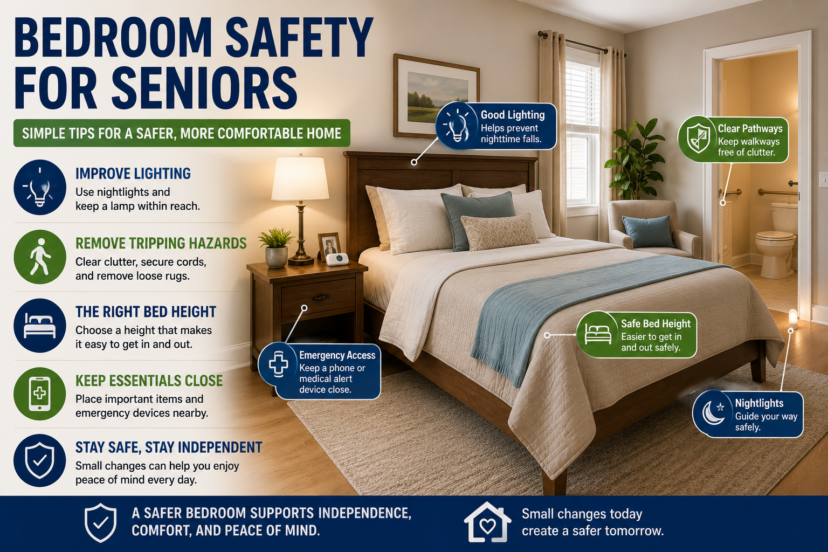
What are the best tips for bedroom safety for seniors? For many older adults, the bedroom should be a place of comfort, relaxation, and peace of mind. Yet surprisingly, bedrooms are one of the most common locations for falls and injuries among seniors. Getting out of bed at night, navigating clutter, or reaching for items in poor lighting can quickly turn a familiar room into a safety hazard.
The good news is that improving bedroom safety for seniors doesn’t require expensive remodeling or complicated home modifications. Small, practical changes can help older adults maintain independence, reduce stress, and enjoy greater confidence while aging in place.
Whether you’re planning for yourself or helping a loved one, creating a safer bedroom can support long-term comfort, mobility, and quality of life.
⭐ Quick Answer: Bedroom Safety For Seniors
Bedroom safety for seniors starts with reducing fall hazards, improving lighting, organizing frequently used items, using supportive furniture, and ensuring easy access to emergency assistance. Simple upgrades can help older adults remain safe and independent at home.
Key Takeaways
Most likely cause: Most bedroom accidents happen because of poor lighting, clutter, loose rugs, difficult-to-reach items, and age-related changes in balance, strength, or mobility.
Usually serious? It can be. Falls in the bedroom may result in significant injuries and can affect an older adult’s confidence and ability to live independently.
First thing to check: Inspect the bedroom for trip hazards, dark pathways, unstable furniture, cords, slippery rugs, and whether frequently used items are easy to reach.
Best solution: Improve bedroom safety for seniors by adding better lighting, removing clutter and loose rugs, organizing essentials within easy reach, choosing supportive furniture, and ensuring quick access to emergency assistance if needed.
🛏 Why Bedroom Safety For Seniors Matters
Many falls happen during everyday activities, especially at night.
Common reasons include:
- Poor lighting
- Loose rugs
- Cluttered walkways
- Difficulty getting in and out of bed
- Balance problems
- Medication side effects
- Vision changes
Improving bedroom safety for seniors may help:
- Reduce fall risks
- Increase confidence
- Support independent living
- Lower caregiver stress
- Improve overall quality of life
Small adjustments often provide significant benefits.
💡 Improve Bedroom Lighting For Better Safety
Poor visibility is one of the biggest causes of nighttime accidents.
Helpful lighting upgrades include:
Motion Sensor Night Lights
These lights automatically turn on when movement is detected.
Bedside Lamps Within Reach
Avoid forcing seniors to walk across a dark room.
Illuminated Pathways
Install nightlights leading to the bathroom.
Easy-To-Use Light Switches
Large switches and voice-controlled smart bulbs can make lighting easier to manage.
Better lighting is one of the simplest ways to improve bedroom safety for seniors.
🚶 Remove Common Tripping Hazards
A clutter-free bedroom is easier and safer to navigate.
Eliminate Loose Area Rugs
Rugs frequently contribute to falls.
Organize Electrical Cords
Secure cords against walls whenever possible.
Keep Floors Clear
Avoid storing boxes, shoes, or laundry baskets in walkways.
Arrange Furniture Carefully
Create wide pathways for walkers, canes, and wheelchairs.
Simple decluttering can dramatically improve safety.
🛌 Choose The Right Bed Height
A bed that is too high or too low may make getting up difficult.
Ideally, seniors should be able to:
- Sit comfortably with both feet flat on the floor.
- Stand without excessive effort.
- Enter and exit the bed safely.
Bed risers or lower bed frames may help create a safer height.
⭐ Use Supportive Bedroom Furniture
Furniture should improve stability rather than create obstacles.
Helpful options include:
Stable Nightstands
Keep essentials within arm’s reach.
Chairs With Armrests
These provide extra support when sitting or standing.
Rounded Furniture Corners
Reduce injury risk if accidental bumps occur.
Firm Mattresses
A supportive mattress may make transfers easier.
Proper furniture placement plays an important role in bedroom safety for seniors.
📱 Keep Emergency Items Nearby
Having important items close by can improve both convenience and peace of mind.
Keep these items within reach:
- Cell phone
- Medical alert device
- Eyeglasses
- Water bottle
- Medications (if approved by a healthcare provider)
- Flashlight
Many families choose medical alert systems for additional protection.
🚽 Create A Safe Path To The Bathroom
Nighttime bathroom trips are common among older adults.
Helpful improvements include:
Motion Lights
Automatic lighting reduces the risk of stumbling.
Non-Slip Flooring
Slip-resistant surfaces provide better traction.
Grab Bars
These may improve balance and stability.
Clear Pathways
Avoid furniture or decorative items that obstruct walking areas.
The easier the route, the safer the experience.
❤️ Bedroom Safety For Seniors With Mobility Challenges
Older adults using walkers, canes, or wheelchairs may require additional adjustments.
Consider:
- Wider walkways
- Lower shelving
- Easy-access storage
- Adjustable beds
- Lift chairs
- Reduced furniture clutter
Even modest modifications can support continued independence.
🌡 Improve Comfort Along With Safety
Safety and comfort often go hand in hand.
Consider:
Temperature Control
Maintain a comfortable room temperature year-round.
Blackout Curtains
Support healthy sleep habits.
Easy-To-Reach Storage
Reduce bending and stretching.
Comfortable Bedding
Lightweight blankets may be easier to manage.
A comfortable bedroom encourages better rest and overall well-being.
🏠 Affordable Bedroom Safety Upgrades
Many improvements cost very little.
Budget-friendly ideas include:
- Installing nightlights
- Removing rugs
- Using cord organizers
- Adding a bedside organizer
- Rearranging furniture
- Replacing slippery flooring
- Installing smart bulbs
Creating better bedroom safety for seniors does not have to involve expensive renovations.
👨🔧 When To Consult A Professional
While many bedroom improvements are simple, some situations require expert guidance.
Consider consulting:
- A Certified Aging-In-Place Specialist (CAPS)
- An occupational therapist
- A healthcare provider
- A home accessibility installer
- A physical therapist
Professional help may be beneficial when:
- Falls have already occurred.
- Mobility limitations are increasing.
- Wheelchairs or walkers are needed.
- Multiple home modifications are being considered.
- Medical conditions affect balance or coordination.
An expert assessment can help families identify risks that may otherwise be overlooked.
❓ FAQs: Bedroom Safety For Seniors
Why Is Bedroom Safety Important For Seniors?
Bedrooms are common locations for falls, especially during nighttime trips to the bathroom.
What Is The Best Lighting For Senior Bedrooms?
Motion-sensor night lights and easily accessible bedside lamps are often ideal.
Should Seniors Remove Bedroom Rugs?
Yes. Loose rugs are among the most common tripping hazards.
What Height Should A Bed Be For Older Adults?
Most seniors benefit from a bed height that allows both feet to rest flat on the floor while sitting.
Are Adjustable Beds Worth It For Seniors?
Adjustable beds may improve comfort and make getting in and out of bed easier.
What Should Seniors Keep On Their Nightstands?
Important items include medications (when appropriate), eyeglasses, phones, flashlights, and water.
Can A Medical Alert System Improve Bedroom Safety?
Yes. Medical alert devices can provide immediate access to assistance during emergencies.
🌟 Conclusion: Bedroom Safety For Seniors
Creating better bedroom safety for seniors doesn’t have to feel overwhelming. In many cases, simple improvements such as better lighting, reduced clutter, and supportive furniture can make a meaningful difference.
These small changes can help older adults stay independent, sleep more comfortably, and enjoy greater confidence in the homes they love.
For families and caregivers, investing in safety today can provide peace of mind for years to come.
Disclaimer
This content is for general informational purposes only and is not a substitute for professional medical, healthcare, or home accessibility advice. Always follow local building codes and consult qualified healthcare providers, contractors, occupational therapists, or certified aging-in-place specialists before making major home modifications or beginning new exercise routines.
 Explore more:
- Best Non-Slip Flooring For Seniors
- Stair Lift Cost Guide
- Best Medical Alert Systems For Seniors Compared