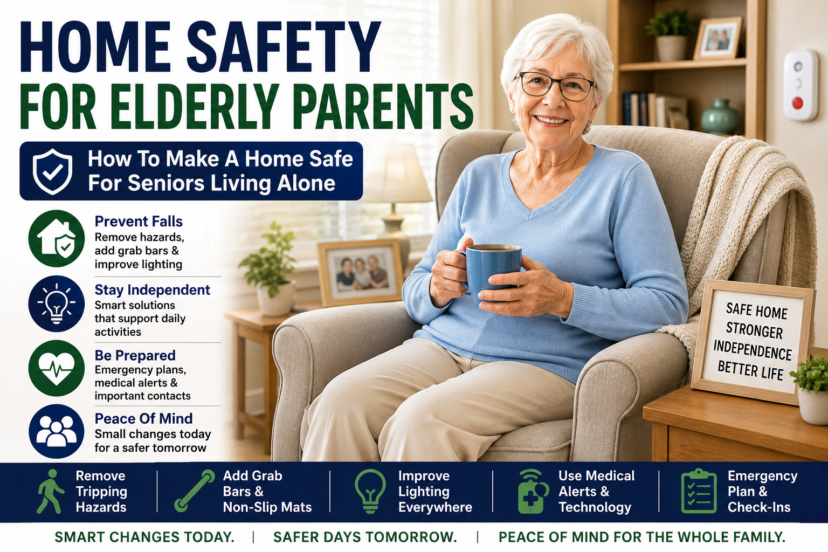
Home Safety For Elderly Parents: How To Make A Home Safe For Seniors Living Alone
Watching an aging parent live alone can bring mixed emotions. On one hand, you want them to maintain their independence. On the other hand, concerns about falls, emergencies, and everyday safety are always at the back of your mind. The good news is that creating better home safety for elderly parents doesn’t require turning their house into a hospital or spending thousands of dollars on renovations.
Many of the most effective changes are simple, affordable, and can help older adults remain comfortable and independent for years to come.
Whether you’re helping Mom, Dad, or another loved one, these practical aging-in-place strategies can provide peace of mind for the entire family.
⭐ Quick Answer: Home Safety For Elderly Parents
Improving home safety for elderly parents involves reducing fall hazards, improving lighting, adding bathroom safety features, organizing medications, preparing for emergencies, and making daily activities easier and safer. Small changes can help seniors remain independent and enjoy a better quality of life.
Key Takeaways
Most likely cause: Many homes were not designed to accommodate age-related changes in balance, mobility, vision, and strength, increasing the risk of accidents.
Usually serious? It can be. Falls and other household hazards can lead to serious injuries and may affect an older adult’s ability to live independently.
First thing to check: Assess the home for common safety risks such as poor lighting, loose rugs, cluttered walkways, slippery bathrooms, stairs without handrails, and difficult-to-reach everyday items.
Best solution: Improve home safety for elderly parents by removing fall hazards, installing grab bars and handrails, enhancing lighting, organizing medications, and preparing an emergency plan that supports safe, independent living.
🏡 Why Home Safety For Elderly Parents Matters
According to the CDC, falls are one of the leading causes of injury among older adults.
Common risk factors include:
- Poor lighting
- Loose rugs
- Cluttered walkways
- Limited mobility
- Medication side effects
- Vision changes
- Stairs without handrails
Improving home safety for elderly parents can help:
- Reduce fall risks
- Increase confidence
- Support aging in place
- Lower caregiver stress
- Promote independence
- Improve quality of life
The goal isn’t to take away independence. It’s to make everyday life safer and easier.
🚶 Home Safety For Elderly Parents Starts With Fall Prevention
Falls are responsible for many emergency room visits among seniors.
Remove Tripping Hazards
Walk through the home and remove:
- Loose rugs
- Electrical cords
- Cluttered pathways
- Small furniture that blocks walking areas
Secure Carpets
Use:
- Carpet tape
- Non-slip rug pads
- Low-profile rugs
Keep Frequently Used Items Accessible
Store daily necessities between waist and shoulder height.
This reduces excessive bending and reaching.
💡 Improve Lighting Throughout The Home
Poor visibility increases accident risks.
Upgrade To Bright LED Bulbs
Brighter lighting helps seniors:
- See obstacles clearly
- Navigate stairs safely
- Improve depth perception
Add Motion Sensor Lights
Motion lights are useful for:
- Hallways
- Bathrooms
- Bedrooms
- Entryways
Use Night Lights
Many falls occur during nighttime bathroom trips.
Small night lights can make a big difference.
🚿 Improve Bathroom Safety
Bathrooms are one of the most dangerous rooms for older adults.
Install Grab Bars
Place grab bars:
- Near toilets
- Inside showers
- Next to bathtubs
Avoid using towel bars for support.
Add Non-Slip Mats
Slip-resistant surfaces help prevent accidents.
Consider A Shower Chair
Shower chairs can improve comfort and stability.
Use A Handheld Shower Head
These are easier for people with arthritis or limited mobility.
🛏 Make The Bedroom Safer
The bedroom should support easy movement and restful sleep.
Place A Lamp Within Reach
Avoid forcing seniors to walk in darkness.
Adjust Bed Height
Beds that are too high or too low can make standing difficult.
Keep Pathways Clear
Ensure clear access between:
- Bed
- Bathroom
- Closets
🚪 Improve Stair Safety
Stairs become more challenging with age.
Important upgrades include:
- Handrails on both sides
- Brighter stair lighting
- Non-slip stair treads
- Contrasting tape on step edges
If stairs become difficult, consider moving essential rooms to the main floor.
🍳 Increase Kitchen Safety
Cooking remains an important source of independence.
Organize Frequently Used Items
Store everyday items in easily accessible locations.
Replace Heavy Cookware
Lightweight cookware reduces strain.
Use Large Labels
Clear labels improve visibility.
Check Smoke Detectors
Working smoke alarms are essential.
💊 Organize Medications Safely
Medication mistakes are common among older adults.
Helpful solutions include:
- Weekly pill organizers
- Medication reminder apps
- Large-print labels
- Written medication schedules
Review medications regularly with healthcare providers.
📱 Use Technology To Support Independence
Modern technology can improve home safety for elderly parents.
Popular tools include:
Medical Alert Systems
These devices allow seniors to call for help quickly.
Video Doorbells
Video systems help prevent scams and unwanted visitors.
Smart Speakers
Devices like Amazon Alexa can provide:
- Medication reminders
- Weather updates
- Shopping lists
- Emergency assistance
Automatic Lighting
Smart lighting improves convenience and safety.
❤️ Prepare For Emergencies
Every home should have:
- Emergency contact lists
- Flashlights
- Extra batteries
- First aid supplies
- Backup medications
- Important medical information
Post emergency numbers in an easy-to-find location.
🔍 Warning Signs That Additional Help May Be Needed
Watch for changes such as:
- Frequent falls
- Unexplained bruises
- Difficulty walking
- Forgetting medications
- Poor hygiene
- Increased confusion
- Isolation from family and friends
Recognizing problems early can help prevent larger issues later.
👨🔧 When To Consult A Professional
Some situations require expert guidance.
Consider consulting:
- Certified Aging-In-Place Specialists (CAPS)
- Occupational therapists
- Healthcare providers
- Home accessibility contractors
- Physical therapists
Professional help may be beneficial when:
- Mobility challenges increase.
- Falls become frequent.
- Wheelchair accessibility is needed.
- Major home modifications are planned.
- Cognitive decline affects safety.
These professionals can recommend customized solutions based on individual needs.
❓ FAQs: Home Safety For Elderly Parents
How can I make my elderly parent’s home safer?
Focus on fall prevention, better lighting, bathroom safety, medication organization, and emergency preparedness.
What is the biggest danger for seniors living alone?
Falls are among the greatest risks for older adults.
Do elderly parents need grab bars?
Grab bars can provide stability and may help reduce fall risks.
What are the best home modifications for seniors?
Bathroom safety upgrades, improved lighting, and removing tripping hazards are often the most beneficial.
How often should I check on elderly parents living alone?
Every family situation is different, but regular communication is important.
Are medical alert systems worth it?
Many families find that medical alert devices provide valuable peace of mind.
When should seniors stop living alone?
The answer depends on mobility, cognitive health, medical conditions, and available support systems.
📌 Final Thoughts
Creating better home safety for elderly parents isn’t about taking away independence—it’s about protecting it.
Small improvements today can help older adults continue enjoying the comfort and familiarity of home while reducing stress for caregivers and family members.
You don’t need expensive renovations or special expertise to make a meaningful difference.
Sometimes, a few thoughtful changes are all it takes to create a safer, more comfortable, and more enjoyable home for the people you love most.
Disclaimer
This article is for informational purposes only and does not replace professional medical, healthcare, or home accessibility advice. Always follow local building codes and consult qualified healthcare providers, contractors, or Certified Aging-In-Place Specialists before making significant home modifications or beginning exercise programs.
 Explore more: