Aging In Place Guide: Room-By-Room Tips For Creating A Safer Home
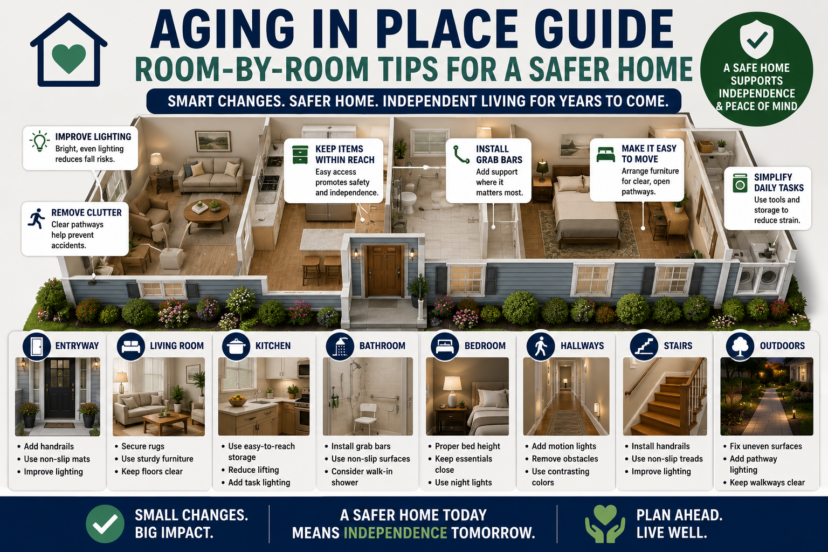
What are the best tips for creating a safer home in this aging in place guide? For many older adults, home represents more than just a place to live. It’s where memories were made, families gathered, and routines developed over decades.
That’s why so many seniors hope to remain in their homes as they age.
The good news is that creating a safer home doesn’t require expensive renovations or turning your house into a medical facility. Small improvements made one room at a time can dramatically improve comfort, confidence, and independence.
This room-by-room aging in place guide will help older adults and caregivers identify practical ways to reduce risks and create a home that supports healthy aging for years to come.
⭐ Quick Answer: Aging In Place Guide
An aging in place guide helps seniors remain safe and independent by improving each room of the home. Key strategies include better lighting, bathroom safety upgrades, clutter reduction, non-slip flooring, and smart home technology.
Key Takeaways
Most likely cause: Many homes were not designed to accommodate the changing mobility, balance, vision, and accessibility needs that often come with aging.
Usually serious? It can be. Common household hazards can increase the risk of falls, injuries, and loss of independence if they are not addressed.
First thing to check: Use an aging in place guide to evaluate each room for safety concerns, including poor lighting, trip hazards, slippery floors, difficult-to-reach storage, and unsafe bathrooms or stairways.
Best solution: Follow a comprehensive aging in place guide by making practical room-by-room improvements such as better lighting, grab bars, non-slip flooring, clutter reduction, and smart home technology to support long-term safety and independence.
🏡 Why An Aging In Place Guide Matters
According to AARP surveys, most Americans prefer to remain in their own homes as they grow older.
However, age-related changes may affect:
- Mobility
- Vision
- Balance
- Strength
- Memory
- Flexibility
A good aging in place guide focuses on preventing accidents while preserving independence and quality of life.
Benefits include:
- Reduced fall risks
- Greater comfort
- Increased confidence
- Lower caregiver stress
- Improved accessibility
- Better long-term planning
🚪 Entryway Safety
The front entrance is the first place many seniors encounter hazards.
Improve Lighting
Install:
- Motion-sensor lights
- Brighter LED bulbs
- Illuminated house numbers
Remove Obstacles
Keep pathways clear of:
- Shoes
- Packages
- Extension cords
Add Handrails
Secure handrails provide additional support when entering and leaving the home.
Consider A Ramp
For individuals with mobility challenges, ramps may improve accessibility.
🛋 Living Room Safety
Living rooms should feel comfortable and easy to navigate.
Remove Clutter
Keep pathways wide and clear.
Avoid:
- Excess furniture
- Loose cords
- Small rugs
Choose Stable Furniture
Furniture should provide support when sitting and standing.
Improve Lighting
Use:
- Floor lamps
- Table lamps
- LED bulbs
Good lighting reduces eye strain and improves safety.
🍳 Kitchen Safety
The kitchen is an important part of independent living.
Store Frequently Used Items Within Reach
Avoid excessive bending and stretching.
Replace Heavy Cookware
Lightweight pots and pans are easier to manage.
Add Under-Cabinet Lighting
Improved lighting makes food preparation safer.
Label Items Clearly
Large-print labels improve visibility.
🚿 Bathroom Safety
Bathrooms are one of the highest-risk areas for falls.
Install Grab Bars
Place grab bars:
- Near toilets
- Inside showers
- Beside bathtubs
Add Non-Slip Mats
Slip-resistant surfaces improve traction.
Use A Shower Chair
Shower chairs provide additional stability.
Install Better Lighting
Bright lighting helps seniors navigate safely.
Consider A Walk-In Shower
Walk-in showers may improve accessibility and reduce tripping hazards.
🛏 Bedroom Safety
The bedroom should support restful sleep and easy movement.
Place A Lamp Near The Bed
Avoid walking in darkness.
Use Night Lights
Night lights help with nighttime bathroom trips.
Adjust Bed Height
Beds that are too high or too low can increase fall risks.
Keep Pathways Clear
Maintain easy access between:
- Bed
- Bathroom
- Closets
🚶 Hallway Safety
Hallways connect every room and should remain obstacle-free.
Install Motion Lights
Automatic lighting improves visibility.
Remove Clutter
Avoid storing items in walking areas.
Use Contrasting Colors
Contrasting walls and floors can help individuals with poor vision.
🪜 Stairway Safety
Stairs become more challenging with age.
Install Handrails On Both Sides
Additional support increases confidence.
Improve Lighting
Bright stairways reduce accidents.
Add Non-Slip Stair Treads
Textured surfaces improve grip.
Mark Step Edges
Contrasting tape can improve visibility.
🧺 Laundry Room Safety
Laundry tasks can become physically demanding.
Helpful improvements include:
- Front-loading machines
- Raised platforms
- Good lighting
- Clear pathways
Avoid carrying heavy loads up and down stairs whenever possible.
🚗 Garage Safety
Garages often contain trip hazards.
Organize Storage
Store items safely and avoid floor clutter.
Improve Lighting
Bright lighting helps identify obstacles.
Secure Tools And Chemicals
Store potentially hazardous items out of reach.
🌳 Outdoor Safety
A complete aging in place guide includes exterior spaces.
Repair Uneven Walkways
Cracked surfaces increase fall risks.
Add Pathway Lighting
Solar lights can improve visibility.
Install Railings
Railings improve stability on steps and porches.
Remove Yard Hazards
Keep outdoor areas free of debris.
📱 Smart Home Technology For Aging In Place
Technology can help older adults remain independent.
Popular options include:
Medical Alert Systems
Provide emergency assistance.
Smart Speakers
Devices like Amazon Alexa can help with:
- Medication reminders
- Weather reports
- Shopping lists
Video Doorbells
Improve home security.
Smart Lighting
Automatic lighting improves convenience and safety.
❤️ Small Changes Can Make A Big Difference
Many people assume aging in place requires major renovations.
Fortunately, simple changes such as:
- Better lighting
- Grab bars
- Non-slip mats
- Medication organizers
- Furniture adjustments
can provide meaningful improvements without large expenses.
You don’t have to become a home modification expert to create a safer environment.
🚨 Signs Your Home May Need Additional Modifications
Consider reviewing your home if:
- Falls have occurred.
- Mobility is changing.
- Vision problems are increasing.
- Daily tasks feel more difficult.
- Fear of falling is growing.
Planning ahead often leads to better outcomes.
👨🔧 When To Consult A Professional
Professional assistance may be helpful when:
- Major remodeling projects are planned.
- Wheelchair accessibility is required.
- Mobility limitations are worsening.
- Falls are becoming frequent.
- Cognitive changes affect safety.
Consider consulting:
- Certified Aging-In-Place Specialists (CAPS)
- Occupational therapists
- Physical therapists
- Home accessibility contractors
- Healthcare providers
These professionals can recommend solutions tailored to individual needs.
❓ FAQs: Aging In Place Guide
What is aging in place?
Aging in place means remaining safely and comfortably in your own home as you grow older.
What room should seniors modify first?
Bathrooms are often the highest priority because they present greater fall risks.
Are home modifications expensive?
Many safety improvements are affordable and can be completed gradually.
What are the most important aging in place upgrades?
Grab bars, better lighting, and fall prevention improvements are among the most valuable changes.
Can smart home devices help seniors?
Yes. Smart technology can improve safety, convenience, and independence.
Do seniors need a home safety assessment?
A professional assessment may identify risks that are easy to overlook.
When should families begin planning for aging in place?
Experts often recommend planning before mobility challenges become severe.
📌 Final Thoughts
This aging in place guide demonstrates that creating a safer home doesn’t have to happen all at once.
By making improvements one room at a time, older adults and caregivers can build an environment that supports independence, confidence, and quality of life.
Small changes today can help ensure that the home remains a place of comfort, safety, and happiness for years to come.
Disclaimer
This article is for informational purposes only and is not a substitute for professional medical, healthcare, or home accessibility advice. Always follow local building codes and consult qualified healthcare providers, contractors, or Certified Aging-In-Place Specialists before making significant home modifications or beginning exercise programs.
 Explore more: