Walk-In Tub Vs Walk-In Shower: Which Is Better For Aging In Place?
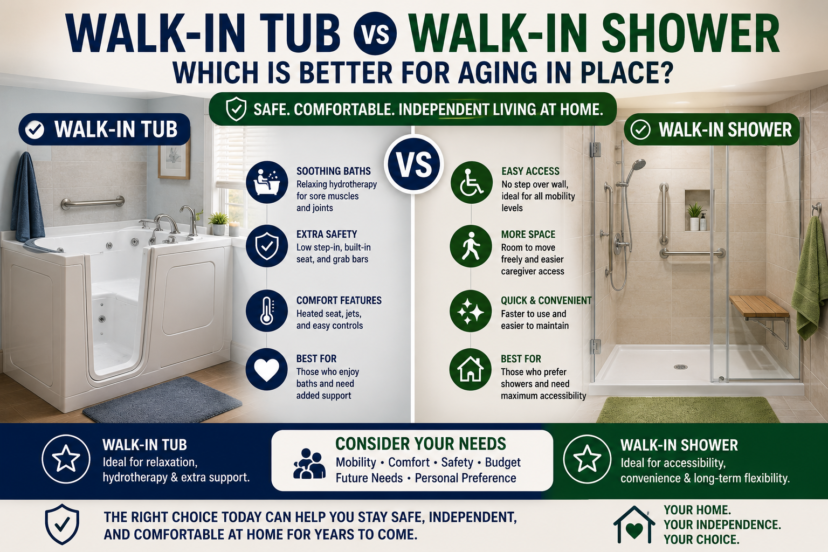
What is the best choice: walk-in tub vs walk-in shower? For many older adults, the bathroom becomes one of the most important rooms to evaluate when planning for aging in place. A traditional bathtub that once seemed perfectly normal may become increasingly difficult to enter safely, while slippery surfaces can raise concerns about falls and injuries.
That’s why many families eventually face an important question:
Walk-in tub vs walk-in shower—which is the better choice?
The answer depends on mobility, personal preferences, budget, and long-term goals. Both options can improve safety and support independence, but each offers unique advantages.
If you’re helping yourself or a loved one age safely at home, understanding the differences can help you make a confident decision.
💡 Quick Answer: Walk-In Tub Vs Walk-In Shower
When comparing walk-in tub vs walk-in shower options, walk-in showers are often preferred for easier access and wheelchair compatibility, while walk-in tubs may provide additional comfort and therapeutic benefits. The best choice depends on mobility needs, safety concerns, and lifestyle preferences.
Key Takeaways
Most likely cause: Many traditional bathtubs become difficult to use safely as mobility, balance, and flexibility change with age, increasing the need for a safer bathing solution.
Usually serious? It can be. Bathroom falls are a common cause of injury among older adults, making it important to choose a bathing option that matches current and future mobility needs.
First thing to check: Evaluate the user’s mobility, balance, ability to step over a tub, need for wheelchair access, available bathroom space, and long-term aging-in-place goals.
Best solution: Compare walk-in tub vs walk-in shower based on safety, accessibility, comfort, budget, and future mobility needs to choose the option that best supports long-term independence.
🚿 Why Bathroom Safety Matters For Aging In Place
Bathrooms are one of the most common locations for falls among older adults.
Risk factors include:
- Wet surfaces
- Limited mobility
- Arthritis
- Balance problems
- Difficulty stepping over tub walls
Replacing a traditional bathtub with a safer option can help:
- Reduce fall risks
- Improve independence
- Increase confidence
- Support aging in place
- Reduce caregiver stress
Both walk-in tubs and walk-in showers are popular solutions.
🛁 What Is A Walk-In Tub?
A walk-in tub features:
- A watertight door
- Low entry threshold
- Built-in seating
- Grab bars
- Anti-slip flooring
Many models also include:
- Hydrotherapy jets
- Heated seating
- Handheld shower heads
These tubs are designed to make bathing easier for people with limited mobility.
🚿 What Is A Walk-In Shower?
Walk-in showers eliminate the need to step over a high bathtub wall.
Features often include:
- Low or zero-threshold entry
- Slip-resistant flooring
- Grab bars
- Built-in benches
- Handheld shower heads
Walk-in showers are widely used in aging-in-place bathroom designs because they offer excellent accessibility.
⚖ Walk-In Tub Vs Walk-In Shower: Safety Comparison
Safety is usually the biggest concern.
Walk-In Tub Safety Advantages
- Low entry height
- Built-in seating
- Grab bars
- Reduced standing time
Walk-In Shower Safety Advantages
- Easier entry and exit
- Wheelchair accessibility
- Faster bathing
- Less risk of stepping over barriers
For many seniors with severe mobility challenges, walk-in showers often provide greater convenience.
❤️ Comfort Differences
Comfort preferences vary from person to person.
Benefits Of Walk-In Tubs
Many seniors enjoy:
- Relaxing warm baths
- Hydrotherapy features
- Muscle and joint comfort
- Stress relief
People with arthritis often appreciate soaking options.
Benefits Of Walk-In Showers
Walk-in showers offer:
- Faster bathing routines
- More freedom of movement
- Easier caregiver assistance
- Less waiting time
Some individuals simply prefer showers over baths.
♿ Accessibility Comparison
Accessibility becomes increasingly important over time.
What Are the Advantages of a Walk-In Shower
Walk-in showers generally:
- Accommodate wheelchairs
- Work well with shower chairs
- Allow caregiver access
- Provide more space
Walk-In Tub Limitations
Although safer than traditional tubs, users must still:
- Step inside
- Sit while filling the tub
- Wait while draining before exiting
This waiting period may be inconvenient for some individuals.
💲 Cost Comparison
Costs vary depending on materials, labor, and location.
Typical Walk-In Tub Costs
Many installations range from:
- $5,000 to $15,000+
Typical Walk-In Shower Costs
Many projects range from:
- $3,500 to $12,000+
Prices vary throughout the United States and depend on:
- Plumbing modifications
- Tile choices
- Accessibility features
- Contractor rates
🏡 Which Option Adds More Home Value?
Walk-in showers often appeal to a broader range of homebuyers.
Many homeowners appreciate:
- Modern design
- Spacious appearance
- Universal accessibility
Walk-in tubs may be highly valuable for certain buyers but are generally considered more specialized.
👨👩👧 Best Choice For Different Situations
Walk-In Tub May Be Better If:
- You enjoy soaking baths.
- Arthritis causes discomfort.
- You want hydrotherapy features.
- Standing for long periods is difficult.
Walk-In Shower May Be Better If:
- Mobility limitations are increasing.
- Wheelchair access is needed.
- Caregivers assist with bathing.
- Simplicity and convenience are priorities.
🔮 Think About Future Needs
One of the smartest aging-in-place strategies is planning ahead.
Ask yourself:
- Will mobility change over time?
- Could a wheelchair eventually be needed?
- Will caregiving assistance become necessary?
Thinking long term can help avoid additional renovations later.
❤️ Small Bathroom Changes Still Matter
Even if a full remodel isn’t possible right now, smaller upgrades can improve safety.
Consider:
- Grab bars
- Non-slip mats
- Shower chairs
- Handheld shower heads
- Raised toilet seats
These affordable improvements can make a big difference.
👨🔧 When To Consult A Professional
Major bathroom remodeling projects often benefit from expert guidance.
Consider consulting:
- Certified Aging-In-Place Specialists (CAPS)
- Occupational therapists
- Home accessibility contractors
- Healthcare providers
- Physical therapists
Professional advice may be especially valuable when:
- Mobility is rapidly changing.
- Wheelchair accessibility is required.
- Caregiver assistance is needed.
- Significant remodeling is planned.
These experts can recommend solutions tailored to individual needs.
❓ FAQs: Walk-In Tub Vs Walk-In Shower
Are walk-in tubs safer than regular tubs?
Yes. Walk-in tubs generally provide easier access and additional safety features.
Which is better for seniors, a walk-in tub or a walk-in shower?
It depends on mobility, comfort preferences, and future needs.
Can wheelchairs fit inside walk-in showers?
Many walk-in showers are designed to accommodate wheelchairs and shower chairs.
Do walk-in tubs help people with arthritis?
Some people find warm water and hydrotherapy features soothing.
Are walk-in showers easier to clean?
Many homeowners find walk-in showers easier to maintain than traditional tubs.
Does Medicare pay for walk-in tubs or showers?
Coverage varies, and many modifications are not fully covered. Families should review their individual plans.
Which option is more popular for aging in place?
Walk-in showers have become increasingly popular because of their accessibility and modern design.
📌 Final Thoughts
When comparing walk-in tub vs walk-in shower options, there is no single answer that works for everyone.
The best choice is the one that supports safety, comfort, and long-term independence.
For some families, that means enjoying the therapeutic benefits of a walk-in tub. For others, the convenience and accessibility of a walk-in shower make more sense.
Whatever option you choose, taking proactive steps today can help create a safer and more enjoyable home for years to come.
Disclaimer
This article is for informational purposes only and is not a substitute for professional medical, healthcare, or home accessibility advice. Always follow local building codes and consult qualified healthcare providers, contractors, or Certified Aging-In-Place Specialists before making significant home modifications or beginning exercise programs.
 Explore more: