Best Medical Alert Systems For Seniors Compared: Top Choices For Safety And Peace Of Mind
How to choose the best medical alert systems for seniors? Growing older doesn’t mean giving up independence. For many older adults, remaining at home is one of life’s greatest priorities. However, falls, medical emergencies, and mobility challenges can create understandable concerns for both seniors and their families.
Fortunately, today’s medical alert systems provide an extra layer of protection without requiring expensive renovations or full-time caregiving. With just the push of a button, seniors can quickly connect with emergency assistance and gain greater confidence while living independently.
Choosing one of the best medical alert systems for seniors can help families enjoy greater peace of mind while supporting safer aging in place and improving overall quality of life.
⭐ Quick Answer: Best Medical Alert Systems For Seniors
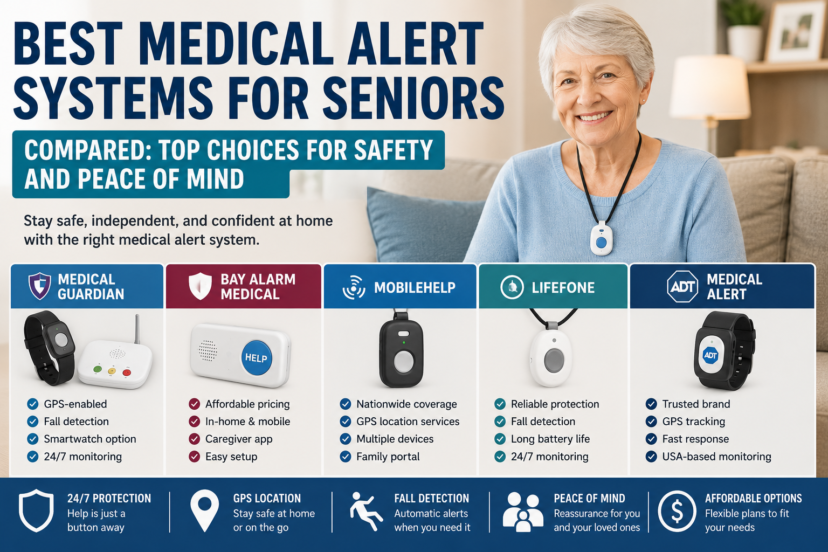
The best medical alert systems for seniors in 2026 include Medical Guardian, Bay Alarm Medical, MobileHelp, LifeFone, and ADT Medical Alert. These systems offer emergency response services, fall detection, GPS tracking, and home or mobile protection options for older adults who want to remain independent.
Key Takeaways
Most likely cause: Many older adults consider medical alert systems because age-related changes in mobility, balance, or health can increase the risk of falls and medical emergencies while living alone.
Usually serious? It can be. Delays in getting help after a fall or emergency may lead to more serious health complications, especially for seniors living independently.
First thing to check: Evaluate the senior’s mobility, lifestyle, fall risk, whether they spend time outside the home, and which features—such as fall detection, GPS, or 24/7 monitoring—are most important.
Best solution: Compare the best medical alert systems for seniors based on reliability, emergency response, monthly costs, battery life, monitoring services, and optional features to find the best fit for long-term safety and independence.
🏡 Why Medical Alert Systems Matter For Aging In Place
Medical alert systems are designed to provide immediate help during emergencies.
These devices may help seniors:
- ✔ Maintain independence longer
- ✔ Reduce fear of falling
- ✔ Improve confidence at home
- ✔ Provide reassurance to family members
- ✔ Support safer living alone
- ✔ Encourage aging in place
Many families view these devices as affordable insurance for everyday peace of mind.
📱 What Is A Medical Alert System?
A medical alert system is an emergency response device that connects users to trained monitoring centers.
Most systems include:
- A wearable pendant or wrist button
- A base station or mobile device
- Two-way communication
- Access to emergency responders
- Optional automatic fall detection
Modern systems are much smaller and easier to use than older models.
⭐ Best Medical Alert Systems For Seniors Compared
Medical Guardian
Medical Guardian is one of the most popular choices in the United States.
Strengths:
- Excellent customer service
- GPS-enabled mobile devices
- Optional fall detection
- Smartwatch options available
Best for:
- Active older adults
- Seniors who spend time outside the home
Bay Alarm Medical
Bay Alarm Medical offers affordable plans and dependable coverage.
Strengths:
- Competitive monthly pricing
- In-home and mobile systems
- Caregiver tracking apps
- Easy setup
Best for:
- Budget-conscious families
MobileHelp
MobileHelp provides nationwide cellular coverage.
Strengths:
- No landline required
- GPS location services
- Multiple device options
- Family caregiver portal
Best for:
- Seniors who travel frequently
LifeFone
LifeFone has built a strong reputation for reliability.
Strengths:
- Long battery life
- Fall detection options
- At-home and mobile protection
Best for:
- Seniors living alone
ADT Medical Alert
ADT combines home security experience with medical monitoring.
Strengths:
- Trusted national brand
- GPS tracking
- Reliable response centers
Best for:
- Families already familiar with ADT services
💡 Features To Look For In The Best Medical Alert Systems For Seniors
Not every senior has the same needs.
Important features include:
Fall Detection
Some devices automatically contact help if a fall is detected.
GPS Tracking
Helpful for active seniors and individuals with mild memory concerns.
Waterproof Design
Allows devices to be worn in showers, where many falls occur.
Long Battery Life
Reduces maintenance and charging concerns.
Two-Way Communication
Allows direct communication with emergency operators.
Caregiver Apps
Enable family members to monitor activity and receive notifications.
🚶 Home Systems Vs Mobile Medical Alert Systems
Home Medical Alert Systems
Designed primarily for use inside the home.
Advantages include:
- Lower monthly costs
- Simple operation
- Reliable indoor coverage
Mobile Medical Alert Systems
Provide protection both inside and outside the home.
Advantages include:
- GPS tracking
- Greater flexibility
- Ideal for active lifestyles
Many families choose mobile systems for added security.
💰 How Much Do Medical Alert Systems Cost?
The cost of the best medical alert systems for seniors varies depending on features.
Typical monthly costs:
- Basic home systems: $20–$35
- Mobile systems: $30–$50
- Fall detection add-ons: $10–$15 extra monthly
Equipment fees vary by company.
Compared with the cost of assisted living or home healthcare, these systems are often relatively affordable.
⚠ Who Benefits Most From Medical Alert Systems?
Medical alert devices may be especially useful for:
- Seniors living alone
- Adults with balance problems
- Individuals with arthritis
- People recovering from surgery
- Those with Parkinson’s disease
- Seniors with a history of falls
- Caregivers supporting aging parents from a distance
Even healthy older adults may appreciate the added peace of mind.
❤️ How Medical Alert Systems Support Independence
Many seniors worry about becoming dependent on others.
Medical alert systems can help:
- Preserve dignity
- Increase confidence
- Reduce caregiver stress
- Encourage active lifestyles
- Support safer aging in place
Knowing help is available often allows older adults to remain comfortable in the homes they love.
🏠 Additional Home Safety Strategies
Medical alert systems work best when combined with other aging-in-place improvements.
Consider:
- Removing loose rugs
- Installing grab bars
- Improving lighting
- Using non-slip flooring
- Adding stair railings
- Keeping walkways clutter-free
Small changes throughout the home can significantly improve safety.
👨🔧 When To Consult A Professional
Medical alert systems are valuable tools, but some situations require professional guidance.
Consider speaking with:
- A Certified Aging-In-Place Specialist (CAPS)
- An occupational therapist
- A healthcare provider
- A physical therapist
- A home accessibility specialist
Professional support may be especially important when:
- Falls have already occurred.
- Mobility changes are increasing.
- Memory issues are present.
- Multiple home modifications are being considered.
An expert assessment can help families create a more comprehensive aging-in-place plan.
❓ FAQs: Best Medical Alert Systems For Seniors
What Is The Best Medical Alert System For Seniors?
Medical Guardian, Bay Alarm Medical, MobileHelp, LifeFone, and ADT Medical Alert are among the most highly rated options.
Do Medical Alert Systems Work Without A Landline?
Yes. Most modern systems use cellular service and do not require a landline.
Are Medical Alert Systems Covered By Medicare?
Original Medicare typically does not cover medical alert systems, although some Medicare Advantage plans may offer benefits.
How Much Do Medical Alert Systems Cost Per Month?
Most plans range from $20 to $50 monthly, depending on features and device type.
Is Fall Detection Worth The Extra Cost?
For seniors with mobility issues or previous falls, automatic fall detection may provide additional safety and peace of mind.
Can Medical Alert Systems Be Worn In The Shower?
Many devices are waterproof and designed for shower use, where falls commonly occur.
Do Medical Alert Systems Work Outside The Home?
Mobile systems with GPS tracking provide protection both inside and outside the home.
📌 Conclusion: Best Medical Alert Systems For Seniors
The best medical alert systems for seniors do much more than summon help during emergencies. They help older adults maintain confidence, independence, and peace of mind while continuing to enjoy life at home.
For caregivers, these devices provide reassurance that loved ones can quickly access assistance if needed.
Sometimes, one small device can make a big difference in supporting safer, healthier, and more enjoyable aging in place.
Disclaimer
This content is for general informational purposes only and is not a substitute for professional medical, healthcare, or home accessibility advice. Always consult qualified healthcare providers, contractors, occupational therapists, or certified aging-in-place specialists before making significant home modifications or addressing medical concerns.
 Explore more: