
How To Create A Dementia-Friendly Home: 15 Simple Ways To Reduce Confusion And Stress
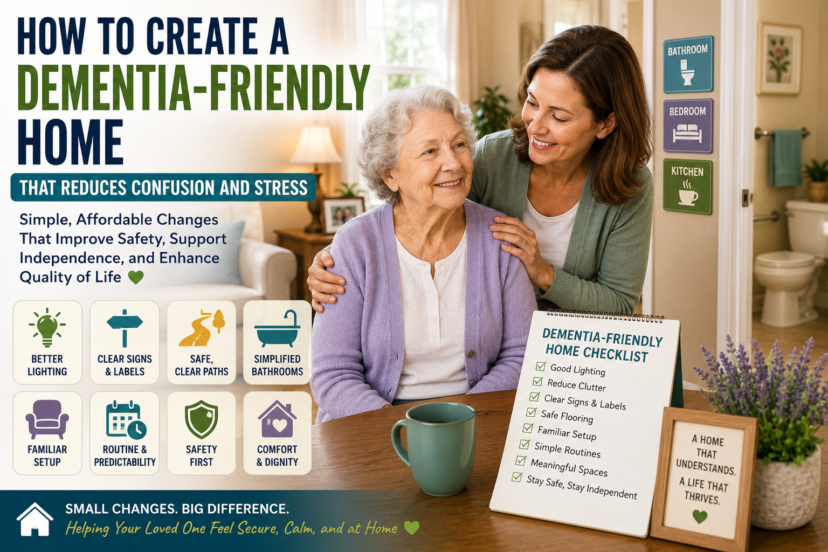
Tips To Create A Dementia-Friendly Home
When someone you love begins experiencing memory or cognitive changes, familiar surroundings can become surprisingly difficult to navigate. Learning how to create a dementia-friendly home can help make everyday routines safer, simpler, and less stressful while allowing an older adult to maintain as much independence as possible.
A hallway that once seemed ordinary may become confusing. Similar-looking doors can be difficult to identify. Clutter, shadows, glare, excessive noise, or unfamiliar objects may contribute to frustration. Even finding the bathroom or remembering where everyday items belong can become challenging.
Fortunately, creating a supportive home does not always require expensive renovations. Clear signs, better lighting, consistent routines, reduced clutter, safer walking paths, and thoughtful use of color can make a meaningful difference.
The goal is not to completely redesign the home. It is to make familiar surroundings easier to understand, navigate, and enjoy while adapting the environment as needs change.
💡 Quick Answer: How To Create A Dementia-Friendly Home
To understand how to create a dementia-friendly home, focus on simplicity, familiarity, visibility, and safety. Reduce clutter, improve lighting, label important rooms and storage areas, keep furniture arrangements consistent, remove fall hazards, simplify bathrooms and kitchens, and reduce unnecessary noise. Small environmental changes can help make everyday activities easier while supporting comfort and independence.
Key Takeaways
Most likely cause: Memory, perception, judgment, and orientation changes can make familiar home environments increasingly difficult to understand and navigate.
Usually serious? Confusion is not always an immediate emergency, but increasing disorientation, wandering, falls, medication mistakes, or unsafe appliance use can create significant safety concerns.
First thing to check: Observe which rooms, objects, activities, or times of day seem to create the most confusion or frustration.
Best solution: When learning how to create a dementia-friendly home, simplify the environment while preserving familiar routines, personal belongings, independence, and dignity.
🏠 Why The Home Environment Matters With Dementia
A person living with dementia may experience changes in memory, reasoning, depth perception, spatial awareness, attention, or the ability to recognize objects.
The physical environment can either make these challenges easier to manage or unintentionally make them worse.
Imagine walking into a bathroom where the toilet, floor, and walls are nearly identical colors. Someone with visual-perception difficulties may have trouble identifying the toilet.
A dark rug might appear to be a hole or change in floor level. Reflections in mirrors may also be confusing for some people.
This is why creating a dementia-friendly home is not simply a question of installing safety equipment. The goal is to make the environment easier to interpret.
A predictable, familiar home may help reduce unnecessary decisions and allow the older adult to continue participating in everyday activities.
💡 1. Improve Lighting Throughout The Home
Good lighting is one of the most practical dementia-friendly home improvements.
Dark corners and strong shadows may make objects more difficult to identify. Glare can also be uncomfortable and confusing.
Pay particular attention to:
- Hallways
- Staircases
- Bathrooms
- Bedrooms
- Kitchens
- Entrances
- Nighttime walking routes
Open curtains during the day when appropriate and use consistent indoor lighting as natural light fades.
Motion-activated night lights may help illuminate the route between the bedroom and bathroom.
However, avoid creating harsh glare. The goal is clear, even illumination.
🚶 2. Keep Walking Paths Simple And Uncluttered
Clutter can create both physical and visual confusion.
A hallway filled with furniture, boxes, cords, or decorative objects may be harder to navigate.
Create clear walking routes between frequently used locations.
Remove unnecessary:
- Electrical cords
- Small furniture
- Floor decorations
- Stacks of magazines
- Shoes
- Boxes
- Unsecured rugs
When considering how to create a dementia-friendly home, simplicity is often more helpful than adding more equipment.
The person should ideally be able to see where a pathway leads without navigating unnecessary obstacles.
🚪 3. Make Important Rooms Easy To Identify
Finding the bathroom or bedroom can become difficult as dementia progresses.
Simple visual cues may help.
For example, place a clear sign on the bathroom door that says Bathroom. Depending on the individual, adding an easy-to-recognize picture of a toilet may also help.
Use large lettering with strong contrast.
Similar labels can identify:
- Bedroom
- Kitchen
- Bathroom
- Closet
- Pantry
Keep signs simple rather than filling the home with instructions.
Too many labels may create additional visual clutter.
🎨 4. Use Color And Contrast Carefully
Color contrast can make important objects easier to distinguish.
For example, a toilet seat that contrasts with the surrounding floor and fixtures may be easier to identify.
Likewise, contrasting plates can sometimes make food easier to see against the dish.
Use contrast to highlight important features such as:
- Handrails
- Grab bars
- Light switches
- Doors
- Toilet seats
- Frequently used objects
Avoid dramatic floor patterns where possible. Busy designs or abrupt color changes may be confusing for some people.
Individual responses vary, so observe how your loved one reacts to environmental changes.
🛋️ 5. Keep Furniture In Familiar Places
Families sometimes think a complete redesign will make the home safer.
But familiarity can be valuable.
Moving a favorite chair, changing the dining-room layout, or rearranging the bedroom may create unnecessary confusion.
When possible, keep major furniture in familiar locations while removing genuine hazards.
This balance is important when learning how to create a dementia-friendly home.
You want the environment to become safer without making it feel completely unfamiliar.
Make gradual changes and observe how the person responds.
🛁 6. Simplify The Bathroom
Bathrooms combine several potential challenges: slippery surfaces, mirrors, water controls, medication storage, and frequent sitting and standing.
Simple modifications may include:
- Better lighting
- Nonslip surfaces
- Clearly visible toilet fixtures
- Easy-to-operate faucets
- Accessible toiletries
- A hand-held showerhead
- Appropriate shower seating
- Properly installed grab bars
Remove unnecessary bottles and products from countertops.
If mirrors appear to cause distress or confusion, discuss appropriate solutions with an occupational therapist or dementia-care professional.
Never use towel racks as substitutes for structural grab bars.
🍳 7. Make The Kitchen Easier And Safer To Use
The kitchen can support independence, but it may require adaptation as cognitive abilities change.
Keep frequently used items in predictable places.
Consider labeling cabinets or using visual cues when helpful.
Remove expired food and unnecessary clutter. Keep potentially dangerous products appropriately secured based on the person’s abilities.
As dementia progresses, families may need to reassess access to:
- Stove burners
- Ovens
- Sharp knives
- Cleaning chemicals
- Small appliances
- Medications
The right level of supervision depends on the individual.
The objective is not automatically to remove every activity. It is to support safe participation for as long as practical.
🧠 8. Reduce Excessive Noise And Stimulation
A constantly running television, loud conversations, barking dogs, appliances, and several people talking simultaneously can create an overwhelming environment.
A calmer home may make it easier to concentrate on everyday tasks.
Try reducing background noise during:
- Meals
- Conversations
- Dressing
- Medication routines
- Bedtime
Create a comfortable quiet area with a familiar chair, photographs, books, music, or meaningful objects.
Knowing how to create a dementia-friendly home includes considering what the person hears as well as what they see.
📷 9. Keep Familiar And Meaningful Objects Visible
A dementia-friendly home does not need to look clinical.
In fact, familiar belongings may help the home continue feeling personal and comforting.
Consider displaying:
- Family photographs
- Favorite artwork
- Meaningful keepsakes
- Familiar blankets
- Favorite books
- Recognizable furniture
A family photograph outside a bedroom may sometimes provide a helpful visual cue.
The objective is to remove distracting clutter without removing the person’s identity from their surroundings.
📅 10. Create Predictable Daily Routines
The environment includes more than furniture and lighting.
Daily routines matter too.
Try keeping meals, bedtime, bathing, activities, and other important routines reasonably consistent.
A large, easy-to-read clock and calendar may be useful for some people.
A simple daily schedule might include:
8:00 a.m. – Breakfast
10:00 a.m. – Walk
12:30 p.m. – Lunch
3:00 p.m. – Favorite TV program
Predictability can reduce the number of unfamiliar decisions required throughout the day.
Avoid making the schedule overly complicated.
🪜 11. Improve Stair And Fall Safety
Falls are a significant concern for many older adults, regardless of whether they have dementia.
Keep stairs well illuminated and free from clutter.
Check for:
- Loose carpeting
- Damaged steps
- Unstable railings
- Poor lighting
- Objects stored on stairs
Handrails should be sturdy and easy to identify.
If the person begins having significant difficulty navigating stairs, an occupational therapist or other qualified professional can evaluate the home and recommend appropriate options.
🔐 12. Consider Wandering And Exit Safety
Some people living with dementia may become disoriented and attempt to leave home unexpectedly.
Families should consider exit safety based on the individual’s behavior and abilities.
Possible strategies can include door alerts, appropriate monitoring systems, identification information, and a family response plan.
Avoid modifications that could prevent emergency escape or violate local fire and building codes.
Wandering behavior deserves professional attention because solutions need to balance safety, dignity, independence, and emergency access.
💊 13. Simplify Medication Management
Medication mistakes can become increasingly concerning when memory changes occur.
With the person’s permission and involvement of healthcare professionals, keep an updated medication list and establish a simple routine.
Depending on individual needs, families may consider:
- Pill organizers
- Medication reminders
- Pharmacy packaging services
- Automated dispensers
- Family assistance
Never change dosages or medication schedules without consulting the appropriate healthcare provider or pharmacist.
If missed or duplicated doses become common, additional supervision may be necessary.
🌙 14. Create A Calmer Evening Environment
Some people with dementia experience increased confusion or restlessness later in the day.
A predictable evening routine may help create a calmer transition toward bedtime.
Try:
- Gradually reducing household noise
- Keeping rooms comfortably illuminated
- Closing curtains when reflections become distracting
- Following familiar evening routines
- Keeping the route to the bathroom clearly illuminated
Avoid making several environmental changes simultaneously.
Observe patterns and discuss significant sleep or behavioral changes with the person’s healthcare provider.
❤️ 15. Preserve Independence Wherever Safely Possible
One of the most important principles of how to create a dementia-friendly home is remembering that safety should support independence rather than automatically replace it.
Look for activities the person can still enjoy successfully.
That might include:
- Folding towels
- Watering plants
- Preparing a simple snack
- Setting the table
- Listening to music
- Looking through photographs
- Walking in a secure area
- Helping with simple household routines
Modify the activity rather than immediately eliminating it.
A dementia-friendly environment should help the person continue experiencing purpose, familiarity, and participation in everyday life.
🛠️ How To Start Making A Home Dementia-Friendly
Do not try to change everything in one weekend.
Start by observing one normal day.
Notice where the person hesitates, becomes confused, loses an item, struggles to find a room, or appears uncomfortable.
Then prioritize three areas:
Safety: Remove immediate hazards.
Simplicity: Make important objects and destinations easier to identify.
Familiarity: Preserve recognizable surroundings and routines whenever possible.
After making a change, watch how the person responds.
Because dementia affects individuals differently, something helpful for one person may not work the same way for another.
The best home modifications adapt alongside the person’s changing needs.
👷 When To Consult A Professional
Professional guidance can be especially valuable when cognitive or mobility changes begin affecting everyday safety.
Consider consulting an occupational therapist, healthcare provider, dementia-care professional, Certified Aging-in-Place Specialist (CAPS), accessibility installer, or qualified contractor if there are repeated falls, wandering, difficulty using stairs, unsafe cooking behaviors, bathroom difficulties, major mobility limitations, or increasing trouble completing daily activities.
Seek medical evaluation for new, sudden, or rapidly worsening confusion. Sudden confusion can have causes other than dementia and may require prompt medical attention.
Professional assistance is also recommended before major structural changes such as ramps, accessible showers, stair lifts, doorway modifications, or extensive electrical and plumbing work.
❓ Frequently Asked Questions About Creating A Dementia-Friendly Home
What Makes A Home Dementia-Friendly?
A dementia-friendly home is designed to make everyday surroundings easier to understand and navigate. It typically uses good lighting, clear pathways, familiar furniture, simple signs, useful color contrast, reduced clutter, and appropriate safety measures.
What Colors Are Best For A Dementia-Friendly Home?
There is no single best color. Strong contrast between important objects and their backgrounds can sometimes make features easier to recognize. Avoid relying on complicated patterns or dramatic flooring changes that could be confusing.
How Do You Make A Bathroom Dementia-Friendly?
Improve lighting, reduce clutter, use nonslip surfaces, make the toilet easy to identify, keep toiletries organized, and consider appropriate shower seating and professionally installed grab bars.
Should You Label Things For Someone With Dementia?
Labels can be useful when they are simple, clear, and meaningful to the person. Large text combined with recognizable pictures may help identify rooms or frequently used storage areas. Avoid excessive labeling that adds visual clutter.
How Can You Reduce Confusion At Home For Someone With Dementia?
Maintain familiar routines and furniture arrangements, improve lighting, reduce unnecessary noise and clutter, provide clear visual cues, and make frequently used objects easy to locate.
How Can I Keep Someone With Dementia Safe At Home?
Assess fall hazards, medications, cooking safety, bathrooms, stairs, exits, lighting, emergency plans, and the person’s ability to complete everyday tasks. Reassess regularly because safety needs can change as dementia progresses.
Can Someone With Dementia Continue Living At Home?
Some people with dementia can remain at home for a considerable period with appropriate support, depending on their cognitive abilities, mobility, health, behavior, home environment, caregiving resources, and safety needs. Regular professional assessment can help families determine when additional assistance is necessary.
🏡 Final Thoughts On How To Create A Dementia-Friendly Home
Learning how to create a dementia-friendly home does not mean transforming a familiar house into a medical facility.
Often, the most effective changes are surprisingly simple.
Improve one dark hallway. Clear one cluttered walking path. Label one difficult-to-find room. Simplify one crowded countertop. Keep a favorite chair where it has always been.
Then observe what happens.
Small changes can gradually create an environment that is easier to understand, safer to navigate, and more comfortable to live in.
Most importantly, continue seeing the person rather than only the diagnosis. Familiar belongings, favorite activities, meaningful routines, personal choices, and participation in everyday life still matter.
With thoughtful adjustments, regular reassessment, compassionate caregiving, and appropriate professional guidance, families can create homes that support safety while preserving dignity, comfort, connection, and as much independence as possible.
Disclaimer: This content is for general informational purposes only and is not a substitute for professional medical, healthcare, dementia-care, mobility, or home accessibility advice. Follow applicable local building and fire codes and consult qualified healthcare providers, occupational or physical therapists, contractors, accessibility professionals, or Certified Aging-in-Place Specialists before making significant home modifications or beginning new exercise or mobility routines.
 Explore more:



Comments are closed.