Fall Hazards At Home For Seniors: The Hidden Hazards That Increase Fall Risk After 65
What are common fall hazards at home for seniors? As we grow older, the home that has always felt safe can gradually present new challenges. A loose rug, dim hallway, cluttered walkway, or slippery bathroom floor may seem harmless—but these everyday hazards can significantly increase the risk of a serious fall.
For many older adults, a fall can lead to injuries, reduced confidence, and difficulty living independently. Fortunately, preventing many falls doesn’t require expensive renovations. Small, thoughtful changes can make your home safer, easier to navigate, and more comfortable while supporting independence for years to come.
Whether you’re planning ahead for yourself or helping an aging parent, identifying fall hazards at home for seniors is one of the smartest steps you can take. A safer home provides peace of mind, reduces stress, and helps older adults continue enjoying the comfort of living where they feel most at home.
⭐ Quick Answer: Fall Hazards At Home For Seniors
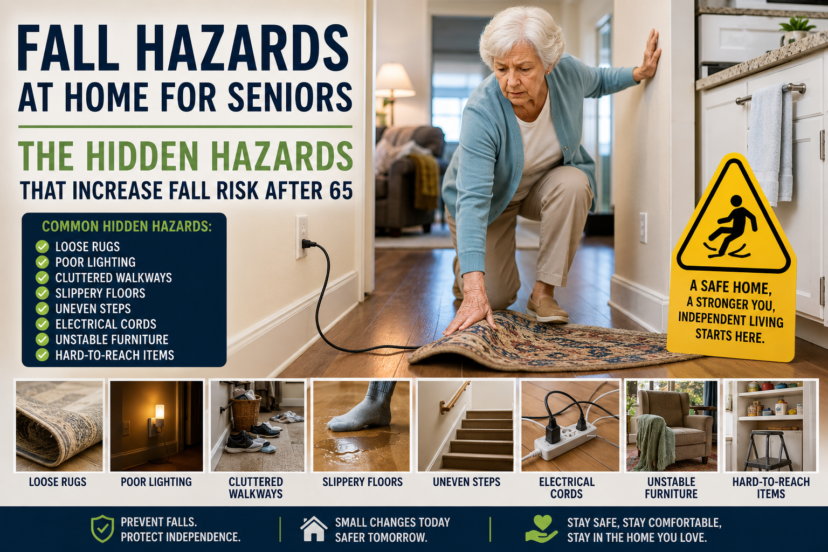
Fall hazards at home for seniors include loose rugs, poor lighting, cluttered walkways, slippery bathroom floors, uneven steps, electrical cords, unstable furniture, and difficult-to-reach storage. Removing these hazards and making simple safety improvements can significantly reduce fall risk and help older adults remain independent.
Key Takeaways
- Most likely cause: Falls are commonly caused by loose rugs, poor lighting, cluttered walkways, slippery floors, uneven steps, and reduced balance or mobility.
- Usually serious? Yes, they can be. Falls are a leading cause of injury among older adults and may result in fractures, head injuries, or a loss of independence.
- First thing to check: Walk through the home and look for tripping hazards, inadequate lighting, slippery bathroom surfaces, unsecured electrical cords, and frequently used areas that could benefit from safety improvements.
- Best solution: Reducing fall hazards at home for seniors involves removing clutter, securing rugs, improving lighting, installing grab bars and handrails where needed, wearing supportive footwear, and keeping everyday items within easy reach.
🏡 Why Fall Hazards Become More Dangerous After Age 65
As people age, natural physical changes can make everyday obstacles more difficult to navigate.
Common age-related changes include:
- Reduced balance
- Slower reaction time
- Decreased muscle strength
- Arthritis and joint stiffness
- Vision changes
- Reduced flexibility
- Side effects from certain medications
These changes don’t mean someone can’t continue living independently—they simply mean the home should better support changing mobility and safety needs.
Recognizing fall hazards at home for seniors early allows families to make proactive improvements before accidents happen.
⚠️ Common Fall Hazards At Home For Seniors
Many homes contain hidden dangers that go unnoticed because they’ve been there for years.
Let’s look at the most common problem areas.
🚪 1. Loose Rugs And Floor Mats
Area rugs are one of the leading trip hazards.
Safer alternatives include:
- Removing small rugs
- Using non-slip rug pads
- Securing carpet edges
- Choosing low-pile flooring
If a rug slides even slightly, it’s worth addressing immediately.
💡 2. Poor Lighting
Dim lighting makes it difficult to see changes in flooring, stairs, or obstacles.
Improve visibility by adding:
- Bright LED bulbs
- Motion-sensor lights
- Nightlights
- Under-cabinet lighting
- Porch lighting
Well-lit homes are much easier to navigate safely.
🚶 3. Cluttered Walkways
Hallways filled with boxes, decorations, shoes, or pet toys can quickly become dangerous.
Keep pathways:
- Wide
- Clear
- Easy to navigate
- Free from unnecessary furniture
This simple improvement costs nothing but can greatly reduce fall hazards at home for seniors.
🚿 4. Slippery Bathrooms
Bathrooms combine hard surfaces with water, making them one of the highest-risk rooms in any home.
Helpful improvements include:
- Grab bars
- Non-slip bath mats
- Shower chairs
- Handheld showerheads
- Raised toilet seats
These upgrades improve both comfort and confidence.
🔌 5. Electrical Cords
Extension cords stretched across walkways are easy to overlook.
Reduce risk by:
- Routing cords along walls
- Using cord covers
- Adding additional outlets if needed
- Removing unnecessary extension cords
🪜 6. Unsafe Stairs
Stairs deserve extra attention.
Warning signs include:
- Loose carpeting
- Missing handrails
- Worn stair edges
- Poor lighting
- Uneven steps
Installing sturdy handrails on both sides often makes a significant difference.
🪑 7. Unstable Furniture
Older adults sometimes rely on nearby furniture for support.
Avoid:
- Rolling chairs
- Lightweight tables
- Wobbly furniture
- Unsecured shelving
Choose sturdy furniture that remains stable if lightly leaned on.
📦 8. Hard-To-Reach Storage
Climbing on chairs or step stools greatly increases fall risk.
Instead:
- Store daily items between waist and shoulder height.
- Use pull-out shelves.
- Organize kitchen cabinets.
- Keep heavy items lower.
These simple adjustments make everyday tasks much safer.
🚪 9. Entryway Hazards
Front entrances often become slippery due to rain, snow, or fallen leaves.
Improve safety with:
- Slip-resistant steps
- Bright lighting
- Secure railings
- Clearly visible step edges
- Weather-resistant mats
🐕 10. Pets Underfoot
Beloved pets can unintentionally create tripping hazards.
Consider:
- Feeding pets away from walkways
- Keeping toys organized
- Training pets to avoid stairways
- Using bells on collars if vision is limited
⭐ Room-By-Room Fall Prevention Tips
Bathroom
- ✔ Install grab bars
- ✔ Improve lighting
- ✔ Use non-slip flooring
- ✔ Keep towels within easy reach
Kitchen
- ✔ Organize cabinets
- ✔ Remove clutter
- ✔ Wipe spills immediately
- ✔ Use stable step alternatives when necessary
Bedroom
- ✔ Keep a lamp within reach
- ✔ Add motion-sensor nightlights
- ✔ Remove loose rugs
- ✔ Keep pathways clear
Living Room
- ✔ Secure cords
- ✔ Rearrange furniture
- ✔ Eliminate clutter
- ✔ Choose stable seating
Garage And Entryway
- ✔ Repair uneven flooring
- ✔ Install railings
- ✔ Improve outdoor lighting
- ✔ Remove seasonal hazards like leaves or ice
🛠️ Small Home Changes That Reduce Fall Hazards
Fortunately, many fall hazards at home for seniors can be addressed with inexpensive improvements.
Some of the best upgrades include:
- Lever-style door handles
- Motion-activated lights
- Grab bars
- Stair handrails
- Raised toilet seats
- Non-slip stair treads
- Furniture rearrangement
- Better storage solutions
- Brighter lighting
- Wider walking paths
Many of these changes can be completed in just a weekend.
❤️ Benefits Of Removing Fall Hazards
Reducing hazards isn’t only about preventing injuries.
A safer home also helps:
- Increase independence
- Improve confidence
- Reduce caregiver stress
- Make everyday activities easier
- Support healthy aging
- Preserve quality of life
Many older adults feel more comfortable moving around their homes after even a few simple improvements.
🔍 How To Perform A Simple Home Safety Check
Walk through each room and ask yourself:
- Is the lighting bright enough?
- Could someone trip here?
- Are frequently used items easy to reach?
- Is there anything slippery?
- Are stairs easy to use?
- Are grab bars needed?
- Would someone using a walker or cane have enough space?
Taking 20 minutes to inspect your home can uncover several easy fixes.
👷 When To Consult A Professional
Many home safety improvements are simple DIY projects, but some situations require professional guidance.
Consider consulting a qualified professional if:
- Falls have already occurred.
- Mobility is becoming more limited.
- A wheelchair or walker is needed.
- Major bathroom remodeling is planned.
- Ramps, stair lifts, or widened doorways are being considered.
- Structural repairs or accessibility upgrades are required.
Professionals who can help include:
- Certified Aging-in-Place Specialists (CAPS)
- Occupational Therapists
- Licensed Accessibility Contractors
- Home Accessibility Installers
- Healthcare Providers who can evaluate balance, vision, medications, or other health concerns that may increase fall risk.
❓ FAQs: Fall Hazards At Home For Seniors
1. What are the biggest fall hazards at home for seniors?
Loose rugs, poor lighting, slippery bathrooms, cluttered walkways, electrical cords, uneven stairs, and hard-to-reach storage are among the most common hazards.
2. How can seniors reduce fall risk at home?
Improving lighting, removing trip hazards, installing grab bars, adding handrails, organizing storage, and keeping walkways clear are effective ways to improve safety.
3. Which room has the highest fall risk?
Bathrooms are often considered the highest-risk area because wet surfaces and frequent transfers in and out of the shower or bathtub increase the likelihood of slipping.
4. Are home fall prevention improvements expensive?
Not always. Many effective safety upgrades, such as better lighting, non-slip mats, decluttering, and furniture rearrangement, are affordable and easy to implement.
5. Should older adults remove all rugs?
Small throw rugs that slide easily should usually be removed or secured with non-slip pads. Larger rugs should lie flat and remain firmly in place.
6. How often should a home safety assessment be performed?
It’s a good idea to review home safety once a year or after any significant health, vision, or mobility changes.
7. Who can help identify fall hazards at home?
Certified Aging-in-Place Specialists (CAPS), occupational therapists, healthcare providers, and experienced accessibility contractors can evaluate a home and recommend personalized safety improvements.
🎯 Conclusion: Fall Hazards At Home For Seniors
Creating a safer home doesn’t require major remodeling or a large budget. In many cases, removing a few hidden hazards can dramatically reduce fall risk while helping older adults remain confident and independent.
By identifying fall hazards at home for seniors and making practical improvements one step at a time, families can create homes that are easier to navigate, more comfortable to live in, and better prepared for the future.
Every small safety upgrade—whether it’s brighter lighting, a grab bar, or simply clearing a hallway—is an investment in independence, peace of mind, and a better quality of life.
Disclaimer: This article is for general informational purposes only and is not a substitute for professional medical, healthcare, or home accessibility advice. Always follow local building codes and consult qualified healthcare providers, licensed contractors, occupational therapists, or Certified Aging-in-Place Specialists (CAPS) before making significant home modifications or beginning new exercise or mobility programs.
 Explore more: