Senior Bathroom Fall Prevention: Why Most Falls Happen In The Bathroom (And How To Prevent Them)
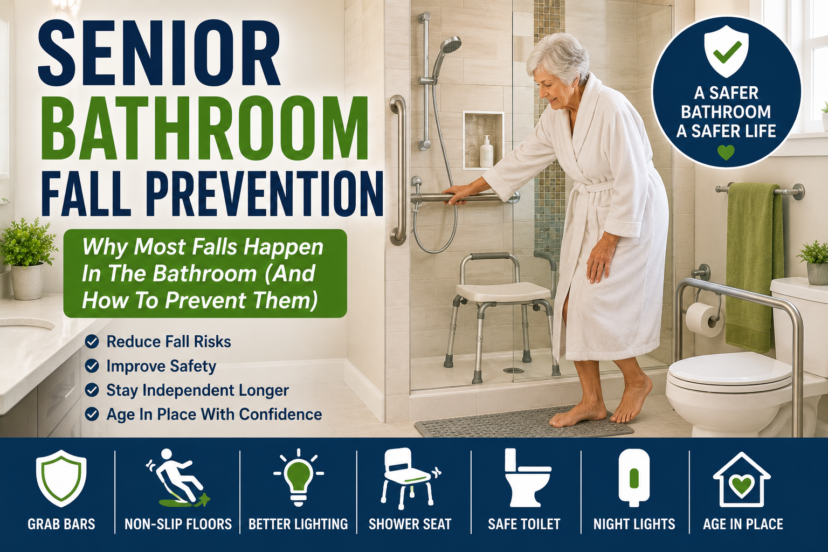
What do you need to do for senior bathroom fall prevention? The bathroom is one of the smallest rooms in the house, yet it is also one of the most dangerous places for older adults. Slippery floors, wet surfaces, limited space, and frequent transfers between standing and sitting create conditions where a simple misstep can quickly lead to a serious injury.
The good news is that many bathroom falls are preventable. You don’t need a complete remodel or an expensive accessibility upgrade to make a meaningful difference. With thoughtful planning and a few practical improvements, families can create a bathroom that is safer, easier to use, and more supportive of independent living.
Whether you’re planning ahead for yourself or helping an aging parent remain at home, focusing on senior bathroom fall prevention can greatly improve confidence, comfort, and peace of mind while supporting successful aging in place.
⭐ Quick Answer: Senior Bathroom Fall Prevention
Senior bathroom fall prevention focuses on reducing slippery surfaces, improving stability, increasing visibility, and making everyday bathroom tasks safer. Installing grab bars, using non-slip flooring, improving lighting, adding a shower chair, and removing hazards are among the most effective ways to reduce bathroom fall risk for older adults.
Key Takeaways
Most likely cause: Wet, slippery surfaces, poor lighting, limited support, and age-related changes in balance and mobility make bathrooms one of the highest-risk areas for falls.
Usually serious? It can be. Bathroom falls can result in serious injuries for older adults and may affect long-term mobility, confidence, and independence.
First thing to check: Inspect the bathroom for slippery floors, inadequate lighting, loose rugs, high tub walls, and the absence of grab bars or other support features.
Best solution: Improve senior bathroom fall prevention by installing grab bars, using non-slip flooring and bath mats, increasing lighting, adding a shower chair, and removing hazards that could lead to slips or trips.
🚿 Why Senior Bathroom Fall Prevention Matters
Bathrooms combine several factors that increase fall risk:
- Wet floors
- Smooth tile surfaces
- Limited space
- Frequent bending
- Stepping into tubs
- Sitting and standing from toilets
- Poor lighting during nighttime visits
For many seniors, balance, muscle strength, reaction time, and vision naturally change with age. These changes make bathrooms especially hazardous without proper safety features.
Improving senior bathroom fall prevention doesn’t simply reduce accidents—it also helps older adults maintain confidence and independence.
💧 Why Most Falls Happen In The Bathroom
Understanding why bathroom falls occur helps identify simple solutions.
Common causes include:
Slippery Floors
Water from showers, sinks, or tubs creates slick surfaces that increase slipping.
Poor Lighting
Dim bathrooms make it difficult to see puddles, bath mats, or obstacles.
No Stable Support
Many bathrooms lack secure handholds where they’re needed most.
Stepping Into The Bathtub
Lifting one leg over a high tub wall challenges balance and flexibility.
Rushing To The Bathroom
Nighttime urgency often causes seniors to move quickly in poor lighting.
Recognizing these risks is the first step toward better senior bathroom fall prevention.
🛠️ Install Grab Bars In The Right Locations
Grab bars are among the most effective bathroom safety improvements.
Install them:
- Beside the toilet
- Inside the shower
- At the bathtub entrance
- Along shower walls if appropriate
Choose grab bars that are securely anchored into wall studs or installed using approved mounting systems. Towel bars should never be used for support because they are not designed to hold body weight.
🚶 Use Non-Slip Flooring
Flooring plays a major role in senior bathroom fall prevention.
Safer options include:
- Textured vinyl flooring
- Slip-resistant tile
- Rubber flooring
- Non-slip bath mats with rubber backing
Avoid loose throw rugs that can bunch up or slide.
If replacing flooring isn’t practical, adding high-quality non-slip mats is an affordable alternative.
🚿 Consider A Walk-In Shower
Traditional bathtubs require stepping over a high edge, increasing fall risk.
Walk-in showers provide:
- Easier entry
- Better accessibility
- More space for mobility aids
- Less climbing
- Reduced balance challenges
Although not every home requires this upgrade immediately, it can become an excellent long-term investment.
🪑 Add A Shower Chair Or Bath Bench
Standing for an entire shower becomes more difficult for many older adults.
A sturdy shower chair provides:
- Better balance
- Reduced fatigue
- Greater confidence
- Less slipping
Choose models with:
- Non-slip feet
- Adjustable height
- Drainage holes
- Comfortable seating
Using a handheld showerhead alongside a shower chair can make bathing even easier.
🚽 Upgrade Toilet Safety
Getting on and off the toilet can strain hips and knees.
Helpful improvements include:
- Raised toilet seats
- Comfort-height toilets
- Grab bars beside the toilet
- Adequate surrounding space
These simple upgrades improve stability while reducing unnecessary effort.
💡 Improve Bathroom Lighting
Lighting is often overlooked but plays a major role in preventing falls.
Improve visibility with:
- Bright LED bulbs
- Motion-activated nightlights
- Vanity lighting
- Shower lighting
- Hallway lighting leading to the bathroom
Nighttime trips become much safer when pathways are well illuminated.
🚪 Keep The Bathroom Organized
Clutter increases fall risk.
Keep floors free from:
- Laundry baskets
- Trash cans
- Extension cords
- Extra bath rugs
- Toiletries on the floor
Store frequently used items within easy reach to reduce bending or climbing.
Good organization supports senior bathroom fall prevention while making everyday routines easier.
🧼 Reduce Slippery Surfaces
Water isn’t the only hazard.
Soap, shampoo, conditioner, and lotion spills can create dangerous surfaces.
Helpful habits include:
- Wiping up spills immediately
- Using soap dispensers
- Keeping towels nearby
- Drying floors after showers
- Checking bath mats regularly
Simple daily habits significantly improve bathroom safety.
📱 Use Helpful Technology
Modern technology supports bathroom safety in several ways.
Consider:
- Motion-sensor lighting
- Voice assistants
- Medical alert systems
- Waterproof emergency call buttons
- Smart leak detectors
Technology cannot prevent every fall, but it can improve emergency response if one occurs.
❤️ Healthy Habits Also Reduce Fall Risk
Home modifications work best alongside healthy aging habits.
Encourage:
- Balance exercises
- Strength training approved by a healthcare provider
- Vision exams
- Medication reviews
- Proper hydration
- Supportive non-slip footwear
Improving physical health often lowers overall fall risk throughout the home.
🏡 Budget-Friendly Bathroom Safety Improvements
Many families assume bathroom safety upgrades are expensive.
Fortunately, affordable improvements include:
- ✔ Non-slip bath mats
- ✔ Grab bars
- ✔ Motion nightlights
- ✔ Raised toilet seats
- ✔ Shower chairs
- ✔ Handheld showerheads
- ✔ Better lighting
- ✔ Lever faucet handles
These improvements can often be completed gradually while staying within a modest budget.
👨⚕️ When To Consult A Professional
While many bathroom safety improvements are simple DIY projects, some situations require professional guidance. If an older adult has experienced repeated falls, significant balance problems, limited mobility, or difficulty transferring in and out of the shower or bathtub, consider consulting a Certified Aging-in-Place Specialist (CAPS), occupational therapist, healthcare provider, or licensed accessibility contractor. These professionals can recommend personalized modifications such as walk-in showers, widened doorways, wheelchair-accessible bathrooms, or properly installed grab bars to improve long-term safety.
❓ FAQs: Senior Bathroom Fall Prevention
1. Why do so many senior falls happen in the bathroom?
Bathrooms combine slippery floors, water, hard surfaces, tight spaces, and frequent sitting and standing, making them one of the highest-risk areas in the home.
2. What is the best way to prevent bathroom falls?
Installing grab bars, improving lighting, using non-slip flooring, adding a shower chair, and keeping floors dry are among the most effective strategies.
3. Are grab bars really necessary?
Yes. Properly installed grab bars provide stable support during transfers and significantly improve bathroom safety.
4. Should older adults replace a bathtub with a walk-in shower?
For many people with mobility limitations, a walk-in shower can reduce fall risk and make bathing easier. However, the best solution depends on individual needs and budget.
5. What type of flooring is safest for seniors?
Slip-resistant vinyl, textured tile, rubber flooring, and other non-slip surfaces generally provide better traction than smooth flooring.
6. Are shower chairs safe?
Yes, when properly selected and used according to manufacturer instructions. Look for sturdy, adjustable models with non-slip feet.
7. How often should a bathroom safety assessment be performed?
Review bathroom safety every year or whenever there are significant changes in health, mobility, vision, or balance.
📌 Conclusion: Senior Bathroom Fall Prevention
Bathroom falls are common, but they are not inevitable. Many accidents can be prevented with thoughtful planning, affordable safety upgrades, and healthy daily habits.
By focusing on senior bathroom fall prevention, families can create bathrooms that feel safer, easier to navigate, and more supportive of independent living. Simple improvements such as grab bars, better lighting, non-slip flooring, and shower seating can make everyday routines more comfortable while reducing the risk of injury. Every small step you take today helps build a safer home that supports confidence, dignity, and successful aging in place for years to come.
Disclaimer: This article is for general informational purposes only and is not a substitute for professional medical, healthcare, or home accessibility advice. Always consult qualified healthcare providers, Certified Aging-in-Place Specialists (CAPS), occupational therapists, licensed contractors, or other appropriate professionals before making significant home modifications, addressing mobility concerns, or beginning new exercise or rehabilitation programs. Follow local building codes and manufacturer instructions when installing bathroom safety equipment or accessibility features.
 Explore more:
- Help Aging Parents Stay At Home
- Senior-Friendly Home Design: 15 Smart Ideas
- Aging In Place On A Budget