Help Aging Parents Stay At Home: Practical Ways To Support Safe, Independent Living

What is the best way to help aging parents stay at home? Watching a parent grow older often brings difficult questions. Should they move? Is their home still safe? How can you support them without taking away their independence?
For many families, the answer isn’t moving to an assisted living community right away. With thoughtful planning, practical home improvements, and ongoing support, many older adults can continue living safely in the homes they love.
Learning how to help aging parents stay at home isn’t about making expensive renovations or turning into a home safety expert overnight. Instead, it’s about making small, meaningful changes that reduce everyday risks, simplify daily life, and preserve independence.
Whether you’re helping your mom, dad, or another loved one, every improvement—no matter how small—can make home feel safer, more comfortable, and less stressful.
⭐ Quick Answer: Help Aging Parents Stay At Home
The best way to help aging parents stay at home is to improve home safety, reduce fall hazards, support mobility, simplify daily tasks, encourage healthy habits, use smart home technology, and plan ahead for changing health needs. Small improvements often make a big difference in helping older adults remain independent longer.
Key Takeaways
Most likely cause: Many older adults struggle to remain at home because age-related changes in mobility, balance, vision, and health can make everyday tasks more challenging and increase safety risks.
Usually serious? It can be. Without proper planning and home safety improvements, the risk of falls, injuries, and loss of independence may increase over time.
First thing to check: Assess the home for fall hazards, evaluate mobility needs, review daily routines, and identify areas where additional support or accessibility improvements could make life easier.
Best solution: Create a personalized plan to help aging parents stay at home by improving home safety, reducing fall risks, simplifying daily tasks, encouraging healthy habits, and using assistive devices or technology as their needs change.
🏡 Why More Families Want To Help Aging Parents Stay At Home
Most older adults prefer to remain in familiar surroundings for as long as possible.
Staying at home often means:
- Maintaining independence
- Staying close to neighbors and friends
- Following familiar routines
- Feeling emotionally comfortable
- Remaining connected to the local community
For caregivers, helping parents age in place can also provide peace of mind when the home is made safer and easier to navigate.
Fortunately, many improvements are affordable and can be completed over time.
🚶 Understand The Biggest Safety Risks At Home
Before making changes, identify where accidents are most likely to happen.
Common concerns include:
- Falls
- Poor lighting
- Slippery bathrooms
- Stairs
- Loose rugs
- Cluttered walkways
- Difficult-to-reach storage
- Poor outdoor lighting
Walk through the home as though you’re seeing it for the first time. Look for anything that could increase the risk of injury.
💡 Improve Lighting Throughout The Home
Better lighting is one of the simplest ways to help aging parents stay at home safely.
Focus on:
- Bright hallway lighting
- Motion-activated nightlights
- Stair lighting
- Porch lights
- Garage lighting
- Kitchen task lighting
Good lighting improves visibility while reducing trips and falls.
Consider replacing difficult light switches with larger rocker switches or smart lighting that can be controlled by voice.
🚿 Make The Bathroom Safer
Bathrooms are one of the most common places for falls.
Helpful upgrades include:
Install Grab Bars
Place sturdy grab bars near:
- The toilet
- Inside the shower
- Beside the bathtub
Use Non-Slip Mats
Choose rubber-backed mats designed for wet environments.
Add A Shower Chair
A stable shower chair helps reduce fatigue while bathing.
Install A Handheld Showerhead
This makes bathing easier for people with limited mobility.
Many of these improvements are inexpensive but significantly improve safety.
🛋️ Reduce Clutter And Remove Fall Hazards
One of the easiest ways to help aging parents stay at home is by removing obstacles.
Look for:
- Loose electrical cords
- Throw rugs
- Small furniture in walkways
- Shoes left on the floor
- Pet toys
- Clutter near stairs
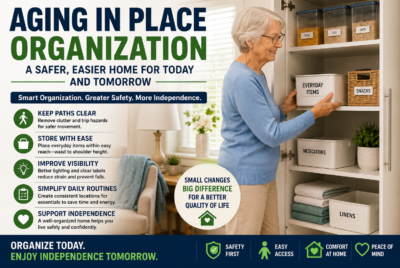
Keep frequently used items within easy reach to reduce unnecessary bending or climbing.
🪜 Make Stairs Easier To Use
Many seniors continue using stairs safely with a few improvements.
Helpful changes include:
- Secure handrails on both sides
- Bright stair lighting
- High-contrast stair edges
- Non-slip stair treads
- Clear landings
If stairs become increasingly difficult, discuss whether a bedroom or laundry room can be moved to the main floor.
🍽️ Simplify Everyday Living
Small adjustments often make daily routines less tiring.
Ideas include:
- Store dishes at waist height
- Use lightweight cookware
- Replace round doorknobs with lever handles
- Install pull-out kitchen shelves
- Use easy-grip utensils
- Organize medications clearly
These simple changes reduce strain and make everyday tasks more manageable.
📱 Use Technology To Help Aging Parents Stay At Home
Technology can support both seniors and caregivers.
Useful devices include:
- Voice assistants
- Smart lighting
- Medication reminder systems
- Video doorbells
- Smart thermostats
- Medical alert systems
- Fall detection devices
Many products are easy to install without major remodeling.
❤️ Encourage Healthy Daily Habits
A safer home works best alongside healthy routines.
Encourage your parent to:
- Walk regularly
- Stay hydrated
- Eat balanced meals
- Sleep well
- Wear supportive shoes
- Stretch gently
- Attend regular healthcare appointments
Maintaining strength and balance can help reduce fall risk.
🚗 Make Getting Around Easier
Transportation often becomes more challenging with age.
Consider:
- Grocery delivery
- Prescription delivery
- Ride-sharing services
- Community senior transportation
- Family driving schedules
Reliable transportation helps older adults remain independent while staying socially connected.
🤝 Respect Independence While Offering Support
One of the biggest challenges for caregivers is finding the right balance.
Instead of taking over, ask:
- “What would make this easier?”
- “Would you like help with this?”
- “How can we make your home safer?”
Including your parent in decisions helps preserve dignity and encourages cooperation.
📋 Create A Long-Term Aging-In-Place Plan
Planning ahead prevents future stress.
Discuss topics like:
- Emergency contacts
- Medical information
- Medication lists
- Financial planning
- Home maintenance
- Future caregiving needs
- Advance directives
Having these conversations early makes future decisions much easier.
🏠 Affordable Changes That Make A Big Difference
You don’t have to spend thousands of dollars to help aging parents stay at home.
Some affordable improvements include:
- ✔ Motion-sensor lights
- ✔ Grab bars
- ✔ Raised toilet seat
- ✔ Non-slip bath mats
- ✔ Lever door handles
- ✔ Better outdoor lighting
- ✔ Smart speakers
- ✔ Furniture rearrangement
Small investments often provide significant improvements in safety and comfort.
👨⚕️ When To Consult A Professional
While many home safety improvements are simple DIY projects, some situations require professional guidance. Consider consulting a Certified Aging-in-Place Specialist (CAPS), occupational therapist, licensed contractor, home accessibility installer, or healthcare provider if your parent has frequent falls, significant mobility limitations, memory concerns, or complex medical conditions. Professionals can assess the home, recommend appropriate modifications, and ensure larger projects—such as ramps, stair lifts, bathroom remodels, or widened doorways—are completed safely and in accordance with local building codes.
❓ FAQs: Help Aging Parents Stay At Home
1. How can I help my aging parents stay at home safely?
Start by removing fall hazards, improving lighting, adding grab bars, simplifying daily routines, and considering smart home technology or medical alert systems.
2. What is the biggest safety concern for seniors living at home?
Falls are one of the most common risks. Clutter, poor lighting, slippery floors, and stairs often contribute to injuries.
3. When should an aging parent stop living alone?
If they experience repeated falls, severe memory loss, difficulty managing medications, poor nutrition, or unsafe behaviors, it may be time to seek a professional assessment.
4. What are inexpensive ways to improve home safety?
Motion-sensor lights, non-slip mats, grab bars, better lighting, removing loose rugs, and organizing clutter are affordable improvements.
5. Can smart home technology help older adults?
Yes. Voice assistants, medication reminders, video doorbells, and emergency alert systems can improve both safety and convenience.
6. How do I convince my parent to accept help?
Approach the conversation with empathy. Focus on maintaining independence rather than taking it away, and involve them in every decision.
7. Is aging in place less expensive than assisted living?
In many cases, yes. While costs vary depending on healthcare needs and home modifications, many families find that aging in place can be a cost-effective option when appropriate support is available.
🎯 Final Thoughts
Helping an aging parent remain at home doesn’t require perfection or expensive renovations. Often, the biggest improvements come from small, thoughtful changes that make everyday life safer, easier, and more comfortable.
By improving lighting, reducing fall hazards, simplifying daily routines, embracing helpful technology, and planning ahead, you can help aging parents stay at home with greater confidence. Every grab bar installed, every hallway cleared, and every supportive conversation contributes to preserving independence and enhancing quality of life. Taking one step at a time can help your loved one continue enjoying the comfort and familiarity of home for many years.
Disclaimer: This article is for general informational purposes only and is not a substitute for professional medical, healthcare, or home accessibility advice. Always consult qualified healthcare providers, Certified Aging-in-Place Specialists (CAPS), licensed contractors, occupational therapists, or other appropriate professionals before making significant home modifications, addressing mobility concerns, or beginning new exercise or rehabilitation programs. Follow all local building codes and safety regulations when making home improvements.
 Explore more:
- Bedroom Safety For Seniors
- Kitchen Modifications For Aging In Place
- Best Shoes For Seniors To Prevent Falls