Aging In Place On A Budget: 15 Affordable Changes That Make A Big Difference
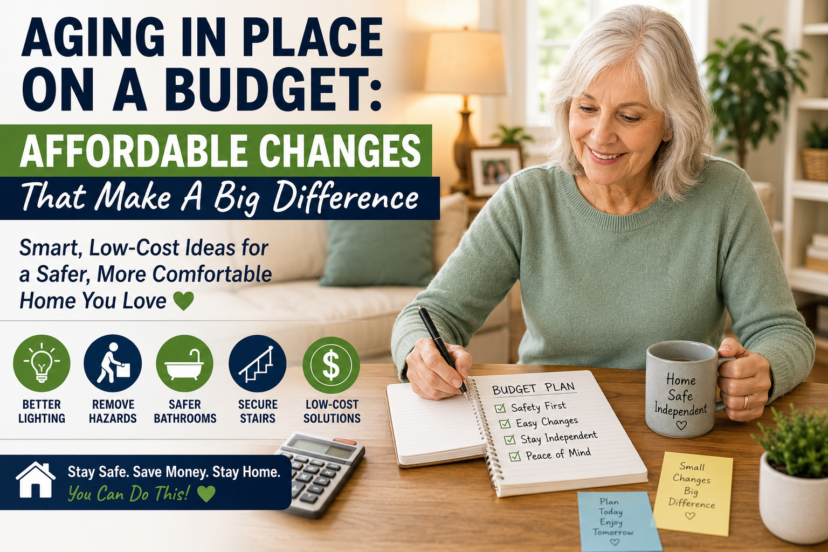
Growing older at home should not require spending tens of thousands of dollars on renovations. In fact, aging in place on a budget is often about making small, thoughtful changes that remove everyday hazards, make common tasks easier, and help older adults feel more confident moving through their homes.
For many seniors, home represents familiarity, independence, privacy, and years of memories. Families naturally want to preserve those benefits while addressing concerns such as falls, reduced mobility, poor lighting, difficult bathrooms, and household chores that become harder with age.
The good news is that creating a safer home does not necessarily mean installing an elevator or remodeling every room. Better lighting, safer flooring, accessible storage, sturdy handrails, and simple organizational changes can make a meaningful difference.
By focusing first on the areas that create the greatest difficulty or risk, older adults and caregivers can build a practical aging-in-place plan without overwhelming their budget.
💡 Quick Answer: Aging In Place On A Budget
Aging in place on a budget means prioritizing inexpensive home improvements that increase safety, accessibility, and comfort before considering major renovations. Start by removing fall hazards, improving lighting, reorganizing frequently used items, adding nonslip surfaces, and making bathrooms and stairs easier to navigate. Many effective changes cost little or nothing and can help older adults remain independent longer.
Key Takeaways
Most likely cause: Aging homes were often designed for younger, fully mobile adults, so everyday features can gradually become harder or less safe to use.
Usually serious? Not every accessibility problem is urgent, but poor lighting, slippery floors, clutter, unsafe stairs, and difficult bathrooms can increase safety concerns as mobility changes.
First thing to check: Walk through the home and identify the places where the older adult feels unsteady, uncomfortable, tired, or has difficulty completing normal tasks.
Best solution: For aging in place on a budget, prioritize low-cost changes that address real daily problems before spending money on major renovations.
🏠 Why Aging In Place Does Not Have To Be Expensive
When people hear “aging-in-place modifications,” they sometimes imagine walk-in tubs, wheelchair ramps, stair lifts, widened doorways, or complete bathroom renovations.
Those improvements can be valuable when genuinely needed, but they are not the starting point for every household.
A better strategy is to examine how the home is actually being used.
Ask:
- Where does the person feel least steady?
- Which tasks have become frustrating?
- Are there areas they have started avoiding?
- Which objects are difficult to reach?
- Where could a small improvement make daily life easier?
Someone may not need a $15,000 bathroom remodel when better lighting, professionally installed grab bars, and a suitable shower chair solve the immediate problems.
Successful aging in place on a budget begins with needs rather than products.
💡 1. Improve Lighting Throughout The Home
Better lighting is one of the simplest home safety upgrades.
As people age, changes in vision can make low-light environments more difficult to navigate. Pay particular attention to stairways, entrances, hallways, kitchens, bathrooms, and the path from the bedroom to the bathroom.
Affordable improvements include:
- Brighter appropriate LED bulbs
- Plug-in night lights
- Motion-activated lights
- Bedside lamps within easy reach
- Under-cabinet kitchen lighting
- Illuminated light switches
Replace burned-out bulbs promptly and reduce glare where possible.
Better visibility can make everyday activities easier without changing the structure of the house.
🚶 2. Clear Walking Paths For Free
One of the best strategies for aging in place on a budget costs absolutely nothing.
Walk through the house and remove unnecessary obstacles.
Look for electrical cords, stacks of magazines, shoes, pet toys, small furniture, baskets, boxes, and other objects that narrow walking paths.
Try to create clear routes between frequently used areas such as the bedroom, bathroom, kitchen, living room, and exterior doors.
Pay special attention to nighttime routes.
A cleaner walking path can be especially helpful for someone using a cane, walker, or other mobility aid.
🧶 3. Remove Or Secure Loose Rugs
Small throw rugs may look harmless, but curled edges or rugs that slide can create tripping hazards.
Consider removing unnecessary rugs from high-traffic areas.
When a rug needs to remain, use an appropriate nonslip backing or other suitable method to keep it secure.
Also examine transitions between flooring materials. Raised edges between carpet, hardwood, tile, or vinyl may become difficult for someone who shuffles their feet or uses a mobility device.
These small details matter when creating a safer home.
🛁 4. Make The Bathroom Safer Without Remodeling It
Bathrooms deserve special attention when aging in place on a budget because they combine water, slippery surfaces, tight spaces, and frequent sitting and standing.
Before planning a complete remodel, consider smaller improvements such as:
- Nonslip surfaces
- A hand-held showerhead
- Better bathroom lighting
- Accessible storage
- A suitable shower chair or transfer bench
- Professionally installed grab bars
- An appropriate raised or comfort-height toilet solution
Do not assume towel bars can substitute for grab bars. They generally are not designed to support body weight.
Grab bars must also be correctly positioned and securely anchored, so professional installation may be appropriate.
🪜 5. Make Stairs Easier To Navigate
Stairs can become more challenging as balance, strength, vision, or joint mobility changes.
Start with inexpensive improvements.
Make sure stairways are well illuminated and free of stored objects. Check whether carpeting or stair coverings are loose.
Sturdy handrails can also make a major difference.
Ideally, the person should have reliable support where appropriate for the staircase and individual mobility needs.
If someone is regularly struggling with stairs, however, don’t simply add inexpensive equipment and assume the problem is solved. A mobility assessment may help determine whether additional modifications are necessary.
🍳 6. Reorganize The Kitchen Around Easy Reach
A safer kitchen does not necessarily require new cabinets.
Instead, reorganize existing storage.
Move frequently used dishes, cookware, pantry foods, and appliances to comfortable heights. Try to reduce the need for reaching overhead, bending deeply, or climbing on stools.
For example:
- Keep everyday dishes on easy-to-reach shelves.
- Store heavy cookware between waist and shoulder height when possible.
- Move frequently used foods toward the front of cabinets.
- Keep the coffee maker and toaster easily accessible.
- Remove rarely used items from prime storage areas.
These changes cost nothing but can make daily routines significantly easier.
🚪 7. Replace Difficult Knobs And Handles
Arthritis, reduced hand strength, and limited dexterity can make traditional round doorknobs and small cabinet knobs frustrating.
Lever-style door handles can often be operated with less gripping and twisting.
Likewise, larger cabinet pulls may be easier to grasp.
You do not necessarily need to replace everything at once.
For aging in place on a budget, start with the doors and cabinets used most frequently and make additional changes over time.
🪑 8. Adjust Furniture For Easier Movement
Furniture placement can either support mobility or make it more difficult.
Look at the rooms from the perspective of someone who moves slowly or uses a mobility aid.
Remove unnecessary side tables, decorative stands, or other furniture that creates narrow passages.
Also consider seating.
Very low, deep, or soft chairs can sometimes be difficult to get out of. A supportive chair at an appropriate height may make sitting and standing easier.
Avoid unstable furniture that someone might instinctively grab for support.
🛏️ 9. Create A Safer Bedroom Setup
Bedrooms are sometimes overlooked because they seem relatively safe.
But consider what happens when someone wakes during the night.
Can they easily reach a light?
Is the pathway to the bathroom clear?
Can they get in and out of bed comfortably?
Affordable bedroom improvements may include:
- Bedside lighting
- Motion-activated night lights
- A clear pathway around the bed
- A phone within easy reach
- Frequently used clothing stored at accessible heights
If transferring into or out of bed has become difficult, an occupational or physical therapist can help evaluate safer options.
📱 10. Use Simple Technology Instead Of Expensive Remodeling
Technology can support aging in place on a budget when it solves a genuine problem and is easy for the older adult to use.
Examples include:
- Voice-controlled lights
- Video doorbells
- Automatic night lights
- Smart thermostats
- Medication reminders
- Door or appliance alerts
- Medical alert systems
You do not need to turn the house into a complicated smart home.
Choose one or two technologies that address actual daily challenges.
Simple and reliable usually beats sophisticated and confusing.
🧺 11. Make Household Chores Less Physically Demanding
Home maintenance can become exhausting long before someone needs extensive caregiving.
Look for ways to reduce lifting, carrying, reaching, and bending.
A rolling laundry cart, lightweight vacuum, long-handled cleaning tool, or smaller trash container may make chores easier.
Families can also divide demanding tasks.
An older parent might continue cooking and light housekeeping while family members or hired help handle lawn care, heavy cleaning, ladder work, snow removal, or home repairs.
Supporting independence does not mean someone must perform every household task alone.
📦 12. Declutter Gradually Instead Of All At Once
Clutter reduction can improve walking space, visibility, and overall ease of movement, but families should approach it respectfully.
A parent’s possessions may have significant sentimental value.
Instead of announcing that the entire house needs cleaning out, start with areas affecting daily safety.
Prioritize:
- Hallways
- Stairways
- Entrances
- Bathroom floors
- Bedroom pathways
- Frequently used living areas
This makes decluttering part of a practical aging in place on a budget plan rather than an overwhelming household purge.
🔔 13. Create A Simple Emergency Plan
Emergency preparedness does not have to be expensive.
Make sure important phone numbers are easy to find, and emergency contacts are current.
Consider keeping basic information in an accessible location, including:
- Emergency contacts
- Healthcare provider information
- Medication list
- Allergies
- Insurance information
- Preferred hospital
- Important family contacts
A charged phone should also be easily accessible.
For someone at higher risk of falls or medical emergencies, discuss appropriate emergency-response options with healthcare professionals and family members.
🌳 14. Check The Entrance To The Home
Aging-in-place planning should not stop at the front door.
Examine the route from the driveway or sidewalk to the entrance.
Look for cracked pavement, uneven steps, loose railings, slippery surfaces, poor drainage, or inadequate lighting.
Keep leaves, ice, snow, hoses, and other obstacles away from walking paths.
Adding brighter exterior lighting or repairing a loose handrail may be relatively inexpensive compared with larger accessibility projects.
If a ramp becomes necessary, consult a qualified professional and follow applicable building codes rather than improvising a potentially unsafe structure.
💰 15. Prioritize Improvements Instead Of Doing Everything At Once
The smartest way to approach aging in place on a budget is to prioritize.
Divide potential improvements into three groups:
Do Now: Immediate hazards such as poor lighting, cluttered walkways, loose rugs, unstable railings, or unsafe bathroom conditions.
Do Soon: Changes that make increasingly difficult tasks easier, such as accessible storage, better handles, or improved seating.
Plan For Later: Larger modifications that may eventually be necessary, such as accessible showers, ramps, widened doorways, or first-floor living arrangements.
This approach prevents families from spending thousands of dollars on modifications that may never be needed.
💵 How Much Does Aging In Place Cost?
There is no single cost because every person and home is different.
A basic safety improvement plan may involve mostly free or low-cost changes, while extensive accessibility remodeling can cost thousands or tens of thousands of dollars.
Rather than asking, “How much does aging in place cost?” ask:
What problem are we trying to solve right now?
Start there.
If a $30 lighting improvement solves a nighttime visibility problem, there may be no reason to undertake a major project.
If someone’s mobility needs require structural modifications, however, professional evaluation and investment may be appropriate.
👷 When To Consult A Professional
Some projects should not be treated as DIY experiments.
Consider consulting a Certified Aging-in-Place Specialist (CAPS), occupational therapist, accessibility installer, contractor, physical therapist, or healthcare provider when there are repeated falls, major mobility limitations, difficulty transferring, significant balance concerns, or uncertainty about which modifications are appropriate.
Professional guidance is particularly important for structural ramps, stair lifts, accessible showers, doorway modifications, electrical work, plumbing changes, and major bathroom renovations.
Healthcare professionals should evaluate sudden or worsening changes in strength, balance, cognition, dizziness, pain, or mobility.
❓ Frequently Asked Questions About Aging In Place On A Budget
What Is The Cheapest Way To Age In Place?
Begin with free and low-cost safety improvements. Remove clutter, improve furniture placement, reorganize storage, remove unsafe rugs, and improve lighting before considering expensive renovations.
How Can I Make A Home Senior-Friendly On A Budget?
Focus on clear walkways, good lighting, non-slip surfaces, accessible storage, easier-to-use handles, sturdy handrails, safer bathroom features, and comfortable furniture arrangements.
What Are The Most Important Aging-In-Place Modifications?
The most useful modifications depend on the individual, but bathrooms, stairs, entrances, lighting, flooring, and frequently traveled pathways often deserve early attention.
Can Seniors Age In Place Without Remodeling Their Home?
Many can, depending on their health, mobility, home design, and available support. Small adaptations and outside assistance may allow someone to remain at home without extensive remodeling.
How Do I Make A Bathroom Safer For An Elderly Person?
Improve lighting, reduce slippery surfaces, keep necessary items accessible, and consider appropriate shower seating and professionally installed grab bars. An occupational therapist can recommend individualized solutions when mobility is limited.
Is Aging In Place Cheaper Than Assisted Living?
Costs vary substantially based on the person’s care needs, housing expenses, location, home modifications, and amount of paid assistance required. Families should compare the total ongoing costs rather than assuming one option is always cheaper.
What Should I Change First For Aging In Place?
Start with immediate safety concerns. Check walking paths, stairs, bathrooms, entrances, lighting, rugs, railings, and the bedroom-to-bathroom nighttime route. Then address activities that are becoming difficult or tiring.
🏡 Final Thoughts On Aging In Place On A Budget
Aging in place on a budget does not mean cutting corners on safety. It means spending money where it can make the greatest practical difference.
Start with the home you already have.
Clear one walkway. Replace one burned-out bulb. Move heavy dishes to an easier shelf. Secure a loose surface. Improve nighttime lighting. Ask which everyday task has become frustrating and look for the simplest safe solution.
Then reassess. Small improvements made gradually can create a home that feels noticeably easier and more comfortable without turning aging in place into a massive renovation project.
The goal is not to create a perfect “senior home.” It is to create a home that continues working for the person living there.
With thoughtful planning, appropriate professional guidance, and a focus on real daily needs, families can help older adults preserve independence, comfort, safety, and quality of life for as long as possible.
Disclaimer: This article is for general informational purposes only and is not a substitute for professional medical, healthcare, mobility, or home accessibility advice. Follow applicable local building codes and consult qualified healthcare providers, contractors, occupational or physical therapists, accessibility professionals, or Certified Aging-in-Place Specialists before making significant home modifications or beginning new exercise or mobility routines.
 Explore more: